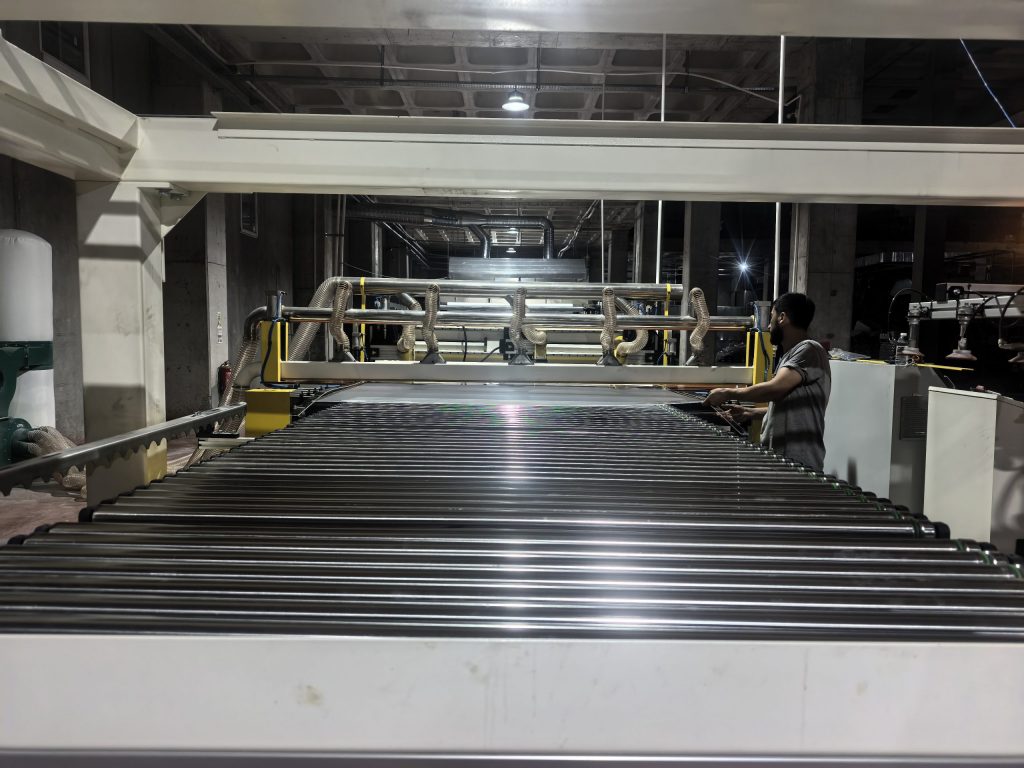
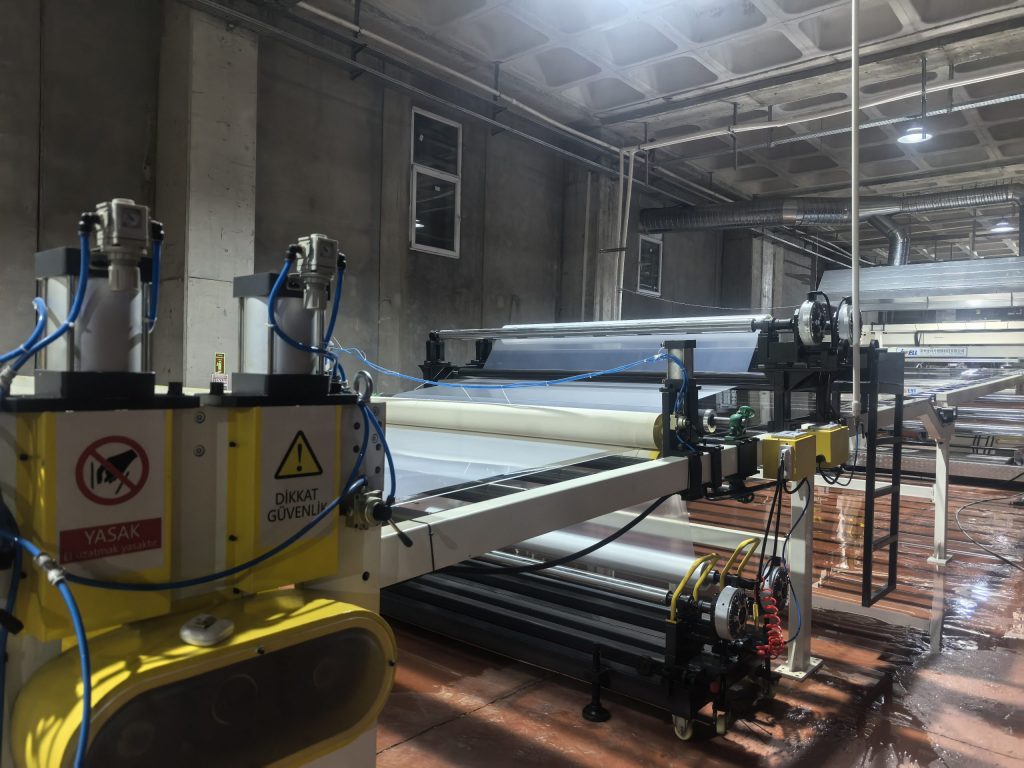
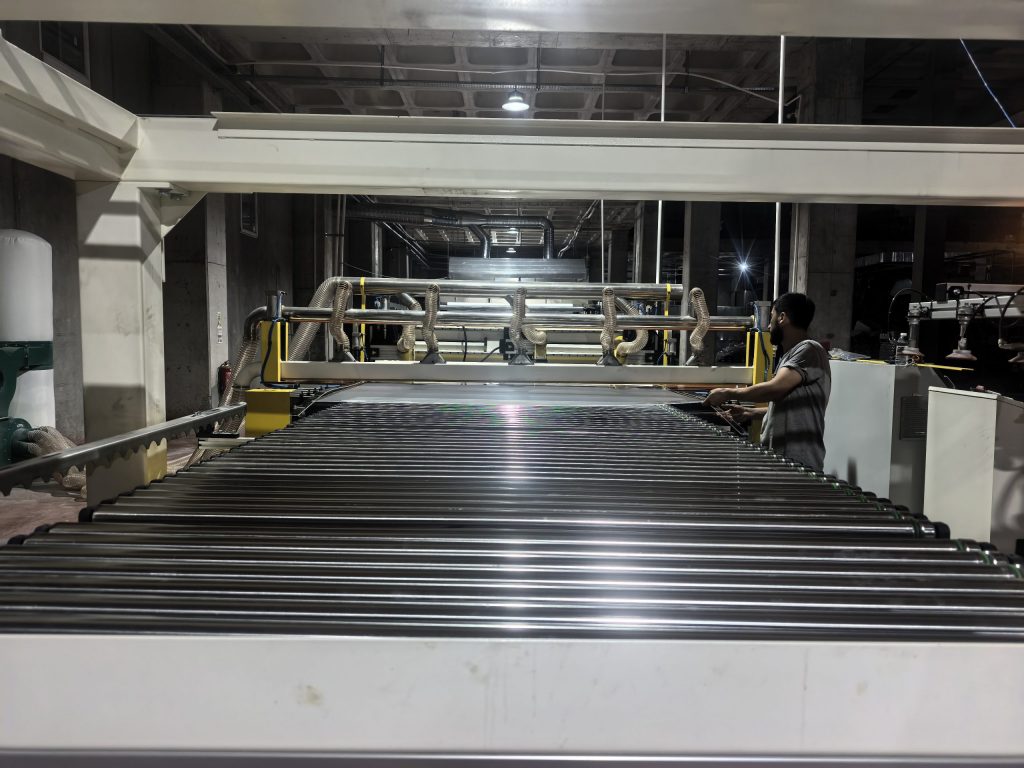
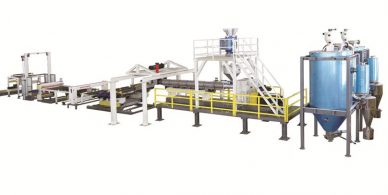
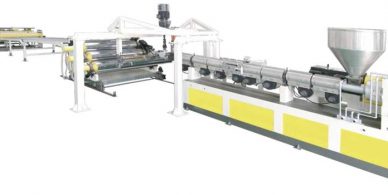
600kg/h PMMA Sheet Extrusion Line
This project involved a customized 600 kg/h PMMA (acrylic) sheet extrusion line for a client in Türkiye, integrating dedicated PMMA screw design, melt pump pressure stabilization, a 2,200 mm coat-hanger die, and a precision three-roll polishing stack to address thermal degradation, surface quality, and gauge uniformity challenges in wide acrylic sheet production.
Project Overview
- Client Region: Türkiye
- Application: PMMA (acrylic) sheet/plate extrusion
- Processed Material: PMMA pellets (virgin or recycle-blended per formulation)
- Design Capacity: ~600 kg/h
- Product Width: up to 2,200 mm
- Product Thickness: 1–12 mm (customizable per application)
- Core Extruder: High L/D single-screw extruder with a PMMA-specific barrier screw
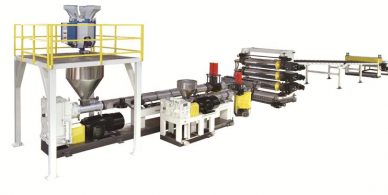
- System Configuration: Dehumidified drying and metering feeding, hydraulic screen changer, melt pump, wide coat-hanger die with flex lip, precision three-roll polishing stack with individual oil temperature control, cooling and haul-off section, automatic flying-saw cutter and sheet stacking unit (online thickness gauge optional)
Process Flow
PMMA pellets → dehumidified drying → metered feeding → single-screw extrusion → hydraulic screen changer → melt pump → coat-hanger die → three-roll polishing stack → cooling conveyor → haul-off & edge trimming → flying-saw cutting → automatic stacking → finished PMMA sheets
Customer Needs & Processing Challenges
PMMA is a typical thermal-sensitive engineering plastic with a narrow processing window. At the target width of 2,200 mm and output of 600 kg/h, the client’s main operational challenges included:
- Thermal Degradation Control: PMMA is prone to degradation and decomposition when overheated, which can cause yellowing, bubbles and silver streaks — a risk that increases at high output rates and long residence times.
- Surface Quality & Clarity: Sheet grades require a high-gloss, defect-free surface. Fish eyes, crystals, die lines and roll marks directly affect optical performance and product grade.
- Gauge Uniformity across 2,200 mm Width: Maintaining consistent thickness from edge to edge on a wide die requires precise lip profile control and stable melt pressure; uneven gauge leads to material waste and scrap.
- Internal Stress & Warpage: Especially in thicker sheets, uneven cooling can generate internal stress that causes warpage or poor flatness after cutting.
- Production Continuity: Frequent screen changes, pressure fluctuation or unstable haul-off speed interrupt production and reduce the effective output below the designed 600 kg/h.
JWELL Solution
Rather than merely supplying a single extruder, JWELL engineered a complete PMMA sheet line tailored to the melt behavior of acrylic and the optical-grade requirements of the end product. The line integrates drying, extrusion, filtration, melt stabilization, sheet forming, cooling and downstream handling as one turnkey solution:
- Drying & Feeding: Dehumidified drying of PMMA pellets before processing, combined with a metered feeding system to maintain a stable material input.
- Extrusion: A dedicated high L/D single-screw extruder with a PMMA-specific screw profile providing gentle shear and uniform melting, helping to minimize degradation and temperature overshoot.
- Filtration & Pressure Stabilization: A hydraulic screen changer removes gels, crystals and foreign particles from the melt, while a melt pump isolates the die from pressure fluctuations for stable flow.
- Sheet Forming: A 2,200 mm wide coat-hanger die with flex lip adjustment distributes the melt evenly across the full width; the melt is then shaped by a precision three-roll polishing stack with individually controlled oil heating, delivering high-gloss surfaces on both sides.
- Downstream & Handling: Multi-roll cooling, haul-off with edge trimming, a flying-saw cutter for accurate sheet length, and an automatic stacking unit for safe, efficient material handling.
Why This Configuration Works
- Gentle-Shear Screw Protects the Polymer: The PMMA-specific screw design keeps shear and melt temperature within the material’s narrow safe window, helping to reduce thermal degradation, yellowing and volatile-related surface defects even at continuous 600 kg/h operation.
- Melt Pump + Screen Changer Ensure Stable Wide-Die Feed: The screen changer removes gels and contamination without interrupting flow, while the melt pump restabilizes pressure after filtration. This is critical for keeping the melt front uniform across the 2,200 mm die — and for holding tight thickness tolerance.
- Flex-Lip Die + Polishing Stack Deliver Surface & Gauge Quality: Local lip adjustment compensates for edge-to-center gauge differences, while the highly polished, individually temperature-controlled rolls produce the mirror-like, low-stress surface expected of PMMA sheets.
- Controlled Cooling Reduces Internal Stress: The gradual, multi-stage cooling path releases heat evenly through the sheet, helping to minimize residual stress and warpage in thicker products.
- Turnkey Integration Protects Output: With feeding, extrusion and downstream synchronized under one centralized control system, the line maintains stable, continuous operation at the designed capacity with reduced labor and scrap.
On-site Commissioning & Performance
The line has been installed, commissioned and put into operation at the client’s facility in Türkiye. The system demonstrates stable operation and achieves the design capacity target of approximately 600 kg/h at up to 2,200 mm sheet width. During commissioning, the sheets showed uniform thickness distribution across the full width, high surface gloss, and no obvious die lines, crystals or bubbles. Flatness and thickness readings met the client’s engineering acceptance criteria, and the downstream cutting and stacking units ran continuously without issues.
Suitable Applications
The engineering logic and operational experience of this configuration provide a practical reference for PMMA/acrylic sheet production lines, as well as for other optically demanding sheet extrusion projects where wide width, high output, surface quality and thickness tolerance are the key requirements — covering signage, sanitary ware, building decoration, display and lighting applications.
FAQ
Q: How does the line prevent PMMA degradation and yellowing at high output?
A: Two main measures are applied. First, the dedicated PMMA screw profile provides gentle shear and uniform melting, keeping melt temperature within a safe range. Second, the melt pump and short, well-controlled die residence minimize local overheating, which helps prevent decomposition, yellowing and silver streaks during long continuous runs.
Q: How is sheet surface kept glossy and free of die lines and crystals?
A: The hydraulic screen changer removes gels and micro-contamination before the die. The wide coat-hanger die is machined and polished to a high standard, and the three-roll polishing stack uses precision-ground, mirror-polished rolls with individual oil temperature control, which determines the final surface gloss and minimizes roll marks.
Q: How is thickness tolerance maintained across a 2,200 mm wide sheet?
A: The die features flex-lip adjustment so operators can fine-tune the lip profile locally from edge to center. When combined with an optional online thickness gauge and automatic feedback to the haul-off speed, the line holds uniform gauge across the full width with minimal manual intervention.
Q: Can the line produce thicker sheets or process recycled PMMA?
A: Yes. The standard range covers approximately 1–12 mm with the cooling and haul-off sections adapted per the required thickness. The line can also be configured to run recycle-blended PMMA by adding a more robust filtration stage, making it flexible for both premium virgin and cost-effective grades.