Solution

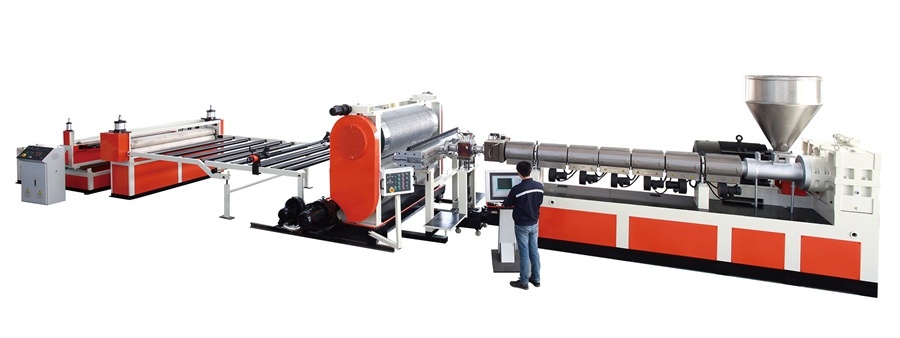
HDPE Water Drainage sheet extrusion line

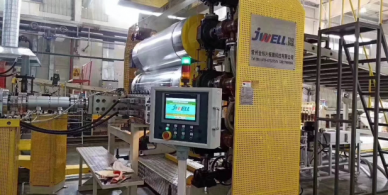
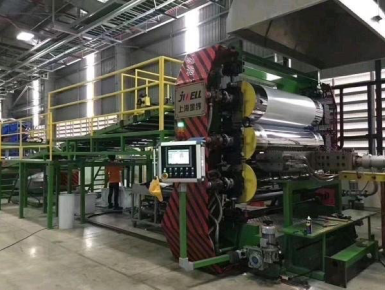
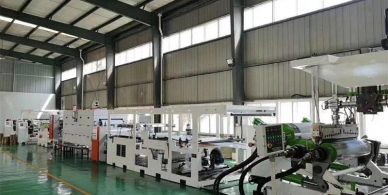
Jwell Machinery's HDPE water drainage sheet extrusion lines are designed for high-volume production of dimpled drainage boards — engineered geosynthetic panels featuring a cone-salient (dimpled) surface structure that provides superior water drainage, pressure resistance, and moisture management. With output capacities of 600 to 1,000 kg/h and sheet widths up to 5,000 mm, our extrusion systems serve manufacturers supplying the building construction, civil engineering, landscaping, and infrastructure industries worldwide.

Water drainage sheets produced on Jwell extrusion lines replace traditional gravel and stone drainage layers, offering significant advantages in installation speed, weight reduction, long-term performance, and cost efficiency. Made from high-density polyethylene (HDPE), these dimpled panels channel water away from structures while resisting root penetration, chemical degradation, and long-term compressive loads.
What Is a Water Drainage Sheet (Dimple Board)?

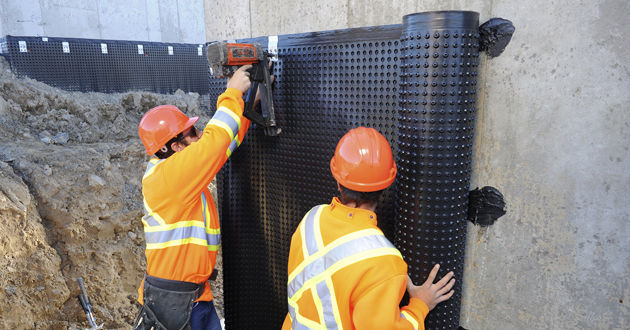
A water drainage sheet, also known as a dimpled drainage board or drainage mat, is a geosynthetic panel made from HDPE through a specialized extrusion and vacuum-forming process. The sheet features an array of cone-shaped protrusions (dimples) on one or both sides, creating channels that allow water to flow freely while the flat back provides structural support against soil and concrete.

When combined with a geomembrane liner and geotextile filter fabric, water drainage sheets create a complete drainage and waterproofing system that protects underground structures from hydrostatic pressure, prevents water infiltration, and maintains proper moisture levels in green roof applications.

Jwell Water Drainage Sheet Extrusion Line Models

Model JWS120 — Standard-Width Dimple Board Production

The JWS120 produces water drainage sheets in widths from 2,000 to 3,000 mm with a sheet thickness range of 0.5 to 3 mm. With a production capacity of 600 kg/h, this model is ideal for manufacturers serving residential and commercial building projects, including basement waterproofing, green roof systems, and landscaping drainage applications. The compact footprint makes it suitable for medium-scale production facilities.

Model JWS150 — Wide-Format High-Capacity Production

The JWS150 is Jwell’s flagship water drainage sheet extrusion line, capable of producing sheets up to 5,000 mm wide — one of the widest formats available in the industry. With the same 0.5–3 mm thickness range and an increased output of 1,000 kg/h, the JWS150 is designed for high-volume manufacturers supplying large-scale infrastructure projects including tunnel waterproofing, highway sub-drainage, landfill liner systems, and railway construction.

Technical Specification

How Does a Water Drainage Sheet Extrusion Line Work?

The production process involves five key stages:

  1. Extrusion: HDPE resin pellets are fed into a single-screw extruder, melted, and homogenized at controlled temperatures (typically 180–230°C). The molten polymer exits through a precision T-die as a flat sheet.
  2. Dimple Forming: The heated flat sheet passes over a vacuum-embossing roller containing the dimple mold pattern. Vacuum suction draws the softened HDPE into the mold cavities, forming the characteristic cone-salient protrusions. The roller is water-cooled to partially solidify the formed dimples.
  3. Calibration & Cooling: The dimpled sheet passes through a secondary cooling system — either water-cooled rollers or a water bath — to fully solidify the panel and lock in the dimensional accuracy of each dimple.
  4. Haul-Off & Cutting: Rubberized haul-off rollers pull the sheet at a synchronized speed. A guillotine cutter or flying knife cuts the continuous sheet to the specified length, or a tension-controlled winder rolls the product for coiled delivery.
  5. Stacking & Packaging: Cut boards are automatically stacked, counted, and packaged. For coiled products, the rolls are wrapped and labeled for shipment.
Model JWS120 JWS150
Products Width(mm) 2000~3000 2000~5000
Sheet thickness (mm) 0.5~3 0.5~3
Capacity( kg/h) 600 1000

Applications of Water Drainage Sheets

Building & Underground Construction

  • Basement & foundation waterproofing — Installed against exterior foundation walls to channel groundwater to perimeter drainage systems, reducing hydrostatic pressure and preventing basement flooding
  • Underground parking garages — Applied to tunnel and garage walls to intercept seepage and protect structural concrete from water damage
  • Retaining walls — Placed behind retaining structures to relieve lateral earth pressure and prevent water buildup
  • Roof gardens & green roofs — Laid beneath the soil layer to drain excess rainwater while retaining enough moisture for plant growth; also functions as a root barrier

Civil Engineering & Infrastructure

  • Tunnel & subway waterproofing — Applied along tunnel linings to divert seepage water into drainage pipes, protecting shotcrete and structural elements
  • Highway & railway sub-drainage — Installed under pavement layers to remove groundwater, preventing subgrade saturation and frost damage
  • Bridge decks & abutments — Protects structural elements from water infiltration and freeze-thaw cycles

Landscaping & Environmental

  • Sports fields & golf courses — Provides subsurface drainage to prevent waterlogging and maintain turf quality
  • Landfill liner systems — Combined with geomembranes to create leachate collection layers
  • Plaza decks & planter boxes — Ensures proper drainage in urban hardscape installations
  • Slope stabilization — Reduces pore water pressure in embankments, mitigating slope erosion and landslides

Video

Why Choose Jwell for Your Water Drainage Sheet Extrusion Line?

In-House Manufacturing — Complete Quality Control

Jwell manufactures all critical components in-house, including machine barrels, screws, T-die heads, forming rollers, and calender rollers. This vertical integration gives us full control over quality from engineering design through final installation and commissioning — a critical advantage for the precise vacuum-forming process required by dimpled drainage boards.

German-Comparable Quality at 30% Lower Cost

Jwell water drainage sheet extrusion lines deliver performance comparable to top European extruder brands at significantly more competitive pricing. Our customers typically save up to 30% compared to equivalent German equipment, making it possible to achieve a faster return on investment.

Global Service Network & 500+ Engineers

With sales and service offices in Turkey, Vietnam, Thailand, Brazil, and Canada, and a team of over 500 plastic engineers worldwide, Jwell provides comprehensive support from line design and factory acceptance testing (FAT) through installation supervision, operator training, and ongoing technical assistance.

Remote Monitoring & Spare Parts Availability

Jwell’s cloud-based remote monitoring system tracks machine status in real time, enabling proactive maintenance and minimizing unplanned downtime. Nearly all critical spare parts are kept in stock for fast delivery worldwide.

25+ Years of Extrusion Expertise

Since 1997, Jwell has installed thousands of extrusion lines in over 100 countries. Our deep experience with HDPE materials and vacuum-forming technology ensures you receive a production line optimized for the specific requirements of dimpled drainage board manufacturing.


FAQ Content

1. What is an HDPE water drainage sheet (dimple board)? Product Definition

An HDPE water drainage sheet, also called a dimpled drainage board or drainage mat, is a geosynthetic panel made from high-density polyethylene through extrusion and vacuum-forming. It features an array of cone-shaped protrusions (dimples) that create channels for water to flow freely away from structures. The flat back provides structural support against soil pressure. When combined with a geomembrane and geotextile fabric, it forms a complete drainage and waterproofing system used in basements, green roofs, tunnels, and retaining walls.

2. What is the production capacity of a water drainage sheet extrusion line? Capacity

Production capacity depends on the model and sheet width. Jwell’s JWS120 model produces up to 600 kg/h for sheets 2,000–3,000 mm wide, while the JWS150 model achieves 1,000 kg/h for sheets up to 5,000 mm wide. Capacity is influenced by sheet thickness (0.5–3 mm), dimple height, raw material grade, and line speed. Wider lines with larger screw diameters (150–160 mm) naturally achieve higher throughput.

3. What raw materials are used for water drainage sheet production? Materials

Water drainage sheets are primarily produced from HDPE (high-density polyethylene) resin pellets. Virgin HDPE grades with high melt flow index are preferred for maximum stiffness and pressure resistance. Many manufacturers also use recycled HDPE — either 100% recycled or blended with virgin resin at ratios of 70–100% recycled content — to reduce raw material costs. Polypropylene (PP) is an alternative material for specialized applications. Mineral-filled HDPE compounds can be used for enhanced stiffness in load-bearing drainage applications.

4. What is the difference between single-sided and double-sided dimpled drainage sheets? Product Types

Single-sided dimpled drainage sheets have cone protrusions on one side with a flat back, designed for installation against smooth surfaces like concrete walls or geomembranes — the dimples face the soil to channel water. Double-sided sheets feature dimples on both sides, used when drainage is needed between two soil layers or when bidirectional water flow is required. Single-sided is the most common type for building waterproofing, while double-sided is used in specialized civil engineering applications such as landfill leachate collection and highway sub-drainage.

5. What are the applications of water drainage sheets? Applications

Water drainage sheets are used across multiple sectors: Building construction — basement waterproofing, green roofs, roof gardens, underground parking, and retaining walls; Civil engineering — tunnel and subway waterproofing, highway and railway sub-drainage, bridge decks; Landscaping — sports fields, golf courses, plaza decks, slope stabilization; Environmental — landfill liner systems and leachate collection. The product replaces traditional gravel drainage layers in all these applications.

6. How does a dimple drainage sheet compare to traditional gravel drainage? Comparison

HDPE dimple drainage sheets offer significant advantages over traditional gravel drainage: they are lightweight (reducing building load), faster to install (no manual stone placement), thinner in profile (8–25 mm vs. 200–300+ mm for gravel), and do not settle or clog over time. Quality is consistent due to automated extrusion, and labor costs are substantially lower. Gravel drainage requires heavy material transport, thick filter layers, and can compact or clog with soil fines over time, reducing long-term drainage effectiveness.

7. How much does a water drainage sheet extrusion line cost? Pricing

The price of a water drainage sheet extrusion line depends on the model, width capacity, and level of automation. A standard JWS120 line (2,000–3,000 mm width, 600 kg/h) typically ranges from $80,000 to $150,000 USD. The high-capacity JWS150 line (up to 5,000 mm width, 1,000 kg/h) ranges from $150,000 to $300,000 USD. Jwell’s pricing is approximately 30% lower than equivalent European brands while maintaining comparable quality. Contact our sales team for a detailed quotation tailored to your specific production requirements.

8. What dimple height and patterns are available for drainage sheets? Specifications

Standard dimple heights range from 6 mm to 20 mm, with some specialized applications requiring heights up to 40 mm. The dimple pattern (spacing, diameter, and arrangement) is determined by the vacuum-embossing roller mold, which is custom-machined to the customer’s specifications. Common dimple heights are 8 mm (light-duty, green roofs), 12 mm (standard, basements), and 16–20 mm (heavy-duty, tunnels and high-load applications). The forming roller can be exchanged to produce different dimple profiles on the same extrusion line.

9. Can the extrusion line produce drainage sheets with geotextile

lamination? Versatility

Yes, Jwell water drainage sheet extrusion lines can be equipped with an optional geotextile lamination unit. This downstream module bonds a non-woven filter fabric to the dimpled sheet surface in-line, creating a geocomposite drainage product. The geotextile layer prevents soil particles from entering the drainage channels while allowing water to pass through. This integrated production capability eliminates the need for a separate lamination process and reduces manufacturing costs for customers producing geocomposite drainage products.

10. How do I choose the right water drainage sheet extrusion line for my business? Buying Guide

Choosing the right line depends on five factors: (1) Target markets — building construction (2,000–3,000 mm width is typical) vs. civil engineering (3,000–5,000 mm for highways, tunnels); (2) Dimple specifications — required height (6–20 mm), single or double-sided; (3) Production capacity — 600 kg/h for medium-scale or 1,000 kg/h for high-volume operations; (4) Material strategy — virgin HDPE only or recycled content blends; (5) Output format — cut boards or coiled rolls, with or without geotextile lamination. Contact Jwell’s application engineers for a free consultation and customized line configuration.

Jwell Trusted By

Why Choose Jwell

  • High Quality Jwell Machinery Co.,Ltd machine barrels , screws , T-die and roller all by ourselves , we control the machine quality from drawing design to final installation.
  • Save Your 30% Money Comparable to the quality of Top Germany’s extruders , reasonable affordable prices . High effective single screw extruders and twin screw extruders .
  • Global Sales Service Jwell Machinery Co.,Ltd has sales office in Turkey , Vietnam , Thailand , Brazil , Canada , there are over 500 plastic engineers serve Jwell customer all over the world .
  • On Time Delivery Of Spare Parts Jwell Machinery Co.,Ltd has almost all key parts of our products in stock and We remotely monitor the cloud status of the machine and provide timely maintenance suggestions ,we promise your extruder will never stop running .

Get A Free Quote