Frequently Asked Questions
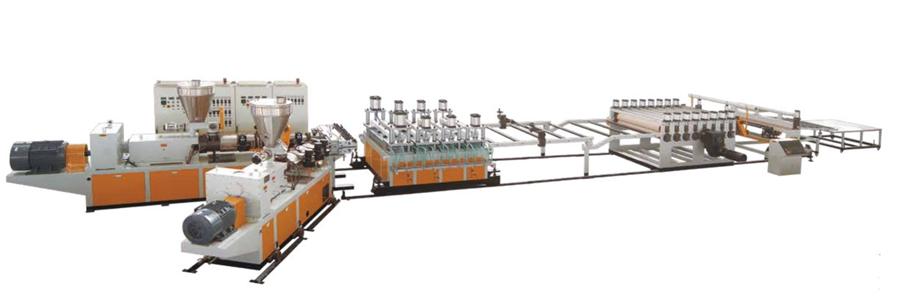
Everything you need to know about PVC skinning foaming sheet extrusion lines
What is PVC skinning foaming sheet and what makes it special?
+
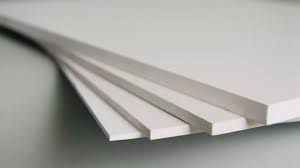
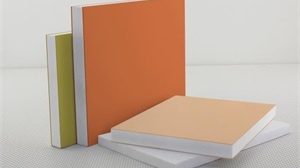
PVC Skinning Foaming sheet — also known as CELUKA hybrid foam board, solid-skinned PVC foam, or free-foam with skinning — is an advanced material produced through a hybrid extrusion process that merges the best of two worlds: the lightweight, insulating core of free-foamed PVC and the hard, smooth surface of Celuka (skinming-foamed) PVC. The resulting product has surface hardness that falls between conventional free-foam and full-skinning foam boards.
⚖️
Balanced Hardness
Harder than free-foam
Smoother than standard Celuka
Print & laminate ready
🪶
Lightweight Core
Density 0.35~0.8 g/cm³
Thermal insulating
Easier to transport & install
🛡️
Durable & Safe
Fire retardant (B1 rated)
100% waterproof & rot-proof
Chemical resistant
Key Properties at a Glance:
- Fire Safety: Self-extinguishing; available in B1/Euroclass fire-rated grades for building compliance
- Waterproof: Zero water absorption — will not rot, swell, warp, or support mold growth
- Fabrication Friendly: Cut, saw, nail, screw, route, drill, heat-bend, print, laminate, weld, emboss
- Thermal & Acoustic Insulation: Closed-cell foam core provides effective thermal barrier and sound dampening
- Surface Versatility: Accepts paint, laminate, veneer, hot-stamping, film coating, digital printing directly
- Recyclable: 100% recyclable Grade 3 PVC; production scrap fully reprocessable
- Cost Effective: Replaces wood, aluminum, MDF, plywood, gypsum at lower lifecycle cost
🔵 Semi-Skinning Foaming (半结皮)
Single-extruder • Moderate surface hardness • Uniform foamed core • Cost-efficient • Models: SJZ 80/156, SJZ 92/188
🟢 Core-Layer Foaming (芯层共挤)
Dual-extruder co-extrusion • Dense outer skins • Premium strength-to-weight • Superior acoustic insulation • Model: SJZ80/156+SJZ65/132
What models and technical specifications does Jwell offer?
+
Jwell offers four standard configurations covering different production scales and process types:
| Specification |
SJZ 80/156
Semi-Skinning |
SJZ 92/188
Semi-Skinning |
SJZ 92/188
Semi-Skinning |
SJZ80+65
Core-Foam Coex |
| Sheet Width (mm) |
1,220 |
1,560 |
2,050 |
1,220 |
| Thickness (mm) |
5 – 20 |
8 – 18 |
8 – 15 |
5 – 20 |
| Output (kg/h) |
400 |
550 |
550 |
500 |
| Extruder Type |
Single Conical Twin-Screw (SJZ Series) |
Dual Twin-Screw
Co-extrusion |
| Control System |
Siemens PLC + ABB Inverter |
💡 Custom Options Available: Max width up to 2,500 mm • Inline embossing unit (wood grain / leather / custom texture) • Thermal film lamination station • UV coating module • Automatic stacking/flying shear cutting • Recipe data logging system.
What is the difference between semi-skinning and core-layer foaming?
+
Jwell offers two distinct process technologies, each optimized for different end-product requirements:
| Characteristic |
Semi-Skinning Foaming
(半结皮发泡) |
Core-Layer Foaming
(芯层发泡共挤) |
| Extruder Configuration |
Single twin-screw extruder |
Dual extruder co-extrusion |
| Internal Structure |
Uniformly foamed throughout entire cross-section |
Dense solid skins + highly foamed core layer |
| Surface Hardness |
Moderate (between free-foam & full Celuka) |
High (dense outer skins) |
| Strength-to-Weight Ratio |
Good |
Excellent (best-in-class) |
| Sound Insulation |
Good |
Superior (best-in-class) |
| Equipment Cost |
Lower (single extruder) |
Higher (dual extruder + complex die) |
| Operation Complexity |
Simple (one material feed) |
More parameters to control (skin/core ratio) |
| Best Applications |
General-purpose boards,
advertising substrates,
cost-driven markets |
Premium furniture panels,
automotive interiors,
high-end construction |
Bottom line: Choose semi-skinning for cost-effective, easy-to-operate volume production. Choose core-layer co-extrusion when surface hardness, mechanical strength, and acoustic performance are worth the additional investment.
What raw materials can be used on these extrusion lines?
+
Jwell PVC skinning foam lines are engineered for maximum formulation flexibility:
🧪 Base Polymer (树脂基料)
Virgin PVC Resin: SG-5 (K-value 66-68, most common), SG-7 (K-value 57-59), SG-8 (K-value 52-54 for low-temp processing).
Recycled PVC: Regrind from pipe, profile, window frame, sheet waste — cleaned, metal-detected, size-reduced. Up to 30-50% recycled content possible.
🔥 Stabilization System (稳定体系)
Heat Stabilizers: Calcium-Zinc (Ca/Zn, eco-friendly) or Tin (Methyltin, excellent heat stability). Dosage: 2–5 phr.
Lubricants: Internal (Paraffin wax, stearic acid) + External (PE wax). Balance critical — too much causes delamination; too little causes plate-out.
🫧 Foaming System (发泡体系)
Blowing Agent: AC (Azodicarbonamide) most common, decomposition temp 200-220°C; Exothermic blends for finer cells. Dosage: 0.3–0.8 phr.
Nucleating Agent: Zinc stearate, TiO₂ — control cell size/uniformity. Smaller uniform cells = better quality.
💪 Property Modifiers (性能改性剂)
Impact Modifier: CPE or MBS/Acrylic — improve toughness. Dosage: 5–12 phr.
Processing Aid: Acrylic processing aids — improve melt strength, enhance surface gloss. Dosage: 1–3 phr.
Filler: Calcium carbonate (CaCO₃) — reduces cost, increases stiffness. Dosage: 5–20 phr.
🎨 Optional Functional Additives (可选功能助剂)
Flame Retardant: Antimony trioxide + chlorinated paraffin (enhanced B1 rating) • UV Stabilizer: HALS + UV absorber (outdoor 5+ years) • Pigment/Masterbatch: Any color, white (TiO₂) most common • Antistatic Agent: Electronic packaging • Fungicide: Tropical/humid climate use
✅ Jwell Formulation Support: Our R&D lab helps develop/optimize your PVC foam formulation for target density, hardness, color, and cost-per-kilogram.
What industries and applications use PVC skinning foamed sheets?
+
PVC skinning foamed sheet has become a cross-industry replacement material across virtually every sector:
🏗️ Building Decoration & Interiors
Wall panels • Ceiling tiles • Partition walls • Bathroom/Kitchen wet-wall panels • Door skins • Window sills • Baseboards • Cabinet carcass • Kitchen backsplash
📢 Advertising & Signage
Exhibition booth construction • POP/POS displays • Screen-printed sign boards • Digital printing substrate • Light box diffusers • Wayfinding signs • Engraved plaques
🪑 Furniture & Joinery
Cabinet doors • Drawer fronts • Wardrobe components • Office desk surfaces • Shelving systems • Bed headboards • TV stand carcass • Furniture templates
🚗 Automotive & Transportation
Interior trim panels • Headliner substrate • Door panel inserts • Dashboard components • Trunk liner • RV interior walls • Marine bulkheads • Train compartments
📦 Industrial & Packaging
Concrete formwork (reusable 60+ cycles) • Pallet slip sheets • Protective dunnage • Reusable export crates • Cleanroom walls • Electrical barriers
🏠 Specialized Markets
Modular/prefabricated housing panels • Cold storage room walls • Swimming pool surrounds • Laboratory benchtops • Hospital hygienic panels • Soundproofing studio panels
🌍 Market Growth Note: Global PVC foam board market growing at 6-8% CAGR since 2010, driven by urbanization, green-building codes favoring recyclables, and wood/gypsum substitution.
Can the extrusion line be customized for specific requirements?
+
Absolutely. Every Jwell PVC skinning foam line is built to order with extensive customization options:
1
Sheet Width Customization
Standard max 2,050 mm → customizable up to 2,500 mm. Wider formats reduce edge waste per shift.
2
Thickness Range Extension
Standard 5-20 mm → configurable from 3 mm ultra-thin (signage) up to 25 mm heavy-duty (formwork).
3
Inline Surface Embossing Unit
Add embossing calibrator for wood grain, leather texture, stone pattern, or custom logo. Eliminates secondary off-line operations.
4
Inline Film Lamination Station
Thermal lamination applies PVC decorative film, PET laminate, or PE overlay while sheet is warm — superior bond strength vs. off-line.
5
UV Curing / Top-Coat Module
Integrated UV coating applies scratch-resistant glossy/matte topcoat cured instantly. Enables furniture-grade finishes without painting.
6
Cutting & Stacking System
Choose flying shear cutter (continuous, auto-stack) or manual guillotine (lower investment, flexible length).
7
Automation & Data Logging
Upgrade to full PLC+HMI touch-screen with recipe storage (50+ formulations), SPC charts, Ethernet MES/ERP connectivity, cloud remote monitoring.
How does the PVC skinning foam extrusion process work?
+
The complete manufacturing process follows seven tightly-controlled stages:
- Material Premixing (配方混料)
PVC resin, stabilizers, lubricants, blowing agents, modifiers, fillers precisely weighed then blended in a high-speed hot/cooler mixer. Hot mixing to 115-125°C to gelatinize PVC; cooling to 40-45°C to prevent premature blowing agent activation.
- Feeding & Plastication (喂料塑化)
Dry blend feeds into a conical twin-screw extruder (SJZ series) via gravimetric/volumetric feeder. Heated barrel (typical: 140→170→185→190→185°C from feed to die) melts, homogenizes, and activates blowing agent. Precise temperature control critical — too hot degrades PVC; too cool = incomplete foaming.
- Die Shaping (模头成型)
Molten foaming compound exits through a precision coat-hanger T-die shaping into continuous flat sheet with uniform residence time and pressure distribution. For co-extrusion models, multi-manifold T-die combines separate skin/core melt streams.
- Calibration & Skin Formation (定型结皮) ⭐ Key Stage
The hot sheet enters vacuum calibration/sizing tank — where the signature “skinning” effect occurs. Sheet surfaces contact cooled metal plates under vacuum suction, rapidly chilling outer layers into dense solid skin while interior core continues expanding. This hybrid approach gives the product its unique intermediate hardness.
- Cooling & Dimension Setting (冷却定型)
Sheet passes through multi-zone spray cooling tanks (2-3 stages, progressively colder) followed by cooling rollers bringing to ambient temperature, locking dimensions and setting cellular structure permanently.
- Haul-Off & Thickness Control (牵引定厚)
Rubberized nip roller haul-off pulls sheet at controlled speed. Output rate ÷ haul-off speed = final thickness. Closed-loop thickness feedback (laser/ultrasonic gauge) auto-adjusts to maintain ±0.08mm tolerance.
- Cutting or Winding (切割/收卷)
Thick boards (≥5mm): flying shear saw cutter cuts to programmed length → auto-stacker. Thin gauge (<5mm): turret winder collects into rolls for later conversion.
🖥️ Process Monitoring: Every stage supervised by Siemens PLC + HMI displaying real-time data: barrel temperatures (8-12 zones), screw RPM, motor load %, melt pressure, vacuum level, cooling water temp, haul-off speed, thickness reading, production counter.
What is the delivery timeline and installation process?
+
Phase 1
Order → Ex-Factory Ready
50–65 days
Fabrication, assembly, factory acceptance test (FAT), trial run with sample material if provided
Phase 2
Ocean Freight (Shanghai)
7–35 days
NA/EU 25-35d · SE Asia/Middle East 7-15d · S. America 35-45d · Africa 30-40d
Phase 3
Customs & Local Delivery
5–15 days
Import customs clearance, duty payment, inland freight to your factory gate
Phase 4
On-Site Installation
18–28 days
Foundation prep → Machine positioning → Mechanical connection → Electrical wiring & PLC setup → Water circuit piping → Vacuum tuning → Test run → Training → Sign-off
🌍 Global Footprint
Exported to 120+ countries. Local partners in Turkey, Vietnam, Thailand, Brazil, Canada, Mexico, Egypt, Indonesia, and more.
⏰ Planning Recommendation
Place orders 3.5–4 months ahead of planned production start date. Extra buffer prevents last-minute rush.
Common production problems and solutions?
+
The six most frequently encountered production challenges with proven remediation steps:
01
Uneven Skin Layer Thickness
Cause: Asymmetric vacuum calibration plate contact or uneven cooling water spray distribution between upper/lower surfaces
Fix: Re-level calibration plates with feeler gauges; balance water spray nozzles equally; verify vacuum level uniformity; check plate surface temperature evenness
02
Surface Roughness / Pitting / Orange Peel
Cause: Melt temperature too low for adequate gloss development, or internal/external lubricant imbalance causing poor metal-release from calibration plates
Fix: Raise barrel temperature 3-5°C near die exit; adjust external lubricant (PE wax +0.2-0.3 phr); clean calibration plate surface
03
Irregular Cell Structure (Large Cells, Collapse, Void Bands)
Cause: Blowing agent decomposing too early/non-uniformly; inadequate nucleation; screw dead spots where gas escapes unevenly
Fix: Optimize temperature profile to position activation zone correctly; add nucleating agent (ZnSt 0.1-0.3 phr); verify AC particle size (<15μm) and dispersion; check worn screw flights
04
Sheet Warping, Bowing, or Curling
Cause: Differential cooling between top/bottom surfaces creating asymmetric shrinkage stress locked into the sheet
Fix: Balance cooling tank water temperature on both sides equally; adjust individual roller temperatures symmetrically; ensure haul-off nip pressure even on upper/lower rollers
05
Density Fluctuation (Inconsistent Weight/m²)
Cause: Feeder throughput inconsistency, VFD instability, air entrapment in dry blend causing momentary under-feeding
Fix: Verify gravimetric feeder accuracy ±0.5% and recalibrate; check VFD frequency stability (±0.1 Hz); inspect hopper for bridging — install agitator if needed
06
Discoloration / Yellowing of Sheet Surface
Cause: Excessive thermal history (overheating/prolonged residence), insufficient stabilizer, pro-degradant contaminants in recycled material
Fix: Reduce max barrel temperature 5-10°C near die; increase stabilizer dosage 0.3-0.5 phr; reduce screw speed; test recycled purity — limit ABS/PET/rubber contaminants
🛠️ Need Help? Contact +86 18851202565 or [email protected] for troubleshooting guides, video consultations, and on-site diagnostics.
Why choose Jwell? Warranty, training & after-sales support?
+
Yes — Jwell provides comprehensive lifetime partnership support:
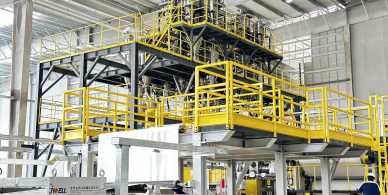
🏭 In-House Core Component Manufacturing
Jwell designs and manufactures ALL core components internally: barrels, screws, T-dies, calibration molds, vacuum tanks, cooling rollers. From metallurgy to CNC machining to assembly — full quality traceability. Result: German-quality at ~30% lower total machine cost.
🌍 Global Service Network — 120+ Countries
Sales & engineering offices in Turkey, Vietnam, Thailand, Brazil, Canada. Over 500 plastic engineers worldwide ready for installation, training, maintenance, emergency response. Expert support wherever you are.
🔬 Proprietary Hybrid Skinning-Free-Foam Technology
Developed through 20+ years of focused R&D on PVC foam technology. Purpose-engineered hybrid process delivering surface hardness balance competitors struggle to replicate.
📊 Proven Record Since 1997 — Trusted Globally
80+ lines in North America alone. Thousands of machines across 100+ countries. Critical spare parts stocked for same-day/next-day dispatch.
Full After-Sales Coverage:
🛡️
12-Month Full Warranty
All mechanical & electrical components covered. Free parts during warranty.
👷
Installation & Commissioning
Engineers travel to your facility for complete setup and trial run with your material.
📚
Operator Training Program
Hands-on: daily operation, formulation basics, maintenance, safety, troubleshooting (3-5 days on-site).
🧪
Formula Development Support
Our lab develops/optimizes your PVC foam formulation for density, hardness, color, cost-efficiency.
Ready to Start Your PVC Foam Board Production?
Contact us today for a free quote, technical consultation, or factory visit arrangement.
Still Have Questions?
Our PVC foam extrusion experts are ready to help you find the perfect production solution.
Get Your Free Quote →