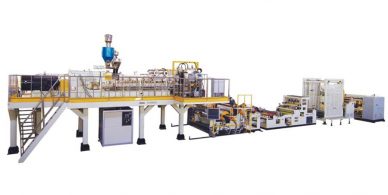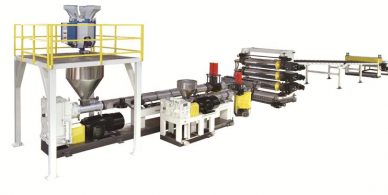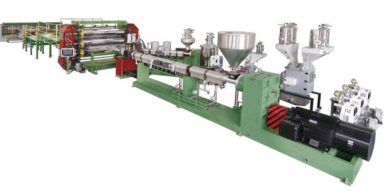
Solution
JWELL parallel twin screw extrusion line for PET sheet is engineered to produce high-quality APET, rPET, PETG, CPET, and PLA sheets for the thermoforming packaging industry. Unlike conventional single-screw PET extrusion lines that require expensive crystallizing hoppers and dehumidifying dryers, JWELL's twin screw design incorporates a built-in high-efficiency vacuum degassing system that removes moisture and volatile gases directly from the polymer melt during extrusion — eliminating the predrying step entirely and reducing energy consumption by up to 40%.
Every critical component — barrels, segmented screws, T-die, and symmetrical thin-wall calender rollers — is designed and manufactured in-house by JWELL, ensuring full quality control from engineering through final commissioning. The extrusion line features a multi-component dosing feeder that precisely controls the ratio of virgin PET resin, recycled bottle flakes, color masterbatch, and functional additives. This enables producers to optimize material costs while maintaining consistent sheet quality and meeting food-grade packaging standards.
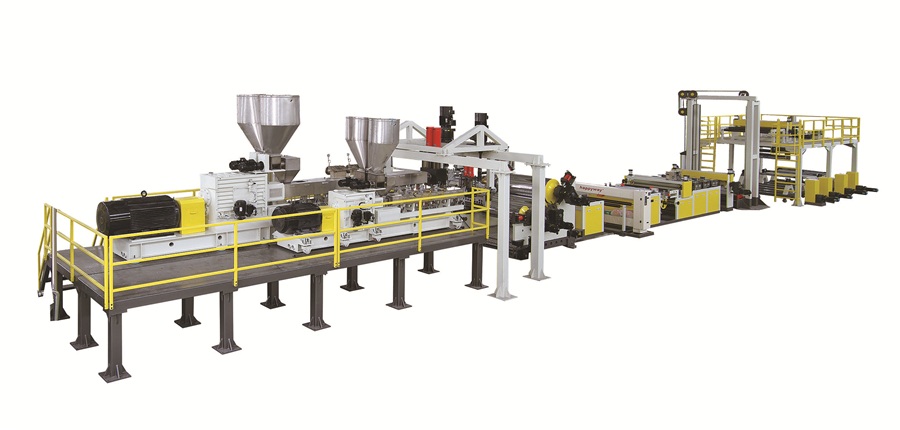
PET (Polyethylene Terephthalate) sheet twin screw extrusion is a specialized polymer processing method that uses two parallel intermeshing screws rotating inside a heated barrel to melt, mix, devolatilize, and extrude PET-based materials into flat sheets. The twin screw configuration provides several critical advantages over single-screw extrusion for PET processing.
PET is a hygroscopic material that readily absorbs atmospheric moisture. In conventional processing, this moisture must be removed by predrying the resin for 4–6 hours at 160–180°C using a crystallizer and dehumidifying dryer — equipment that typically consumes 50–100+ kW of additional energy. If moisture is not adequately removed, PET undergoes hydrolysis during melting, which reduces molecular weight, causes brittleness, and creates bubbles that destroy sheet clarity.
JWELL’s twin screw extruder solves this problem with an integrated vacuum degassing system. As the twin screws convey and melt the PET material, multiple venting ports along the barrel extract moisture vapor and volatile compounds under vacuum before the melt reaches the T-die. The long screw L/D ratio (typically 44:1) provides sufficient residence time for thorough devolatilization. This technology enables direct processing of recycled PET bottle flakes with variable moisture content — something single-screw lines cannot achieve reliably.
APET is the most widely used PET sheet grade for thermoforming packaging. It offers excellent optical clarity and gloss, good impact resistance, and effective barrier properties against moisture and gases. APET sheets are used for transparent food containers, clamshell packs, salad boxes, bakery trays, blister packaging, and retail display packaging. Its maximum service temperature is 60–70°C, making it suitable for refrigerated and room-temperature food applications.
rPET sheets are produced from post-consumer recycled PET bottle flakes, supporting circular economy and sustainability initiatives. JWELL’s twin screw extrusion line processes up to 100% recycled content while maintaining high sheet clarity and consistent quality through superior mixing and degassing. rPET sheets are increasingly demanded by brand owners and retailers for food packaging as part of corporate sustainability commitments and packaging regulations.
PETG incorporates glycol into the PET polymer chain, resulting in a material with superior impact resistance, better formability, and lower sealing temperature compared to standard PET. PETG is commonly used as a co-extruded cap layer in three-layer GAG (PETG/APET/PETG) sheets, where the PETG outer layers provide excellent sealing strength and impact protection while the APET core layer maintains clarity and structural rigidity.
CPET has a fully crystalline structure that makes it opaque (matte-white appearance) but enables it to withstand temperatures up to 200°C. This makes CPET the standard material for microwave-safe and oven-ready food trays used in ready-meal and convenience food packaging. CPET trays maintain dimensional stability during heating and can transition directly from freezer to microwave or conventional oven.
PLA is a biodegradable thermoplastic derived from renewable resources such as corn starch or sugarcane. JWELL’s twin screw line also processes PLA sheets for eco-friendly food packaging applications where compostability and reduced environmental impact are priorities. PLA sheets offer good clarity and are suitable for cold food packaging, disposable cups, and produce containers.
| Model | Extruder model | Sheet thickness
(mm) |
Main Motor Power
(kw) |
Capacity
(kg/h) |
| Multi layer | CJWH85/44+CJWH52/40 | 0.15~1.5 | 160/55 | 600~800 |
| Single layer | CJWH85/44 | 0.15~1.5 | 160/200 | 500~800 |
| High efficient | CJWH95/44 | 0.15~1.5 | 250/315 | 1000~1200 |
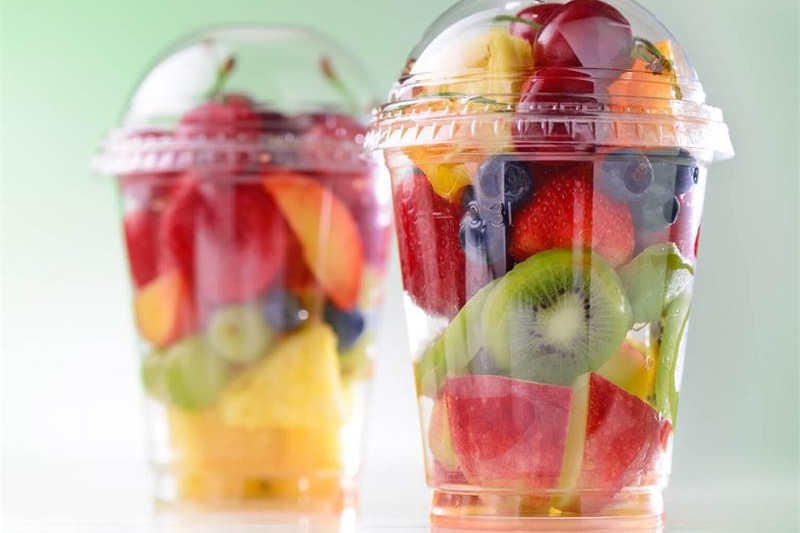
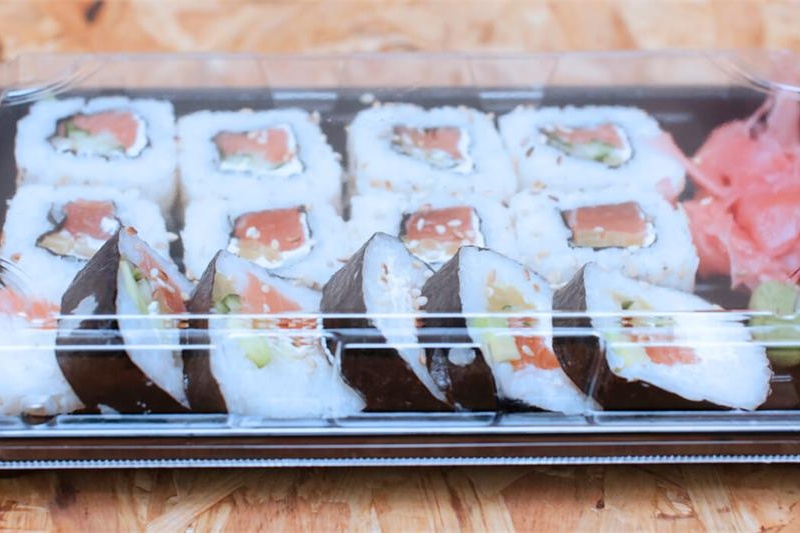
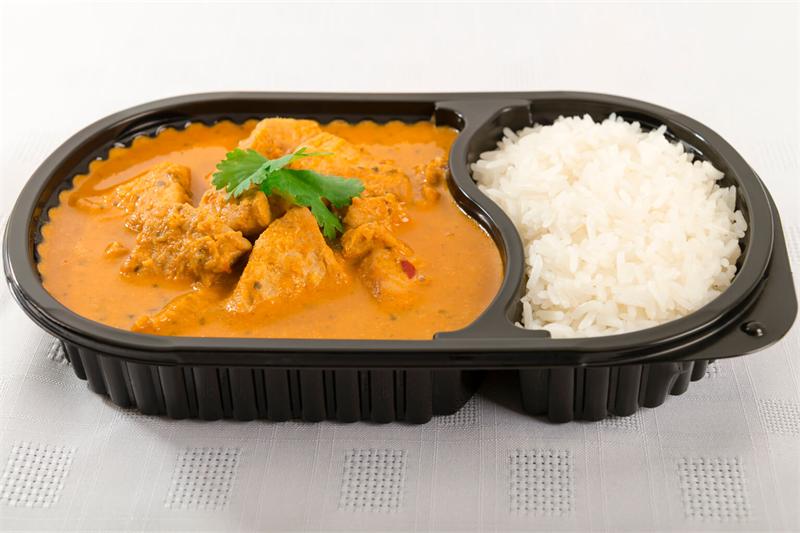
PET sheets produced by JWELL’s twin screw extrusion line serve manufacturers across the global thermoforming packaging industry:
JWELL manufactures all critical components in-house — including barrels, segmented screws, T-die, and calender rollers — giving complete control over material quality, machining precision, and final assembly. This vertical integration is especially important for PET processing, where screw geometry and die design directly impact degassing efficiency and sheet clarity.
JWELL’s twin screw extrusion line eliminates the crystallizer and dehumidifying dryer that conventional PET lines require, reducing electricity consumption by up to 40%. This also simplifies the production process, reduces factory floor space requirements, and lowers maintenance burden by removing two major equipment systems from the line.
The superior mixing and degassing of the twin screw design enables reliable processing of up to 100% recycled PET bottle flakes. JWELL’s multi-component dosing feeder precisely controls virgin-to-recycled ratios, allowing producers to gradually increase recycled content as quality validation progresses and brand-owner specifications evolve.
JWELL maintains dedicated sales and service offices in Turkey, Vietnam, Thailand, Brazil, and Canada, with over 500 plastic engineers serving customers worldwide. Cloud-based remote monitoring tracks machine operating status in real time, enabling proactive maintenance and rapid troubleshooting to minimize production downtime.
JWELL extrusion lines deliver performance and build quality comparable to top European extruder manufacturers at approximately 30% lower investment cost. This value advantage enables packaging sheet producers to achieve faster return on investment while meeting the quality standards demanded by international food packaging brands and OEM customers.
JWELL’s PET twin screw extrusion line features a built-in high-efficiency vacuum degassing system that removes moisture and volatile gases directly from the polymer melt inside the extruder barrel. In conventional single-screw PET processing, PET resin must be predried for 4–6 hours at 160–180°C in a crystallizer and dehumidifying dryer to prevent hydrolysis, which causes molecular weight degradation and bubbles. The twin screw design provides sufficient residence time, mechanical shearing, and multiple venting zones to devolatilize the melt during extrusion itself. This eliminates both the crystallizing unit and the drying unit from the production line, reducing energy consumption by up to 40% and simplifying the entire production workflow.
The key differences are: (1) Predrying: Single-screw lines require 4–6 hours of predrying with crystallizer + dryer equipment; twin-screw lines eliminate this entirely through in-barrel vacuum degassing. (2) Mixing: Twin screws provide far superior mixing and shearing, ensuring homogeneous melt quality even with recycled flakes and multi-component formulations. (3) Recycled content: Twin-screw lines process up to 100% recycled PET (rPET) flakes with consistent quality; single-screw lines struggle with the variable moisture and contamination levels in recycled material. (4) Energy: Twin-screw lines save up to 40% electricity by eliminating the drying system. (5) Material versatility: Twin-screw lines handle PET, APET, PETG, CPET, and PLA on the same equipment; single-screw lines are better suited for simpler polymers like PP, PS, and PE. (6) Investment cost: Twin-screw lines have higher initial cost but lower operating costs. Choose twin-screw for PET/rPET packaging production; choose single-screw for simple, cost-sensitive applications with virgin pellets.
Yes. JWELL’s parallel twin screw extrusion line is specifically designed to process up to 100% recycled PET (rPET) bottle flakes. The twin-screw configuration provides excellent mixing and shearing action that handles the inconsistent size, shape, and contamination levels typical of post-consumer recycled flakes. The built-in vacuum degassing system removes moisture, residual volatiles, and trapped gases from the recycled material during extrusion, ensuring high transparency and minimal bubbles in the final sheet. JWELL’s multi-component dosing feeder precisely controls the ratio of virgin PET, recycled flakes, color masterbatch, and additives, allowing producers to optimize cost and quality for any formulation. This capability supports circular economy initiatives and meets growing brand-owner requirements for recycled content in food packaging.
JWELL’s twin screw extrusion line produces multiple types of polyester-based sheets: APET (Amorphous PET) — clear, transparent sheets for refrigerated food packaging, clamshells, blister packs, and retail displays; rPET (Recycled PET) — sheets made from recycled bottle flakes with up to 100% recycled content for sustainable packaging; PETG — glycol-modified PET sheets offering superior impact resistance and lower sealing temperature, often used as a co-extruded cap layer in GAG (PETG/APET/PETG) three-layer sheets; CPET (Crystallized PET) — opaque, heat-resistant sheets that withstand up to 200°C for microwave and oven-safe food trays; and PLA (Polylactic Acid) — biodegradable sheets from renewable resources for eco-friendly food packaging. The line supports both single-layer and multi-layer (co-extruded) sheet production on the same equipment.
JWELL offers three PET twin screw extrusion line models with different output capacities: CJWH85/44 produces 500–800 kg/h with 160 kW main motor power; CJWH85/44+CJWH52/40 (dual-extruder co-extrusion configuration) produces 600–800 kg/h with 160/55 kW; and CJWH95/44 produces 1,000–1,200 kg/h with 250/315 kW main motor power. All models produce sheets in the 0.15–1.5 mm thickness range. Actual output depends on sheet thickness, material grade (virgin vs recycled), and whether co-extrusion is active. Thinner sheets (0.15–0.5 mm) such as those used for blister packaging run at higher line speeds, while thicker sheets (1.0–1.5 mm) for food trays operate at slightly lower throughput.
PET sheets produced by JWELL’s twin screw extrusion line serve the thermoforming packaging industry across multiple sectors: Food packaging — clear clamshell containers for salads, sandwiches, and bakery items; fruit and vegetable trays; egg cartons; biscuit and confectionery boxes; and ready-to-eat meal containers. Beverage cups — cold drink cups, coffee cup lids, and smoothie containers. Blister packaging — pharmaceutical pill packs, battery packaging, electronics protection, and retail hanging packs. Consumer goods — cosmetic packaging, personal care product boxes, and household item containers. Industrial — electronics component trays, smartphone packaging, and hardware display packs. CPET variants specifically serve the ready-meal market for microwave and oven-safe food trays up to 200°C. PLA sheets target eco-friendly packaging for organic food brands and sustainability-focused retailers.
APET (Amorphous PET) and CPET (Crystallized PET) serve fundamentally different markets. APET is transparent with excellent clarity, making it ideal when product visibility matters — refrigerated food containers, salad clamshells, bakery displays, and blister packaging. Its maximum service temperature is 60–70°C. CPET has a fully crystalline structure that makes it opaque (matte-white appearance) but allows it to withstand temperatures up to 200°C, making it the only choice for microwave-safe and oven-ready food trays. Choose APET when you need clarity, lower cost, and easy recyclability. Choose CPET when your customers require microwave/oven reheatability, such as frozen meal trays and ready-to-eat convenience food containers. JWELL’s twin screw line can produce both APET and CPET sheets by adjusting extrusion temperature profiles and calender cooling conditions.
JWELL’s PET twin screw extrusion line incorporates multiple vacuum venting ports along the extruder barrel. As the parallel twin screws convey and melt the PET material, moisture vapor, volatile organic compounds, and trapped gases are released from the polymer melt. The venting ports, connected to a high-efficiency vacuum system, continuously extract these gases from the barrel before the melt reaches the T-die. The long L/D ratio of the twin screws (typically 44:1 or higher) provides sufficient residence time for thorough devolatilization. The segmented screw design allows optimized shear zones that promote degassing without excessive temperature rise that could degrade PET. This in-line degassing process eliminates the need for upstream crystallizing hoppers and dehumidifying dryers, removes moisture down to levels that prevent hydrolysis, and ensures bubble-free, high-clarity sheets even when processing recycled PET flakes with high initial moisture content.
From order confirmation to full production, the typical timeline is 60 to 100 days. This includes approximately 45–60 days for machine fabrication, assembly, and factory testing at JWELL’s Changzhou facility; 15–30 days for ocean freight shipping depending on destination port; and 7–14 days for on-site installation, commissioning, and operator training. JWELL dispatches experienced engineers to the customer’s factory to supervise installation, calibrate the extrusion line, and provide hands-on training covering material handling, extruder operation, quality control, troubleshooting, and daily maintenance procedures. Training continues until the customer’s operators can independently produce qualified PET sheets that meet target specifications for thickness, clarity, and dimensional accuracy.
Key purchasing factors for a PET sheet twin screw extrusion line include: (1) Predrying elimination — verify the twin-screw design includes effective vacuum degassing that truly eliminates the need for crystallizer + dryer, saving up to 40% energy costs. (2) rPET capability — confirm the line processes 100% recycled PET flakes with consistent quality if sustainability is part of your strategy. (3) Sheet types — ensure the line handles all target materials (APET, PETG, CPET, PLA) if you plan to produce multiple products. (4) Co-extrusion option — dual-extruder configuration enables multi-layer sheets like GAG (PETG/APET/PETG) for enhanced barrier and sealing properties. (5) Dosing system — multi-component gravimetric feeders allow precise control of virgin/recycled/masterbatch ratios. (6) Capacity — match output (500–1,200 kg/h) to your production volume and growth plans. (7) After-sales support — verify the manufacturer offers global service coverage, spare parts inventory, remote monitoring, and training. (8) Certifications — food-grade production requires GMP, QS, CE, and ISO certifications. JWELL offers all these capabilities with service offices in Turkey, Vietnam, Thailand, Brazil, and Canada.
https://www.jwellplate.com/projects/pet-sheet-extrusion-line/