Solution

PMMA (Acrylic) Sheet Extrusion Line

PMMA (Acrylic) Sheet Extrusion Line: High-Clarity Sheet Manufacturing for LED Panels, Signage & Display

Jwell Machinery's PMMA (polymethyl methacrylate) sheet extrusion lines are designed for continuous high-volume production of optical-grade acrylic sheets with light transmission up to 92% — comparable to glass but at half the weight. Capable of processing both PMMA and GPPS (general purpose polystyrene) materials, our extrusion systems serve manufacturers supplying the advertising, LED lighting, display, construction, and automotive industries worldwide.

Founded in 1997, Jwell Machinery is one of China's largest plastic extrusion machinery manufacturers. Every critical component — from screws and barrels to T-die heads and calender rollers — is designed and manufactured in-house, ensuring complete quality control from engineering design to final installation and commissioning.
What Is PMMA (Acrylic) Sheet Extrusion?

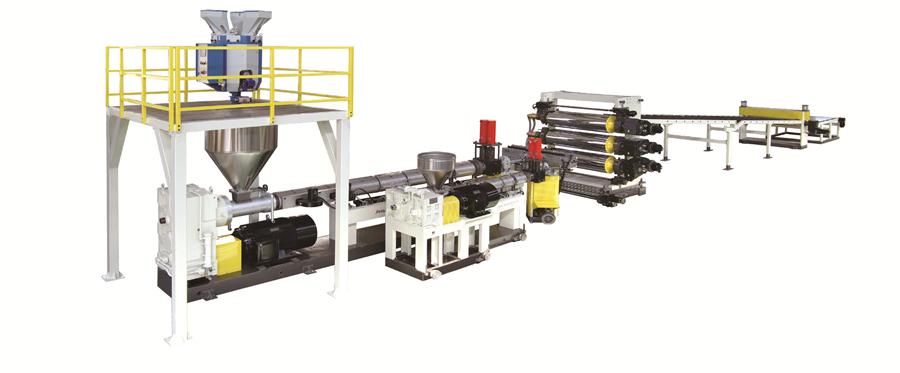
PMMA sheet extrusion is a continuous manufacturing process that transforms PMMA resin pellets into flat acrylic sheets through melt extrusion. The molten polymer is forced through a precision T-die to form a flat sheet, then calibrated and cooled on a three-roll stack to achieve precise thickness control and superior surface finish.

Extruded PMMA sheets offer outstanding optical clarity (up to 92% light transmission), excellent weather and UV resistance, good impact strength, and high surface gloss. They are approximately half the weight of glass, making them ideal for applications where transparency, lightweight, and durability are required simultaneously.

Technical Specification

Jwell PMMA Sheet Extrusion Line Models

Model JWS120 — Standard PMMA Sheet Production

The JWS120 produces PMMA and GPPS sheets at 1,220 mm width with a thickness range of 1–10 mm. With an output of 300–400 kg/h, this model is suitable for manufacturers producing standard acrylic sheets for advertising signage, light guide panels, decorative panels, and general-purpose transparent sheet applications.

Model JWS130 — High-Capacity PMMA Sheet Production

The JWS130 delivers 400–500 kg/h output — approximately 25% higher than the JWS120 — with the same 1,220 mm width and 1–10 mm thickness range. This model is designed for high-volume manufacturers serving large-scale LED panel production, display fabrication, and automotive component supply chains where throughput and production efficiency are critical.

Technical Specifications

Model JWS120 JWS130
Material PMMA GPPS PMMA GPPS
Products Width(mm) 1220 1220
Products Thickness (mm) 1~10 1~10
Capacity (kg/h) 300~400 400~500

Applications of Extruded PMMA Sheets

LED Lighting & Display

  • LED light guide panels (LGP) — Ultra-thin light panels for edge-lit LED light boxes, achieving uniform illumination with minimal light loss
  • Flat panel display lamps — Backlight diffusion panels for computer monitors and television displays
  • LED poster stands and light boxes — Advertising light boxes requiring high light transmission and optical uniformity
  • Display cases and protective covers — Transparent covers for retail displays, museum exhibits, and electronic device screens

Advertising & Signage

  • Advertising signage and billboards — Outdoor and indoor signage panels requiring weather resistance and optical clarity
  • Nameplates and escutcheons — Engraved or printed identification panels for industrial equipment, building directories, and corporate branding
  • POP (point-of-purchase) displays — Retail display stands, product showcases, and promotional signage
  • Light box panels — Translucent panels for backlit advertising and architectural feature lighting

Decoration & Architecture

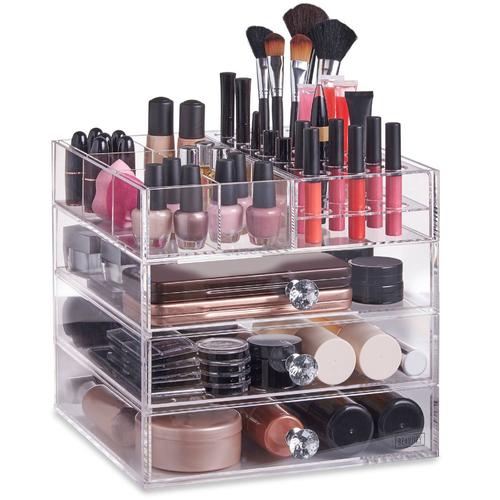
  • Interior decoration panels — Decorative partitions, wall cladding, and furniture surfaces
  • Art ware and craft products — Artistic acrylic fabrications, trophies, and custom design objects
  • Skylights and canopy glazing — Weather-resistant transparent panels for architectural daylighting
  • Sound barriers — Transparent noise control panels for highways and urban environments

Automotive & Transportation

  • Vehicle light covers — Headlight and taillight lens covers requiring optical clarity and UV resistance
  • Interior trim panels — Decorative and functional interior components
  • Instrument panel covers — Transparent protective covers for dashboard displays and gauges

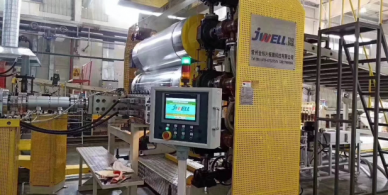
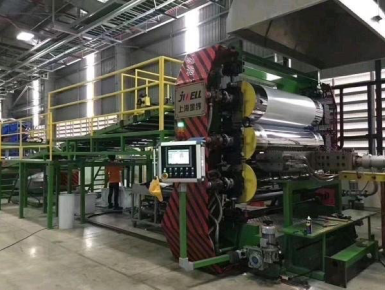
Video for Machine Type(JWS130)


Why Choose Jwell for Your PMMA Sheet Extrusion Line?

In-House Manufacturing — Complete Quality Control

Jwell manufactures all critical components in-house, including machine barrels, screws, T-die heads, and calender rollers. This vertical integration ensures full quality control from engineering design through final installation — essential for achieving the optical clarity and surface finish standards required by PMMA sheet applications.

German-Comparable Quality at 30% Lower Investment

Jwell PMMA sheet extrusion lines deliver performance comparable to top German extruder brands at approximately 30% lower cost. Our precision T-die technology and three-roll calibration systems produce sheets with tight thickness tolerances (±5%) and consistent high-gloss surface finish.

Global Service Network & 500+ Engineers

With sales and service offices in Turkey, Vietnam, Thailand, Brazil, and Canada, and a team of over 500 plastic engineers worldwide, Jwell provides comprehensive before-and-after-sales support including installation supervision, operator training, process optimization, and ongoing technical assistance.

Spare Parts Availability & Remote Monitoring

Nearly all critical spare parts are kept in stock for fast global delivery. Jwell’s cloud-based remote monitoring system provides real-time machine status tracking and proactive maintenance recommendations, ensuring minimal unplanned downtime and maximum production efficiency.

25+ Years of PMMA Extrusion Expertise

Since our founding in 1997, Jwell has installed thousands of extrusion lines in over 100 countries. Our deep experience with PMMA and GPPS materials, combined with our understanding of optical sheet quality requirements for LED and display applications, makes us the ideal partner for your acrylic sheet production project.


FAQ Content

1. What is PMMA sheet extrusion and how does it work? Process

PMMA (polymethyl methacrylate) sheet extrusion is a continuous manufacturing process that transforms PMMA resin pellets into flat acrylic sheets. Raw material is fed into a single-screw extruder where it is heated to a molten state (typically 200–250°C), then forced through a precision T-die to form a flat sheet. The sheet passes through a three-roll calibrator stack that controls thickness and produces a high-gloss surface finish. After cooling, the sheet is cut to length by a guillotine cutter or flying knife and automatically stacked. The entire process is PLC-controlled for consistent quality at high production speeds.

2. What is the difference between PMMA and GPPS sheet extrusion? Materials

PMMA (acrylic) and GPPS (general purpose polystyrene) are both transparent thermoplastics but with different properties. PMMA offers superior optical clarity (92% light transmission vs. ~88–90% for GPPS), better UV and weather resistance, higher surface hardness, and better chemical resistance. GPPS is less expensive and easier to process, making it suitable for cost-sensitive applications where optical performance is less critical. Jwell’s extrusion lines are designed to process both materials — switching between PMMA and GPPS requires a screw and temperature profile adjustment along with a material purge procedure.

3. What is the production capacity of a PMMA sheet extrusion line? Capacity

Jwell’s PMMA sheet extrusion lines produce between 300 and 500 kg/h depending on the model. The JWS120 delivers 300–400 kg/h, while the JWS130 achieves 400–500 kg/h with approximately 25% higher throughput. Actual output depends on sheet thickness (1–10 mm range), material grade (PMMA vs. GPPS), and line speed settings. For reference, a JWS130 running at full capacity can produce approximately 5,000–8,000 square meters of 3mm PMMA sheet per day.

4. What thickness range can a PMMA acrylic sheet extrusion line produce? Specification

Jwell’s PMMA sheet extrusion lines handle thicknesses from 1 mm to 10 mm, with tight thickness tolerance of approximately ±5%. For comparison, cast acrylic can produce sheets up to 100+ mm thick but at significantly higher cost and lower throughput. The 1–10 mm range covers the vast majority of commercial applications including LED light guide panels (typically 2–6 mm), signage sheets (2–8 mm), and display panels (1–5 mm). Extruded sheets offer tighter and more consistent thickness tolerances compared to cast sheets.

5. What is the difference between extruded PMMA and cast acrylic sheets? Comparison

The key differences: Process: Extruded PMMA is produced continuously at high speed; cast acrylic is made in batches. Thickness: Extruded is typically 1–20 mm; cast can reach 100+ mm. Tolerance: Extruded has tighter tolerance (±5%); cast is wider (±10–15%). Clarity: Both achieve up to 92% light transmission — nearly identical. Cost: Extruded is ~20% cheaper due to high-volume production. Thermoforming: Extruded is easier (lower softening temperature). Laser cutting: Cast produces cleaner edges. Applications: Extruded is best for LED panels, light boxes, and signage; cast is preferred for aquariums, laser engraving, and thick structural panels.

6. Can a PMMA extrusion line produce colored and opaque sheets? Versatility

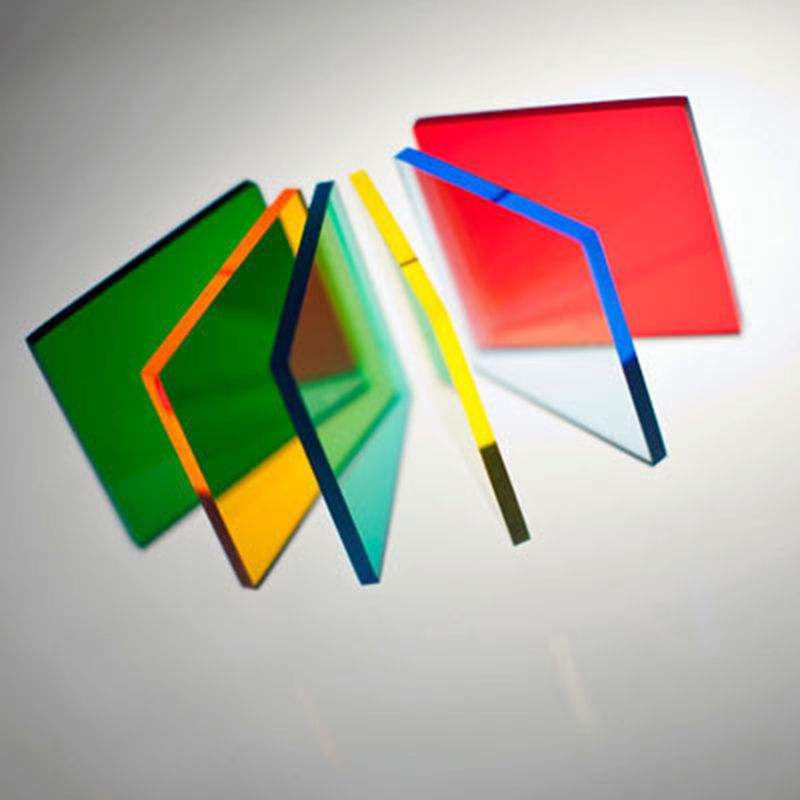
Yes, Jwell PMMA sheet extrusion lines can produce transparent, translucent, colored, and opaque sheets. Transparent sheets use clear PMMA resin. Colored sheets are produced by feeding pre-compounded PMMA pellets with color masterbatch in the desired shade. Common colors include white, black, red, blue, green, and bronze. Frosted or matte surface finishes can also be achieved through special calender roller surface treatment. However, changing color requires purging the extruder and T-die, so batch production by color is recommended. For multi-color production, plan production runs by color group to minimize changeover time.

7. What are PMMA sheets used for in LED lighting? Application

PMMA sheets are widely used in LED lighting for three main products: (1) Light guide panels (LGP) — thin transparent or micro-structured PMMA sheets that distribute LED edge-lighting uniformly across the panel surface, used in backlit displays, architectural lighting panels, and ultra-thin light boxes; (2) LED light box panels — translucent PMMA sheets for advertising light boxes, poster displays, and retail signage illumination; (3) Display cover panels — protective transparent covers for LED display screens, instrument panels, and electronic devices. PMMA’s 92% light transmission, UV stability, and excellent optical uniformity make it the preferred material for these applications over polycarbonate or glass.

8. How much does a PMMA acrylic sheet extrusion line cost? Pricing

The price of a PMMA sheet extrusion line depends on the model, output capacity, and level of automation. Jwell’s JWS120 line (300–400 kg/h, 1,220 mm width) typically ranges from $80,000 to $150,000 USD. The JWS130 line (400–500 kg/h) ranges from $150,000 to $250,000 USD. Jwell’s pricing is approximately 30% lower than equivalent European extruder brands while maintaining comparable optical quality and production consistency. Contact Jwell’s sales team with your specific production requirements for a detailed budgetary quotation.

9. What maintenance is required for a PMMA sheet extrusion line? Maintenance

Routine maintenance for a PMMA sheet extrusion line includes: weekly cleaning of the T-die lip surfaces to prevent material degradation buildup; monthly inspection and lubrication of gearbox bearings and haul-off rollers; quarterly checking of screw and barrel wear (PMMA is mildly abrasive); semi-annual calibration of temperature controllers and thickness measurement sensors. The three-roll calibrator stack requires periodic roller surface polishing to maintain high-gloss finish quality — typically every 6–12 months. Jwell’s remote cloud monitoring system provides real-time alerts on machine health parameters. When switching between PMMA and GPPS, a thorough purge with the target material is essential to prevent contamination and optical defects.

10. How do I choose between a PMMA sheet extrusion line and other transparent sheet lines (PC, PETG)? Buying Guide

Choose based on your end-product requirements: PMMA — best for optical clarity (92% transmission), surface gloss, and weather resistance; ideal for LED panels, signage, and display applications where visual quality is paramount. Polycarbonate (PC) — superior impact strength (250x glass) and heat resistance; better for safety glazing, automotive, and structural applications. PETG — excellent thermoformability and chemical resistance; preferred for point-of-purchase displays, medical packaging, and formed trays. Consider: target application, optical requirements, impact resistance needs, forming method (flat vs. thermoformed), and raw material cost. Many manufacturers operate multiple lines for different transparent sheet types. Contact Jwell for application engineering support to determine the optimal line configuration for your product mix.

Jwell Trusted By

Why Choose Jwell

  • High Quality Jwell Machinery Co.,Ltd machine barrels , screws , T-die and roller all by ourselves , we control the machine quality from drawing design to final installation.
  • Save Your 30% Money Comparable to the quality of Top Germany’s extruders , reasonable affordable prices . High effective single screw extruders and twin screw extruders .
  • Global Sales Service Jwell Machinery Co.,Ltd has sales office in Turkey , Vietnam , Thailand , Brazil , Canada , there are over 500 plastic engineers serve Jwell customer all over the world .
  • On Time Delivery Of Spare Parts Jwell Machinery Co.,Ltd has almost all key parts of our products in stock and We remotely monitor the cloud status of the machine and provide timely maintenance suggestions ,we promise your extruder will never stop running .

Get A Free Quote