Project
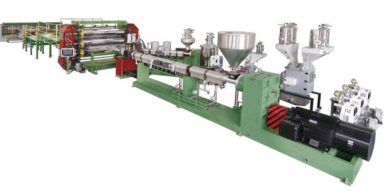
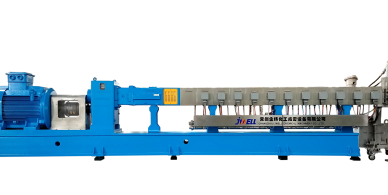
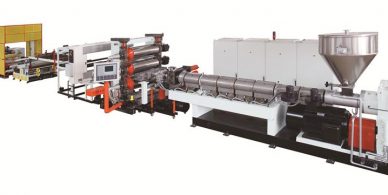
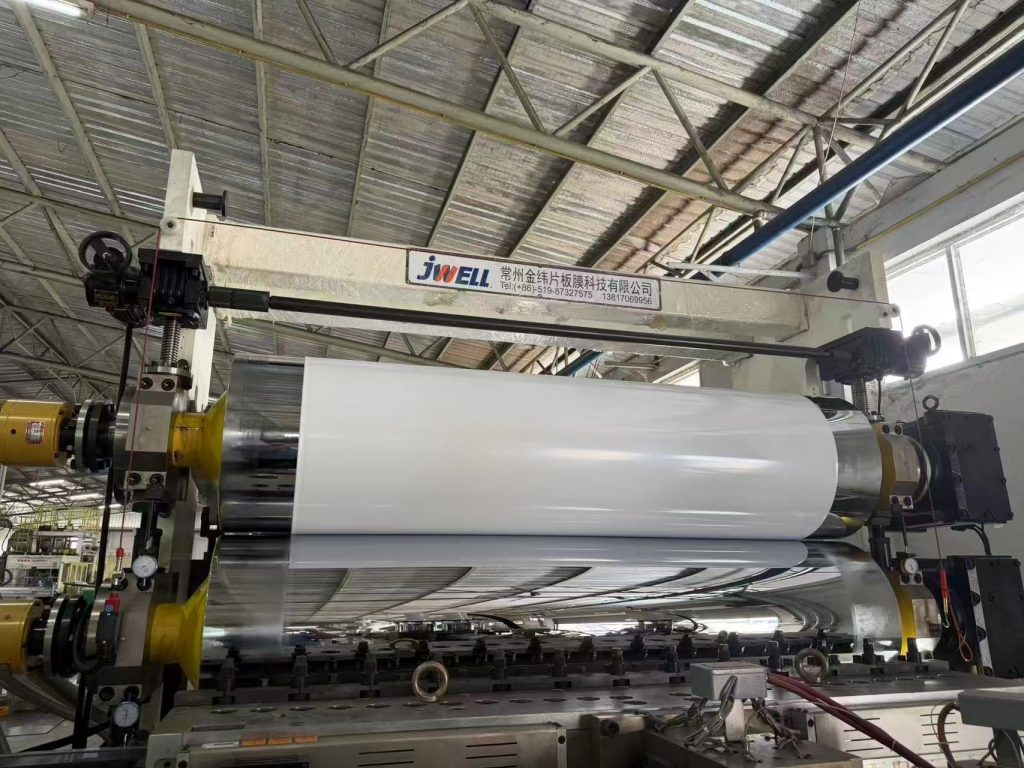
In 2026, Jwell Machinery successfully delivered and commissioned a JWS130+JWS65 ABS/HIPS plate extrusion line for one of Thailand’s leading home appliance component manufacturers. The line is rated at 850 kg/h with a maximum plate width of 2000 mm, and flexibly switches between HIPS monolayer plate and ABS/HIPS ABA co-extruded plate — primarily for vacuum thermoforming of refrigerator inner liners and appliance housing panels.
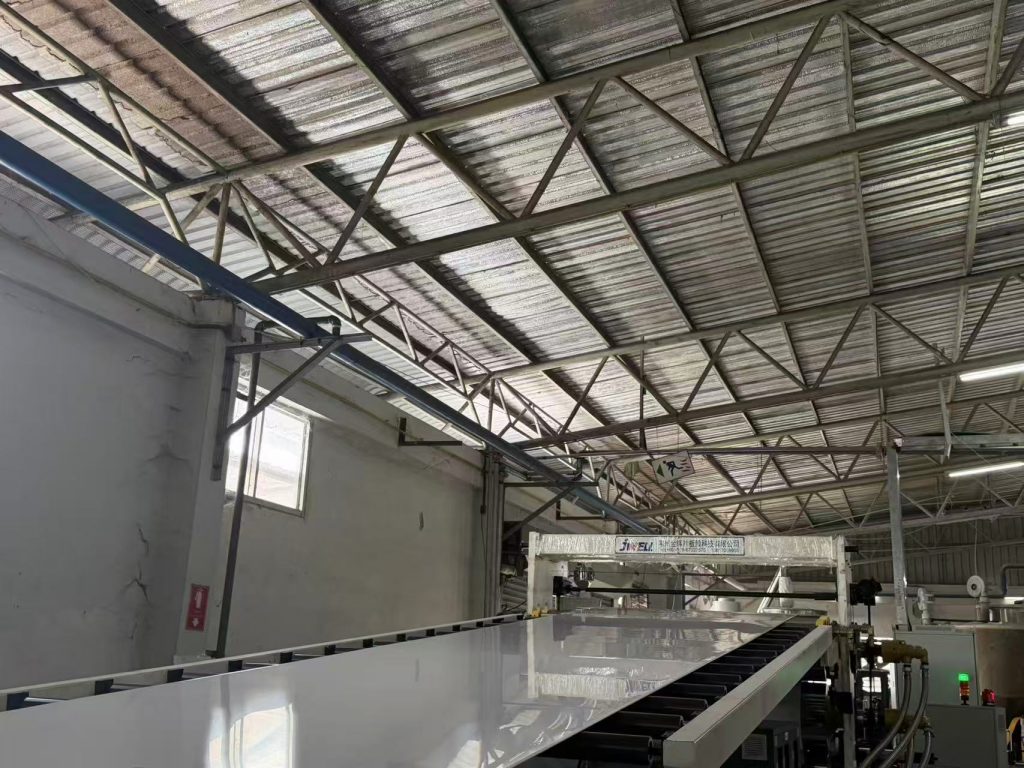
From manufacturing, Factory Acceptance Test (FAT), sea freight, to on-site installation and commissioning, the project was completed on schedule. During the 72-hour continuous trial run, the line operated stably and met all design specifications. The customer accepted the line on the first pass.
The customer is one of the largest home appliance component manufacturers in Thailand, whose parent company is publicly listed on the Shanghai Stock Exchange, founded in 1999 and headquartered in Hefei, Anhui Province, China.
Company Strength Overview:
In 2022, the customer started construction of a new plant in Sriracha, Chonburi, continuously expanding local capacity and product lines. This ABS/HIPS plate line represents a strategic step from component manufacturing upstream into plate deep-processing, strengthening its in-house supply chain for white goods materials.
Existing plate lines were running near full capacity, unable to keep pace with growing demand for refrigerator inner liners and appliance panels. The new line needed stable 850 kg/h output with consistent thickness uniformity and surface quality over long production runs — placing strict demands on screw design, temperature control and downstream take-off stability.
Supplying Samsung, Electrolux, Haier and others simultaneously, the customer runs varied HIPS/ABS grades and colors. The line had to support HIPS-to-ABS changeover within a single shift — including screw purge, die cleaning and one-touch recall of process recipes — to minimize downtime losses.
Wide-width extrusion demands even melt distribution across the full die face. ABS’s relatively poor flowability makes 2000 mm wide extrusion prone to center-thick/edge-thin deviation, requiring precise manifold design and flexible lip adjustment on the T-die.
Lacking in-house high-end extrusion maintenance capability, the customer required proven overseas engineering support and remote diagnostics from the supplier, with 7×24 technical response and minimal unplanned downtime after commissioning.
Vacuum thermoforming of refrigerator inner liners is extremely sensitive to thickness tolerance, surface gloss and residual stress of the plate. Any minor defect is amplified during thermoforming, causing uneven liner walls or surface defects that directly affect finished refrigerator quality — leaving virtually zero tolerance for quality control in extrusion.
| Parameter | Specification |
|---|---|
| Screw Diameter: | 120 mm |
| Barrel: | Bimetallic lined, nitrided, wear & corrosion resistant, suited for flame-retardant ABS compounds |
| Screw Type: | Barrier screw with dedicated mixing section, optimized for HIPS/ABS |
| Drive: | AC vector inverter drive, 0.01 rpm resolution, output fluctuation ≤1% |
| Heating: | Ceramic heater bands, PID multi-zone control, accuracy ±1°C |
The JWS130 barrier screw is specially tuned for HIPS/ABS rheology, resolving common issues of melt temperature non-uniformity and surface flow marks in wide-width extrusion. The 38:1 L/D ensures full melting and degassing for a cleaner, higher-gloss plate surface.
The JWS90 supports A/B/A three-layer co-extrusion: high-gloss virgin ABS or HIPS cap layers on both surfaces (guaranteeing surface quality and thermoforming performance), while the core layer can incorporate regrind or lower-cost material — reducing raw material cost by approx. 25–30% without compromising performance. Each layer is fed by an independent metering pump for precise layer ratio control.
| No. | Application | Notes |
|---|---|---|
| 1 | Refrigerator Inner Liners: | Vacuum-thermoformed inner liners; high impact strength, food-grade compliance, excellent thermoformability |
| 2 | Appliance Housing Panels: | Washing machine tops, AC panels, microwave housings; uniform gloss and dimensional stability |
| 3 | Refrigerator Door Liners: | Laminated or co-extruded high-gloss cap layer; matches door shell stamping process |
| 4 | Advertising Signage & Display: | Screen-printing substrate, lightbox panels; flatness and printability |
| 5 | Automotive Interior Parts: | Door panel substrates, dashboard liners; meets automotive VOC emission requirements |
| 6 | Luggage & Sanitary Ware: | Suitcase liners, shower tray thermoforming plate; impact and chemical resistance |
Thailand hosts regional plants of Samsung, LG, Haier, Panasonic, Hitachi and Sharp. This customer — the country’s refrigerator door gasket leader (50%+ market share) — moving upstream into ABS/HIPS plate processing reflects the industry trend of component makers integrating raw-material supply. JWELL’s selection by such a demanding customer reinforces its brand influence in Southeast Asia’s white goods equipment market.
With an A-share listed parent and its core ASEAN plant in Thailand, this project demonstrates the synergy of Chinese equipment + Southeast Asian production bases: Chinese high-end extrusion equipment empowering Chinese enterprises’ overseas expansion, reducing dependence on imported Japanese/Korean machinery for supply chain autonomy.
Compared with the JWS150+JWS90 high-capacity package (e.g. the Algeria project at 1200 kg/h), the JWS130+JWS65 offers excellent cost-performance at the 850 kg/h segment — lower capital investment and smaller footprint — making it ideal for mid-scale appliance component producers upgrading capacity across Southeast Asia.
Following earlier PP plate lines and the 2019 ABS plate line delivered in Thailand, this project further enriches JWELL’s Thai delivery record and localized service experience, building a long-term partnership covering maintenance, spare parts and process upgrades.
Q: What is the actual capacity of this line?
A: HIPS plate at 850 kg/h and ABS plate at approx. 750 kg/h. Maximum plate width 2000 mm; thickness range 0.5–6 mm.
Q: What products can this line produce?
A: Monolayer HIPS plate, monolayer ABS plate, and ABA three-layer co-extruded plate (A-layer high-gloss cap, B-layer core that can incorporate regrind).
Q: How long does the HIPS-to-ABS changeover take?
A: Within 4 hours including die cleaning, using the auto-purge program and dual-screen changer. Multiple process recipes can be recalled with one touch.
Q: What thickness tolerance can be achieved?
A: ±0.05 mm across the full 2000 mm width, controlled by flexible lip adjustment and closed-loop on-line laser thickness gauging.
Q: How does JWELL support overseas after-sales service?
A: JWELL dispatches field engineers for installation and commissioning, then provides remote diagnostics via Siemens PLC VPN module. 7×24 hotline support with 48-hour on-site response commitment.
Q: Can this line be upgraded in the future?
A: Yes. Extension interfaces are reserved for optional in-line lamination units, automatic winders or cut-to-size stations to suit different downstream processing needs.
About Jwell Machinery: Founded in 1997, Jwell has ranked No.1 in China’s plastic extrusion industry for 15 consecutive years, with 8 production bases in China, 3,000+ employees, and over 800 plate/plate extrusion lines delivered to 60+ countries worldwide.
Download our document to see specific data of the service and how we work.