Q1: What is the difference between TPU cast film and TPU blown film?
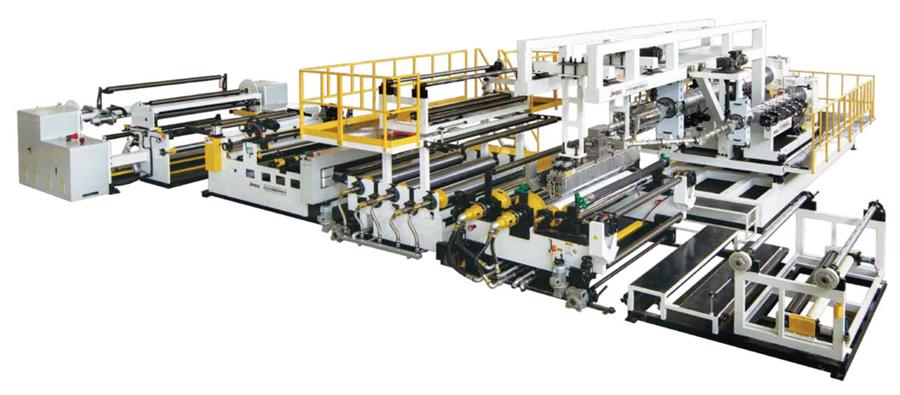
TPU cast film is produced by extruding molten TPU through a flat T-die onto a chilled roller, resulting in superior optical clarity, more uniform thickness control, and higher production speeds. TPU blown film is produced by extruding TPU through an annular die and inflating it into a tubular bubble. Cast film typically achieves better transparency (essential for phone screen protectors and paint protection films) and tighter thickness tolerances, while blown film offers better balance of properties in both machine and transverse directions. For most TPU film applications requiring transparency and multi-layer co-extrusion, casting is the preferred production method.
Q2: Can a TPU casting film extrusion line produce multi-layer films?
Yes. Jwell’s TPU casting film lines are specifically designed for multi-layer co-extrusion. The 2-extruder configuration (JWS90+JWS100) produces A/B two-layer films, while the 3-extruder configuration (JWS90+JWS90+JWS90) produces A/B/A three-layer films. This allows manufacturers to combine different TPU hardness grades, colors, or functional properties in a single production pass — for example, bonding a soft 80A inner layer to a hard 95A outer layer — without a separate lamination step.
Q3: What is the production capacity of a Jwell TPU film extrusion line?
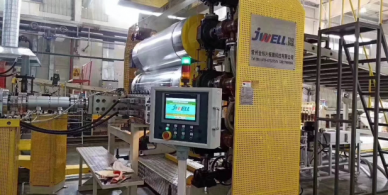
Jwell offers two TPU casting film line models. The JWS90+JWS100 two-extruder line produces 200–250 kg/h, and the JWS90+JWS90+JWS90 three-extruder line produces 200–300 kg/h. Both models produce film with a width range of 1000–2000 mm and thickness from 0.02 to 0.5 mm. The PLC control system enables one-person operation with precise parameter adjustment for consistent film quality.
Q4: What TPU hardness range can be processed on a casting film line?
For casting film applications, the typical TPU hardness range is Shore A 80A to 95A. Softer grades (80A–85A) are used for flexible applications like shoe linings, inflatable products, and waterproof breathable membranes. Harder grades (90A–95A) are used for wear-resistant applications like paint protection film, screen protectors, and industrial component films. Jwell’s multi-extruder lines can co-extrude films combining different hardness grades in each layer, providing both surface durability and internal flexibility.
Q5: What is the difference between polyester TPU and polyether TPU film?
Polyester TPU offers better tensile strength, tear strength, abrasion resistance, oil resistance, and transparency — making it ideal for footwear soles, industrial components, and transparent films. Polyether TPU offers superior hydrolysis resistance, microbial resistance, low-temperature flexibility (as low as -40°C), and higher resilience — making it the preferred choice for waterproof/breathable garments, cold-climate applications, medical devices, and water-contact products. Both types can be processed on the same Jwell casting film line with appropriate drying parameter adjustments.
Q6: How do you dry TPU material before extrusion?
TPU resin pellets — especially polyester TPU which has higher moisture content — must be thoroughly dried before extrusion to prevent bubbles, surface defects, and degradation. A dehumidifying hopper dryer is typically used at 80–110°C for 3–5 hours to reduce moisture content below 0.02%. Polyether TPU has lower moisture content and requires less demanding drying conditions. Proper drying is one of the most critical steps in TPU film production and directly affects film clarity and mechanical properties.
Q7: What is TPU film used for?
TPU film is used across a wide range of industries. Major applications include: footwear (shoe uppers, toe caps, waterproof linings), waterproof/breathable garments (outdoor jackets, sportswear), automotive (paint protection film, interior surfaces), bags and luggage (transparent windows, waterproof covers), sports and leisure (inflatable products, equipment protection), medical devices (wound dressings, surgical drapes), electronics (screen protectors, cable jacketing), and stationery (book covers, document protection). TPU is increasingly replacing PVC due to its superior environmental profile and non-toxic properties.
Q8: Can TPU film replace PVC film?
Yes. TPU film can replace PVC film in virtually all applications where PVC is currently used, and it offers several advantages: TPU is non-toxic, halogen-free, and recyclable — addressing the growing regulatory restrictions on PVC in many markets. TPU also provides superior abrasion resistance, better low-temperature flexibility, and higher resilience compared to PVC. The main trade-off is that TPU raw material costs are higher than PVC, but the performance advantages and regulatory compliance benefits often justify the premium, particularly in footwear, medical, and automotive applications.
Q9: How long does it take to install a TPU film extrusion line?
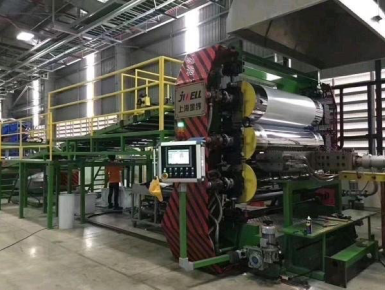
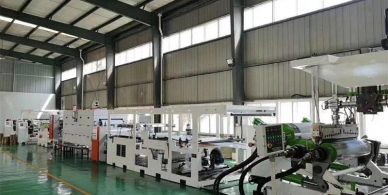
Complete installation and commissioning of a TPU casting film extrusion line typically takes 30–45 days from equipment arrival at the customer’s factory. This includes mechanical installation of extruders, T-die, chill roll unit, and winding system; electrical wiring and PLC control system setup; cooling system connection; trial production runs with TPU material; and operator training on machine operation, parameter adjustment, and routine maintenance. Jwell sends experienced installation engineers to oversee the entire process.
Q10: What maintenance does a TPU casting film extrusion line require?
Key maintenance tasks include: regular cleaning of the T-die lips to prevent material buildup and ensure uniform film thickness; inspection and calibration of chill roll temperature uniformity; monitoring screw and barrel wear (TPU is moderately abrasive); checking heater bands and thermocouples for accurate temperature control; maintaining proper drying system performance; and periodic inspection of winding system tension controls. Jwell Machinery provides remote cloud monitoring that tracks machine operating parameters in real-time, enabling predictive maintenance to minimize unplanned downtime. Critical spare parts (screw elements, heater bands, die lips, chill roll bearings) are kept in stock for rapid delivery worldwide.