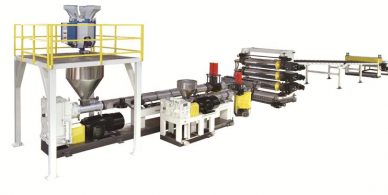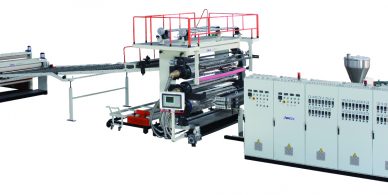
Solution
JWELL ABS sheet extrusion lines deliver high-output, energy-efficient production of ABS (Acrylonitrile Butadiene Styrene) and HIPS (High Impact Polystyrene) sheets for a wide range of industrial applications. Designed and manufactured in-house at our Changzhou facility, every critical component — including the extruder barrels, precision screws, T-die, and three-roller calender — is produced by JWELL to ensure full quality control from engineering drawings through final installation and commissioning.
Our ABS extrusion lines are equipped with an advanced concentrated material feeding system and fully automatic sheet stacker, which together reduce processing costs and significantly improve finished product quality. With output capacities ranging from 300 kg/h to 1,200 kg/h and sheet widths up to 2,000 mm, JWELL provides solutions for manufacturers of all sizes — from mid-scale producers to high-volume industrial operations. JWELL holds approximately 70% market share for ABS sheet extrusion equipment in China, a testament to the reliability and performance our customers depend on.
ABS sheet extrusion is a continuous polymer processing method in which ABS resin granules are fed into a heated extruder barrel, melted under controlled temperature and pressure, and forced through a flat T-die to form a continuous sheet. The molten sheet then passes through a three-roller calender that precisely controls thickness, surface finish, and dimensional accuracy, followed by a cooling system and haul-off unit that pulls the sheet at a consistent speed before automatic cutting or winding.
ABS is an engineering thermoplastic combining three monomers — acrylonitrile (providing chemical and heat resistance), butadiene (delivering toughness and impact resistance), and styrene (offering rigidity and surface gloss). This balanced property profile makes ABS sheets ideal for demanding applications in the home appliance, automotive, sanitaryware, luggage, and advertising industries.
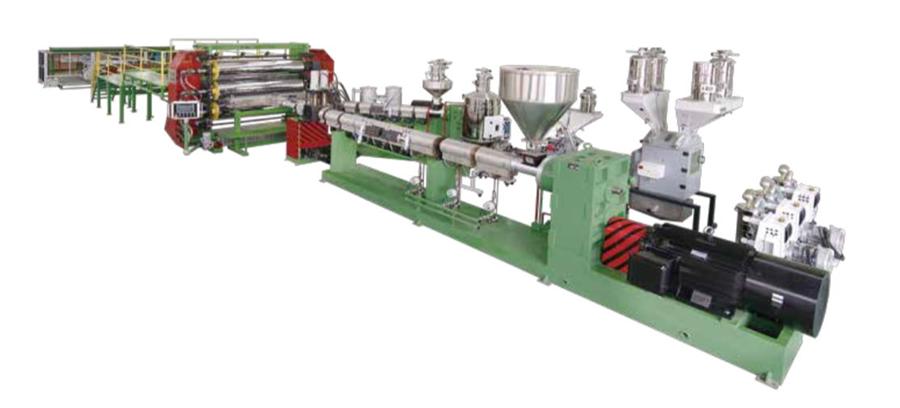
Unlike many equipment assemblers who source key components from third parties, JWELL manufactures all critical parts — barrels, screws, T-die, and calender rollers — in our own facilities. This vertical integration gives us complete control over material quality, machining precision, and final assembly, ensuring consistent extrusion performance and sheet quality from every machine we deliver.
JWELL holds approximately 70% of the ABS sheet extrusion equipment market in China. This market position is built on decades of engineering expertise, continuous innovation, and the trust of hundreds of sheet manufacturers who rely on JWELL lines for their daily production. Our equipment processes thousands of tons of ABS and HIPS material every day across China and worldwide.
JWELL extrusion lines deliver performance and build quality comparable to top German extruder manufacturers at approximately 30% lower investment cost. This value advantage allows sheet producers to achieve faster return on investment while maintaining the production quality demanded by international OEM customers in the appliance, automotive, and construction industries.
JWELL maintains dedicated sales and service offices in Turkey, Vietnam, Thailand, Brazil, and Canada, with over 500 plastic engineers serving customers worldwide. Our cloud-based remote monitoring system tracks machine operating status in real time, enabling our engineering team to provide proactive maintenance recommendations and rapid troubleshooting support — minimizing unplanned downtime and keeping your production running.
JWELL maintains comprehensive inventory of key spare parts including screws, barrels, heater bands, screen changer meshes, and T-die lip inserts. When replacement is needed, parts ship quickly to minimize production interruption. Combined with our remote diagnostic capability, we can identify issues early and dispatch the correct components before they cause unplanned stoppages.
| Model | JWS120+JWS45 | JWS130+JWS65 | JWS150+JWS90 |
| Material | ABS HIPS | ABS HIPS | ABS HIPS |
| Products Width(mm) | 1220 | 1800 | 2000 |
| Products Thickness(mm) | 1~6 | 1~6 | 1~6 |
| Capacity (kg/h) | 300~400 | 500~600 | 800~1200 |
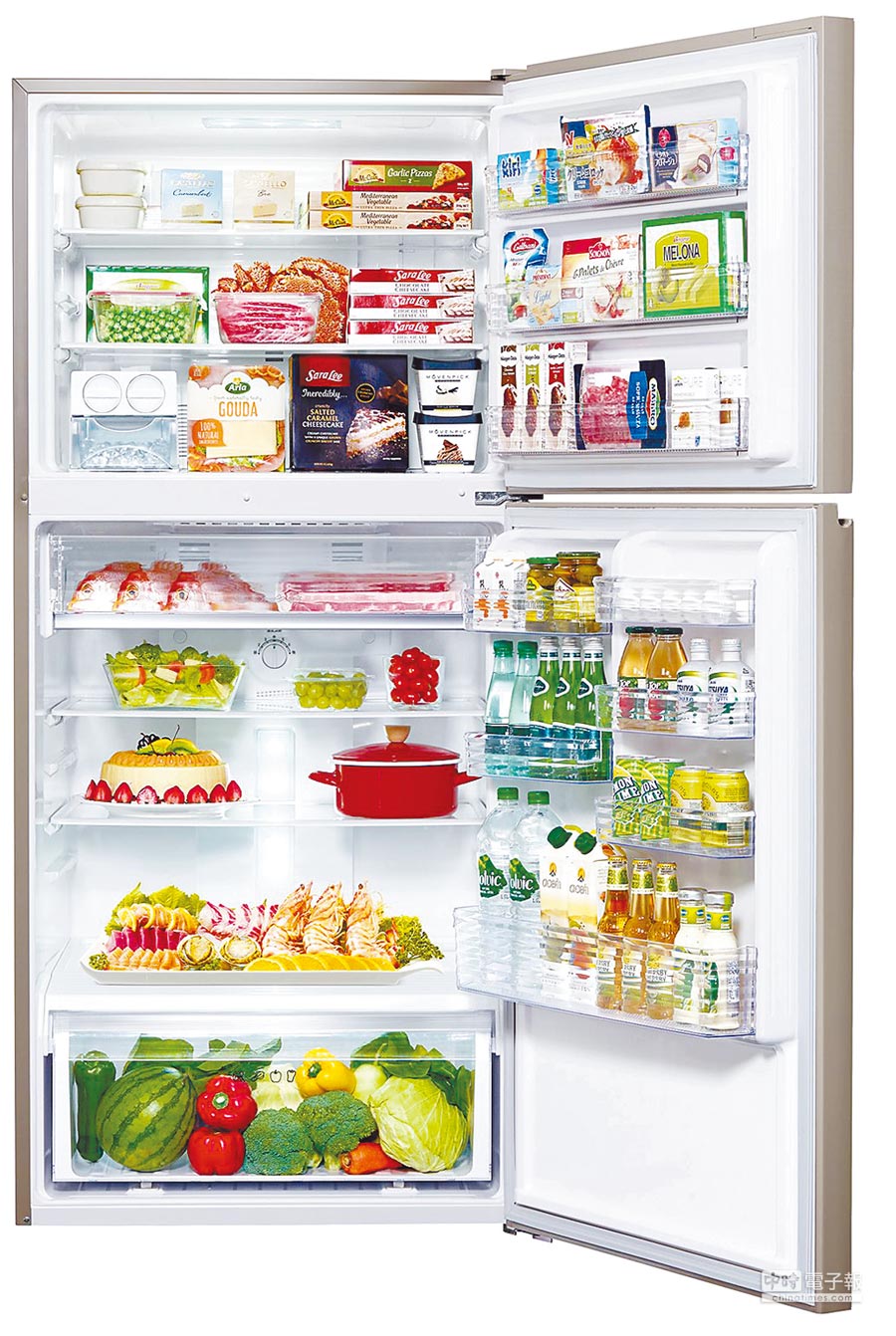
ABS sheets are the standard material for refrigerator interior components, including door panels, inner liners (gallbladder), crisper drawers, and water dispenser housings. The material’s excellent impact resistance, food-contact safety compliance, and smooth surface finish make it the preferred choice for major appliance manufacturers worldwide. JWELL’s extrusion lines deliver the tight thickness tolerances and consistent surface quality that thermoforming processes require for high-volume refrigerator liner production.
ABS sheets thermoform into bathtubs, shower cabinets, steam rooms, washing basins, and other bathroom fixtures. The material’s resistance to moisture, mold, and household chemicals ensures long-lasting performance in wet environments. JWELL extrusion lines can produce ABS sheets in both glossy and matte surface finishes to meet the diverse design requirements of the sanitaryware industry.
Both ABS and HIPS sheets are widely used for advertising display boards, wayfinding signage, machinery nameplates, and indoor decoration panels. HIPS sheets in particular offer excellent printability for offset lithography and screen printing applications. The dual-material capability of JWELL extrusion lines allows manufacturers to produce both premium ABS signage boards and cost-effective HIPS display panels on the same equipment.
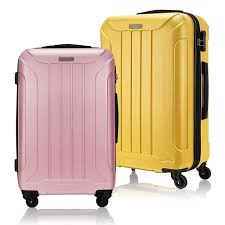
ABS sheets are the primary material for hard-shell luggage, draw-bar boxes, suitcase shells, and recreational bags. The material’s high impact strength protects contents during travel while its lightweight nature reduces overall bag weight. JWELL’s co-extrusion capability enables production of multilayer sheets with a glossy exterior surface and impact-absorbing core layer, providing both aesthetic appeal and structural performance.
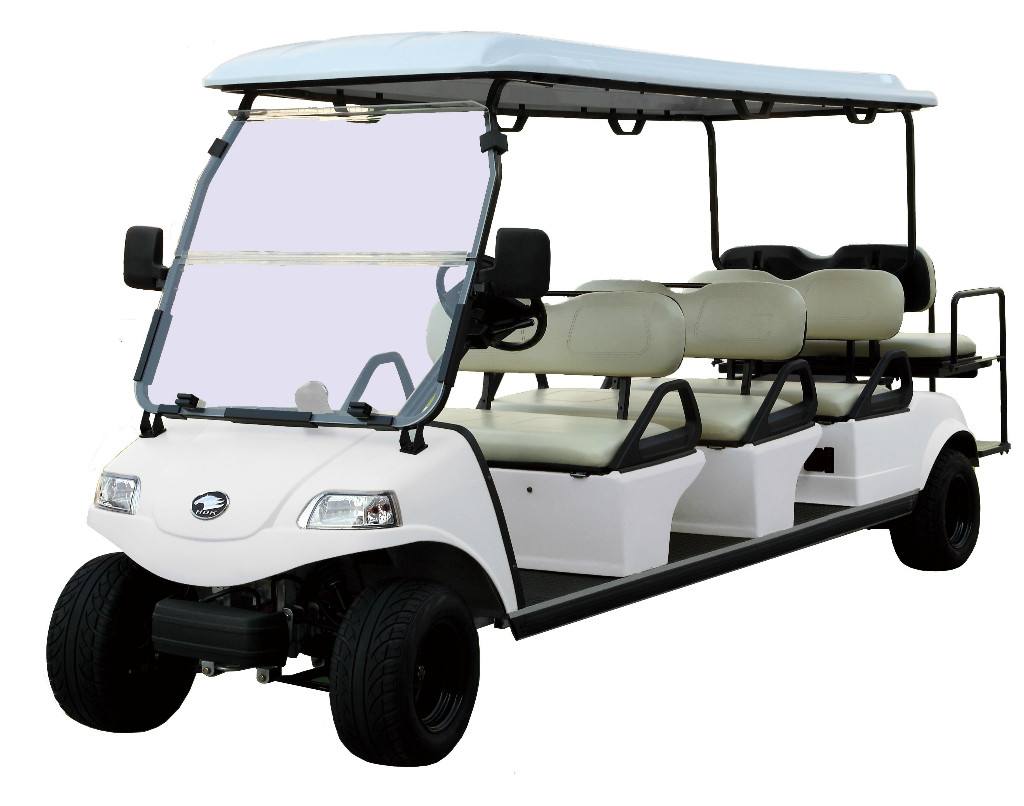
In the automotive industry, ABS sheets are thermoformed into dashboard panels, instrument boards, door trims, backrest panels, and window frames for cars, buses, and motorcycles. The material withstands the temperature extremes found inside vehicles and provides the surface quality needed for interior trim applications. ABS sheets also contribute to vehicle weight reduction of 10–15% compared to metal alternatives, improving fuel efficiency.
One of the key advantages of JWELL’s ABS sheet extrusion line is its ability to process both ABS and HIPS materials on the same equipment, giving manufacturers maximum production flexibility. Here is a practical comparison to help you decide which material best fits your target market.
JWELL’s ABS sheet extrusion lines offer production capacities ranging from 300 to 1,200 kg/h depending on the model. The JWS120+JWS45 produces 300–400 kg/h, the JWS130+JWS65 delivers 500–600 kg/h, and the largest model JWS150+JWS90 achieves 800–1,200 kg/h. Actual output depends on sheet thickness, ABS grade, and formulation. Thinner sheets (1–2 mm) typically run at higher line speeds, while thicker sheets (4–6 mm) reduce throughput slightly.
ABS (Acrylonitrile Butadiene Styrene) and HIPS (High Impact Polystyrene) are both processable on the same extrusion line, but their properties differ significantly. ABS offers superior impact resistance (70–370 J/m vs. 45 J/m for HIPS), higher tensile strength (37–110 MPa vs. 32 MPa), better heat resistance, and improved chemical resistance. HIPS is more affordable, easier to process, lighter, and offers excellent printability for signage. ABS is preferred for automotive interiors, refrigerator liners, and heavy-duty applications, while HIPS suits cost-sensitive products like toys, packaging, and consumer electronics housings.
JWELL ABS sheet extrusion lines produce sheets in a thickness range of 1 to 6 mm and widths from 1,220 mm to 2,000 mm, depending on the model selected. The JWS120+JWS45 handles sheets up to 1,220 mm wide, the JWS130+JWS65 produces up to 1,800 mm wide sheets, and the JWS150+JWS90 can manufacture sheets up to 2,000 mm in width. Thickness tolerance is typically controlled within ±0.05 mm using the precision three-roller calender system.
Yes, ABS sheets are one of the primary materials for both refrigerator liners and automotive interior components. In refrigerator manufacturing, ABS sheets are thermoformed into door panels, inner liners (gallbladder), drawers, and water dispenser housings due to their excellent impact resistance, food safety compliance, and good surface finish. In the automotive industry, ABS sheets are used for dashboard panels, instrument boards, door trims, backrests, and interior cladding because they withstand temperature extremes, resist impact, and can be produced in various colors and textures. JWELL’s extrusion lines are specifically designed to meet the strict dimensional and surface quality requirements of these industries.
JWELL offers three models of ABS/HIPS sheet extrusion lines, each featuring a dual-extruder configuration (main extruder + co-extruder): JWS120+JWS45 for 1,220 mm sheet width and 300–400 kg/h output; JWS130+JWS65 for 1,800 mm width and 500–600 kg/h; and JWS150+JWS90 for 2,000 mm width and 800–1,200 kg/h. All models process both ABS and HIPS materials, produce 1–6 mm thickness sheets, and include JWELL’s proprietary in-house manufactured barrels, screws, T-die, and three-roller calender. The choice of model depends on your target production volume, sheet width, and budget.
JWELL designs and manufactures its own screws in-house, which is a critical advantage for ABS sheet extrusion. ABS requires a screw with a moderate compression ratio (typically 2.5:1 to 3:1) and a gradual transition zone to prevent thermal degradation of the butadiene rubber phase. The dual-extruder configuration used in JWELL’s ABS lines combines a larger main extruder (JWS120/130/150) for bulk melting with a smaller co-extruder (JWS45/65/90) for the cap layer or skin layer. This design enables multi-layer sheet production with different materials or colors on each layer, and ensures uniform melt temperature and pressure for consistent sheet quality.
The complete process from order confirmation to full production typically takes 60 to 90 days. This includes approximately 45–60 days for machine fabrication and testing at JWELL’s Changzhou factory, 15–30 days for sea freight shipping (depending on destination), and 7–14 days for on-site installation, commissioning, and operator training. JWELL sends experienced engineers to the customer’s factory for installation supervision and provides hands-on training until the customer’s team can independently operate the line and produce qualified ABS sheets. Spare parts for all key components are stocked in-house for rapid replacement.
Routine maintenance for an ABS sheet extrusion line includes: daily inspection and cleaning of the screw and barrel to prevent material degradation buildup; weekly calibration of the three-roller calender gap for thickness accuracy; monthly inspection of heater bands, thermocouples, and temperature controllers; quarterly lubrication of haul-off rollers and cutting unit bearings; and semi-annual replacement of the hydraulic screen changer mesh. JWELL’s PLC control system features cloud-based remote monitoring, allowing engineers to track machine status and provide proactive maintenance recommendations. With proper maintenance, the equipment has an expected service life of 10–15 years.
Yes. JWELL’s ABS sheet extrusion lines feature a dual-extruder design that enables A/B type co-extrusion for two-layer sheet production. The main extruder forms the structural core layer while the co-extruder applies a thin cap or skin layer with different material, color, or additive formulation. This capability is widely used to produce ABS sheets with a glossy surface layer on one side and a matte or textured layer on the other, or to combine ABS with a HIPS skin layer for cost optimization. For more complex multilayer structures (A/B/A three-layer), JWELL can customize the die and feed block configuration based on specific customer requirements.
Key factors to evaluate when purchasing an ABS sheet extrusion line include:
(1) Production capacity — match the output (300–1,200 kg/h) to your projected demand;
(2) Sheet width — ensure the maximum width (1,220–2,000 mm) covers your product requirements;
(3) Material versatility — confirm the line processes both ABS and HIPS if you need flexibility;
(4) Component quality — in-house manufactured barrels, screws, T-die, and calender rollers ensure better quality control;
(5) After-sales support — verify the supplier has global service coverage, spare parts inventory, and remote monitoring capability;
(6) Energy efficiency — modern lines with optimized screw design and heating systems can reduce energy consumption by 20–30% compared to older equipment. JWELL offers all three capacities with global service offices in Turkey, Vietnam, Thailand, Brazil, and Canada.
https://www.jwellplate.com/projects/abs-sheet-extrusion-line/