Solution
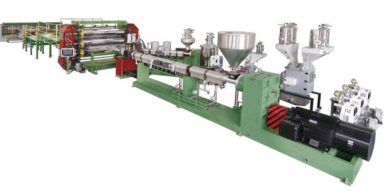
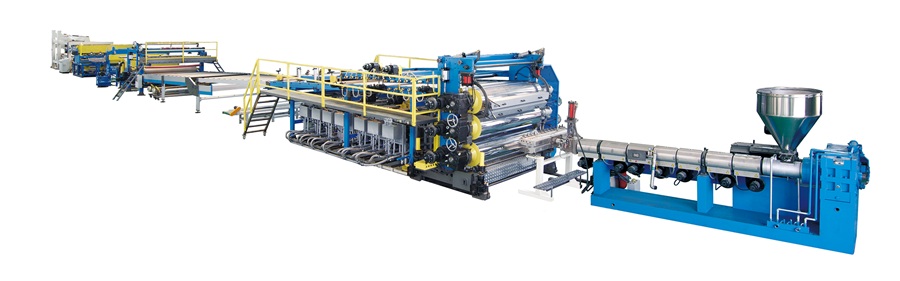
PP thick plate extrusion line
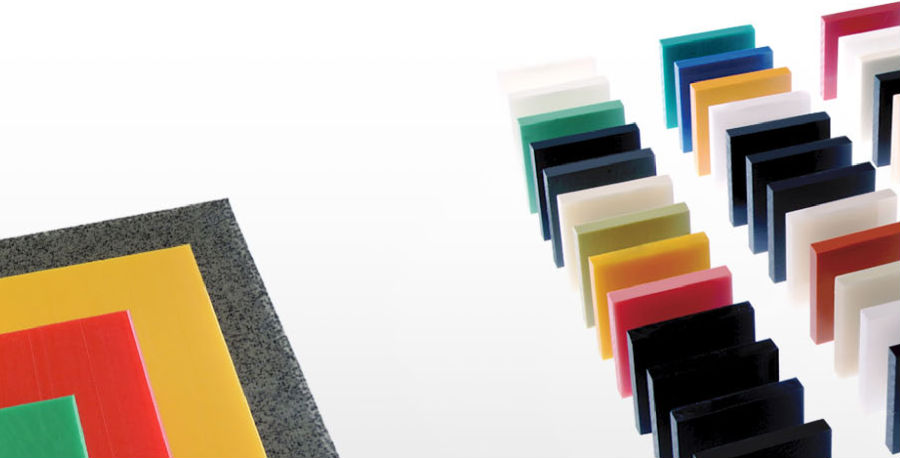
PP thick plate, It is an environment-friendly product and is widely applied in chemistry industry, food industry, anti-erosion industry, environmentally-friendly equipment industry, etc. PP thick plate extrusion line of 2000mm width is a newly developed line which is the most advanced and stable line compared with other competitors.
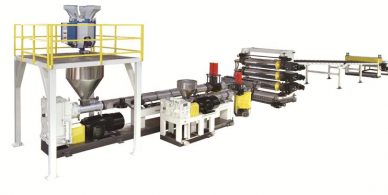
PE thick plate extrusion line
PE plate is widely applied in chemical and electric power industries. HDPE plate, known as engineering plastics, is used in mechanical and chemical equipment as well as ice hockey ring walls.
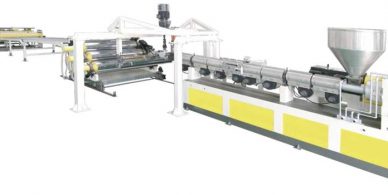
PVC thick plate extrusion line
Rigid PVC thick plate is widely used in chemical industry, petrol, electroplating, water purifying equipment, environment-friendly equipment, lamp house and advertisements, etc.
PVDF plate extrusion line
PVDF plate is a pure plate extruded with Polyvinylidene fluoride resin, there is no additive (such as UV stabilizer, heat stabilizer, plasticizer, lubricant or flame retardant etc.). The plate was widely used in petrifaction, electricity, metallurgy, paper making, spinning, medicine and atomic energy industry and other industries, especially, for the application of conveying the pure chemical agent used in cleaning water system and semiconductor industry.
| Model | JW120-1600 | JW150-2100 | JW180-2600 | SJZ80/156-1500 |
| Material | PP PE ABS PVDF | PP PE ABS | PP PE ABS | PVC |
| Products Width(mm) | 1220 | 1500 | 2000 | 1220 |
| Sheet thickness (mm) | 3~30 | 3~30 | 3~30 | 3~30 |
| Capacity( kg/h) | 350 | 500 | 800 | 400~500 |
A: A thermoplastic sheet extrusion line is a complete production system that melts raw plastic resin and forms it into flat sheets or thick boards of precise thickness through a continuous extrusion process. The line typically consists of a single-screw or twin-screw extruder, a flat die (T-die or coat-hanger die), a calibration and cooling unit, a haul-off system, and a cutting or winding station. JWELL Machinery’s thermoplastic sheet extrusion lines are designed to process PP, PE, PVC, PVDF, and ABS materials, producing sheets with thicknesses ranging from 3 mm to 30 mm at capacities of 350–800 kg/h depending on the model.
A: JWELL thermoplastic sheet extrusion lines are compatible with five major engineering plastics: PP (polypropylene), PE (polyethylene/HDPE), PVC (rigid polyvinyl chloride), PVDF (polyvinylidene fluoride), and ABS (acrylonitrile butadiene styrene). Each model is engineered for specific material combinations — the JW120-1600, JW150-2100, and JW180-2600 handle PP, PE, ABS, and PVDF, while the SJZ80/156-1500 is dedicated to PVC processing. For PVDF applications, JWELL lines can extrude additive-free pure plates for semiconductor and ultrapure chemical industries.
A: JWELL thermoplastic thick board extrusion lines produce sheets with thicknesses from 3 mm up to 30 mm. Product widths vary by model — the JW120-1600 outputs 1,220 mm wide sheets, the JW150-2100 produces 1,500 mm, and the flagship JW180-2600 achieves 2,000 mm width at a production capacity of 800 kg/h. These specifications make JWELL lines suitable for industrial-grade applications requiring heavy-duty thermoplastic boards.
A: Thermoplastic thick boards produced by JWELL extrusion lines serve a wide range of industries: PP boards are used in chemical processing, food handling, and environmental protection equipment; PE (HDPE) boards are applied in chemical tanks, electrical enclosures, and ice rink wall systems; PVC boards serve the petroleum, electroplating, water purification, and signage industries; PVDF boards are essential for petrochemical, pharmaceutical, semiconductor, nuclear energy, and metallurgical applications where chemical purity and corrosion resistance are critical.
A: PVDF (polyvinylidene fluoride) extrusion requires specialized handling because the material demands exceptionally high processing purity. Unlike standard sheet lines, PVDF extrusion must produce plates with zero additives — no UV stabilizers, heat stabilizers, plasticizers, lubricants, or flame retardants. JWELL’s PVDF extrusion lines are designed for semiconductor manufacturing, ultrapure water systems, and pharmaceutical applications where material contamination must be avoided. The line construction uses corrosion-resistant components to handle PVDF’s specific thermal and chemical characteristics.
A: JWELL offers three production capacity tiers for PP/PE thick board extrusion: the JW120-1600 produces up to 350 kg/h with a sheet width of 1,220 mm; the JW150-2100 delivers up to 500 kg/h at 1,500 mm width; and the JW180-2600 achieves up to 800 kg/h with a maximum sheet width of 2,000 mm. For PVC processing, the SJZ80/156-1500 produces 400–500 kg/h. These capacity ranges are designed to match different output requirements from medium-scale production to high-volume industrial manufacturing.
A: The primary difference lies in the product thickness range and equipment configuration. Sheet extrusion lines typically produce thin-gauge materials (0.2–3 mm) used for packaging, thermoforming, and consumer products. Thick board extrusion lines, like JWELL’s models, are engineered for 3–30 mm thickness, requiring more powerful extruders, reinforced calibrators, and heavier-duty cooling systems. Thick boards are used in structural and industrial applications such as chemical tanks, equipment housings, and corrosion-resistant linings where mechanical strength is essential.
A: Yes, JWELL thermoplastic sheet extrusion lines are designed for multi-material compatibility. The JW120-1600, JW150-2100, and JW180-2600 models can process PP, PE, ABS, and PVDF on the same equipment platform with appropriate die and screw configuration adjustments. The SJZ80/156-1500 is specifically configured for PVC, which requires a conical twin-screw extruder due to PVC’s thermal sensitivity. This flexibility allows manufacturers to diversify their product range without investing in separate production lines.
A: Selecting the right JWELL extrusion line depends on three key factors: (1) Target material — identify whether you need to process PP, PE, PVC, PVDF, or ABS, as this determines the extruder type and model; (2) Sheet dimensions — consider your required width (1,220–2,000 mm) and thickness range (3–30 mm); (3) Production capacity — match the output requirement (350–800 kg/h) to your business volume. JWELL’s engineering team provides consultation to help configure the optimal line specification based on your specific material, application, and production targets.
A: JWELL Machinery provides comprehensive after-sales support for thermoplastic sheet extrusion lines worldwide. This includes professional installation and commissioning at the customer’s factory, operator training programs, and ongoing technical assistance. With manufacturing facilities in China and a global sales network serving over 120 countries, JWELL offers spare parts supply, maintenance services, and production optimization consultation. Customers can reach the JWELL sheet extrusion team directly via WhatsApp or email for quotation and technical inquiries.