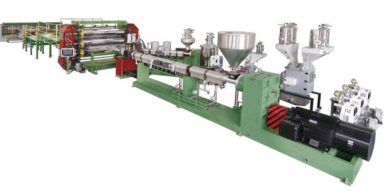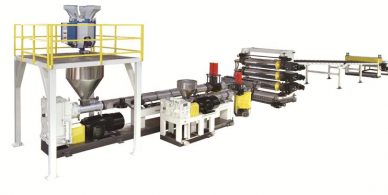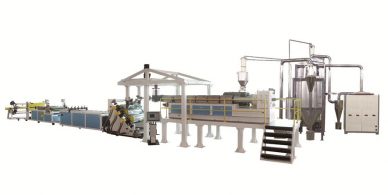
Solution
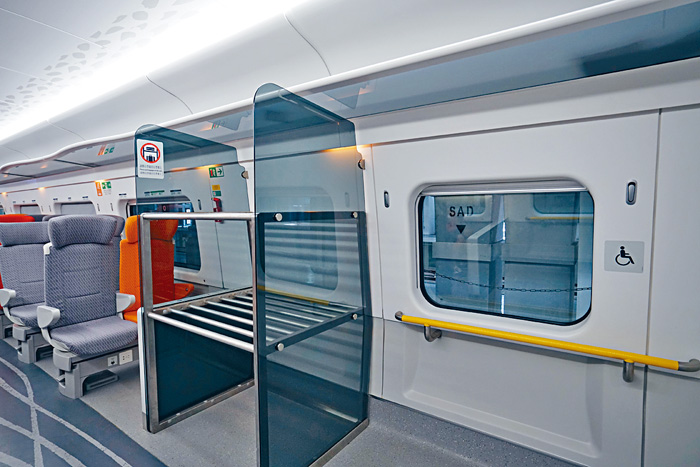
PC sheet line is widely used in Garden, the recreation place, decoration and the corridor pavilion, Internal and external ornaments in the commercial building, curtain wall of the modern urban building, transparent container of aviation, the windscreen before the motorcycle, the plane, the train, the steamer, the submarine, army and polices shield, the telephone booth, advertising signpost, the advertisement of the lamp houses, the expressway and overhead way of the city partition protective screen.
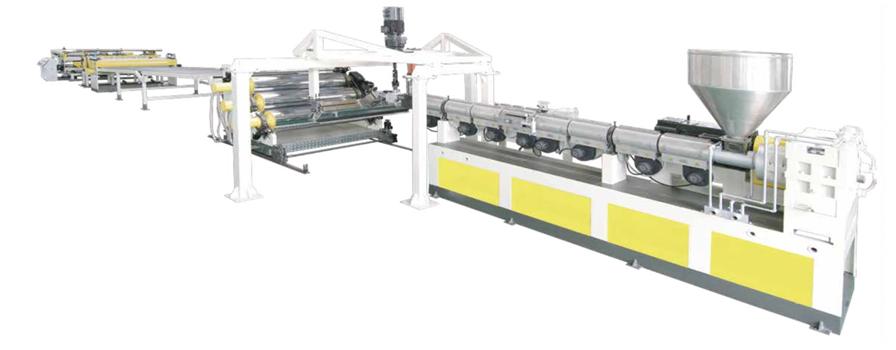
| Model | JWS130/38-2200 | JWS120/38-1400 |
| Products Width(mm) | 2100 | 1300 |
| Sheet thickness (mm) | 2~10 | 1.5~10 |
| Capacity( kg/h) | 550 | 450 |
| Extruder specification | 130/38;45/30 | 120/38 |
Everything you need to know about PC sheet extrusion lines
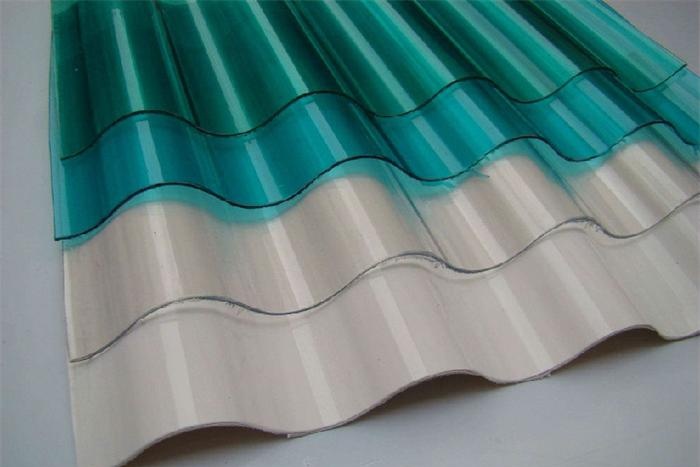
PC (polycarbonate) sheet is an amorphous thermoplastic material known for exceptional impact resistance — 250 times stronger than glass and 30 times stronger than acrylic (PMMA). Its key properties include:
These characteristics make PC sheet ideal for applications requiring both transparency and durability, such as architectural glazing, safety shields, noise barriers, transportation windows, and security visors.
A PC sheet extrusion line operates through a continuous, tightly controlled process:
Modern lines like Jwell’s feature Siemens PLC + ABB inverter automation with real-time monitoring of temperature zones, screw speed, melt pressure, motor load, and sheet thickness throughout every stage.
| Property | PC Sheet | PMMA (Acrylic) | Glass |
|---|---|---|---|
| Impact Strength | 250x glass | 18x glass | baseline |
| Light Transmission | ~88% | ~92% | ~90% |
| Scratch Resistance | Moderate | Good | Excellent |
| Temperature Range | -40~+120°C | -40~+80°C | Wide |
| Weight vs Glass | ~1/2 | ~1/2 | Heavy |
Bottom line: Choose PC when impact safety matters most, PMMA for aesthetics on a budget, and glass where absolute scratch/chemical immunity is required.
| Specification | JWS130/38-2200 | JWS120/38-1400 |
|---|---|---|
| Sheet Width | Up to 2,100 mm | Up to 1,300 mm |
| Sheet Thickness | 2 – 10 mm | 1.5 – 10 mm |
| Output Capacity | ≈ 550 kg/h | ≈ 450 kg/h |
| Extruder Spec | 130/38 + 45/30 (twin) | 120/38 single screw |
| Line Speed | 1 – 5 m/min (thickness-dependent) | |
Both models feature Siemens PLC + ABB inverter automation, precision coat-hanger T-dies, and 3-roll calender stacks with independent zone temperature control.
Evaluate these seven critical factors before investing:
| 1 | Output Capacity Match — Align hourly output (kg/h) with market demand and growth projections |
| 2 | Width & Thickness Coverage — Ensure T-die and 3-roll calender cover your entire product portfolio |
| 3 | Screw Design for PC — Look for specialized barrier screws or twin-screw options; PC requires gentle uniform melting |
| 4 | Temperature Control Precision — Multi-zone PID control (barrel, die, each roll independently) is non-negotiable |
| 5 | Die Technology — Coat-hanger T-die with automatic lip adjustment ensures consistent gauge across width |
| 6 | Automation Level — PLC control reduces operator dependency, improves consistency, enables QA data logging |
| 7 | After-Sales Support Infrastructure — Spare parts availability, training program, and remote diagnostics are crucial |
Jwell Advantage: Jwell addresses ALL seven factors — we manufacture barrels, screws, T-dies, and roller stacks in-house with end-to-end quality control that outsourced-assembler competitors cannot match.
In-House Core Component Manufacturing
Unlike brand-assemblers who source from third parties, Jwell designs and manufactures ALL core components internally — barrels, screws, T-dies, roller stacks. Result: Performance comparable to top German brands at roughly 30% lower total cost.
Global Service Network
Sales offices in Turkey, Vietnam, Thailand, Brazil, Canada. Over 500 plastic engineers worldwide ready to respond wherever your factory is located.
Smart Predictive Maintenance
Cloud-based remote machine monitoring tracks parameters in real-time. Get proactive maintenance alerts before problems cause downtime.
Proven Track Record Since 1997
80+ extrusion lines in North America alone. Customers across 100+ countries. Nearly three decades of continuous innovation in extrusion technology.
| Order Confirmation → Ex-Factory Ready | 60–90 days | Fabrication, assembly, FAT testing |
| Ocean Freight (Shanghai → Destination) | 7–35 days | NA/EU 25-35d / SE Asia 7-15d / S.America 35-45d |
| Customs Clearance & Delivery | 5–15 days | Varies by country regulations |
| On-Site Installation & Commissioning | 15–25 days | Alignment → electrical → tuning → trial run → training |
Planning Tip: Place orders 3–4 months ahead of planned production start. Rush orders may be accelerated with surcharges.
Need help? Jwell after-sales team provides troubleshooting guides, video consultations, and on-site diagnostics. Contact +86 18851202565 or [email protected].
Yes — comprehensive lifetime support covering every phase of ownership:
Ready to Get Started?
Contact us today for a free quote, technical consultation, or factory visit arrangement.
Still Have Questions?
Our extrusion experts are ready to help you find the perfect PC sheet production solution.