Solution
Best-of-Both-Worlds Performance
Hard exterior + Tough interior
No more property compromises
Each layer optimized independently
One-Pass Co-Extrusion
Layers bond inline during extrusion
No secondary lamination step
Lower cost vs. post-extrusion bonding
Material Cost Savings
Use cheaper base layer under
expensive surface layer
Reduce material cost 20-40%
Key Material & Product Properties:
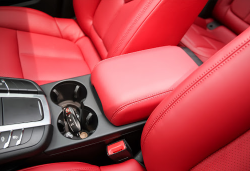
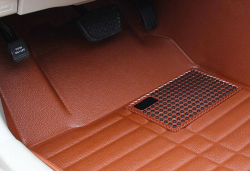
Most popular combination. TPU provides abrasion/oil-resistant surface; ABS or PVC core delivers rigidity and printability. Used for automotive interiors, floor mats, tool pads, sport equipment surfaces.
Chemical & Weather Resistant. TPO skin handles outdoor exposure; EVA or EVOH core adds barrier/flexibility. Agricultural packaging, chemical tank liners, marine covers.
Decorative + Structural. Colored TPU or PMMA surface over PP/ABS base. Furniture panels, luggage shells, consumer goods casings, appliance exteriors.
Jwell Production Range at a Glance:
Why laminated sheets are replacing single-material sheets across industries: Traditional single-polymer sheets force engineers to choose between conflicting properties — a hard surface that cracks under impact, or a flexible material that scratches too easily. Laminated composite sheets eliminate this compromise entirely. By placing exactly the right material where it's needed — hard TPU on the wear surface, flexible TPO on the back, rigid ABS in the middle — manufacturers achieve performance levels impossible with any single material, often at lower total material cost than using premium resin throughout. The global polymer laminate market is growing rapidly, driven by automotive lightweighting (replacing metal and glass), furniture aesthetics (achieving wood/marble look without natural material drawbacks), and packaging durability (combining barrier properties with puncture resistance). Jwell's one-pass co-extrusion technology makes this high-value product accessible to manufacturers of all sizes.
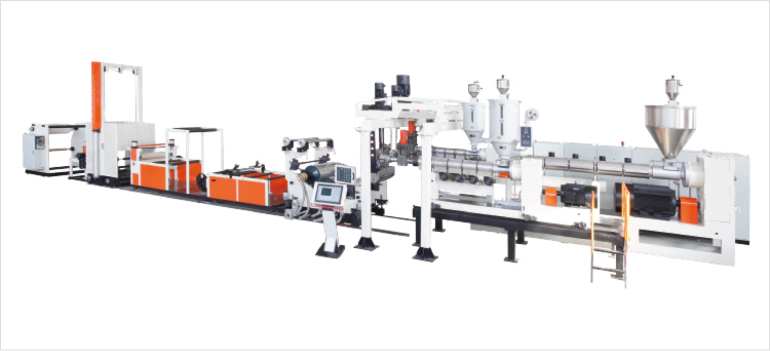
🔄 Multi-Manifold Co-Extrusion Process Flow:
Unwinder
Non-woven fabric, centrifugal paper, ect
Extrusion
ABS/HIPS granules → Extruder
Multi-Manifold
T-Die ⭐
Layers fuse without adhesive
3-Roll
Calender
Surface finish & thickness set
Cooling &
Haul-Off
Water spray + nip rollers
Cutting /
Winding
Sheet cut or roll wind
==================== –>
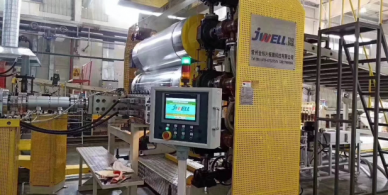
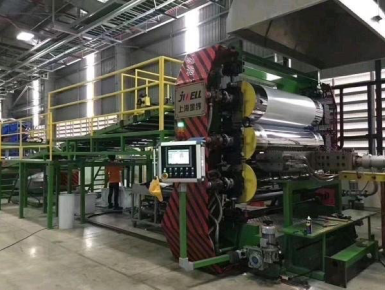
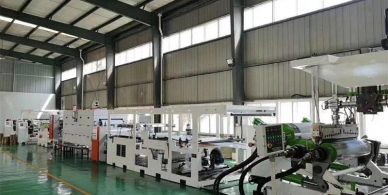
Full laminating process from unwinder to winder — Jwell factory live demo
📌 Process flow: Unwinder → Nonwoven → Corona Treatment → TPU/TPO/ABS Extrusion Lamination → 3-Roll Calender → Thickness Gauge → Haul-off → Edge Trim → Accumulator → Winder
An EVA POE TPO soundproof sheet extrusion line is a specialized production system that manufactures automotive sound insulation pads (also known as vibration damping pads) from EVA (ethylene vinyl acetate), POE (polyolefin elastomer), TPO (thermoplastic polyolefin), PVC, and high-filling inorganic materials. These soundproof sheets are high-density panels applied directly to metal body parts to absorb vibrations and block noise transmission. JWELL Machinery’s extrusion lines produce soundproof sheets with thicknesses from 0.6 mm to 8 mm and widths from 1,000 mm to 3,000 mm, serving the automotive interior and NVH (noise, vibration, and harshness) control industry.
Automotive sound deadening sheets are produced using EVA (ethylene vinyl acetate), POE (polyolefin elastomer), TPO (thermoplastic polyolefin), and PVC (polyvinyl chloride) as base polymers, compounded with high-filling inorganic materials such as barium sulfate, calcium carbonate, or other mineral fillers. The high inorganic filler content increases the sheet density, which is essential for effective vibration damping and noise absorption. JWELL’s soundproof sheet extrusion lines are engineered to handle these heavily filled compounds, ensuring uniform dispersion and consistent sheet quality.
EVA and TPO soundproof sheets are installed throughout the vehicle body at key noise and vibration source points. Primary application locations include the hood (engine noise isolation), doors (road and wind noise reduction), luggage compartment (trunk noise control), roof panel (overhead noise damping and thermal insulation), and fender/wheel arch areas (tire and road noise absorption). These sound deadening pads serve a dual purpose: they reduce NVH levels and contribute to structural reinforcement and thermal insulation of the vehicle body.
EVA (ethylene vinyl acetate) offers excellent flexibility, closed-cell foam properties, and good vibration absorption, making it the most widely used sound deadening material in automotive applications. POE (polyolefin elastomer) provides superior elasticity, weather resistance, and lower density compared to EVA, making it suitable for lightweight noise control solutions. TPO (thermoplastic polyolefin) combines the processing advantages of polypropylene with the flexibility of elastomers, offering recyclability and cost-effectiveness. Each material can be processed on JWELL extrusion lines, allowing manufacturers to produce soundproof sheets that meet specific automotive OEM requirements.
JWELL EVA POE TPO soundproof sheet extrusion lines produce sheets with thicknesses ranging from 0.6 mm to 8 mm and widths from 1,000 mm to 3,000 mm. The line configuration can be customized to match specific automotive part dimensions. Thinner sheets (0.6–3 mm) are typically used for door panels and interior trim applications, while thicker sheets (3–8 mm) are applied to hood, floor pan, and firewall areas requiring higher mass loading for effective noise reduction.
High-filling inorganic materials (such as barium sulfate, calcium carbonate, or talc) are added to the polymer matrix at ratios of 50–70% by weight to increase the sheet’s density and mass, which directly improves vibration damping performance. However, high filler content presents extrusion challenges including increased melt viscosity, accelerated screw and barrel wear, and potential filler dispersion issues. JWELL’s soundproof sheet extrusion lines address these challenges with wear-resistant screw and barrel designs, optimized L/D ratios, and specialized mixing sections that ensure homogeneous filler distribution throughout the sheet.
EVA and TPO soundproof sheet production typically uses a single-screw extruder with a dedicated mixing section, although twin-screw extruders may be employed for formulations requiring intensive compounding of high-filling inorganic materials. The screw design features a large L/D (length-to-diameter) ratio for improved melting and mixing of heavily filled compounds. JWELL manufactures its own screws, barrels, dies, calender rolls, and screen changers in-house, ensuring precise control over the critical wear components required for abrasive, high-filler-content sound deadening materials.
Yes, JWELL’s soundproof sheet extrusion lines can be configured to process both EVA/POE/TPO and PVC materials, though the extruder type and screw design differ. EVA, POE, and TPO are processed on single-screw extruders, while PVC requires a conical twin-screw extruder due to PVC’s thermal sensitivity and shear degradation characteristics. When manufacturing multiple material types, the die, calender, and downstream equipment can be shared, but the extruder unit may need to be exchanged or reconfigured. JWELL’s engineering team can design a flexible production layout for manufacturers producing both material categories.
While both lines produce polymer sheets, they serve different functions and require different equipment configurations. Soundproof sheet extrusion lines produce dense, heavy, high-filler-content sheets (0.6–8 mm) optimized for vibration damping and noise absorption in automotive applications. Waterproof membrane extrusion lines (such as TPO, PVC, or HDPE geomembrane lines) produce thinner, flexible sheets designed for water impermeability in roofing, tunneling, and civil engineering applications. JWELL offers both types of production lines, and some TPO-based products can serve dual waterproof and soundproof functions depending on the formulation and installation requirements.