Project
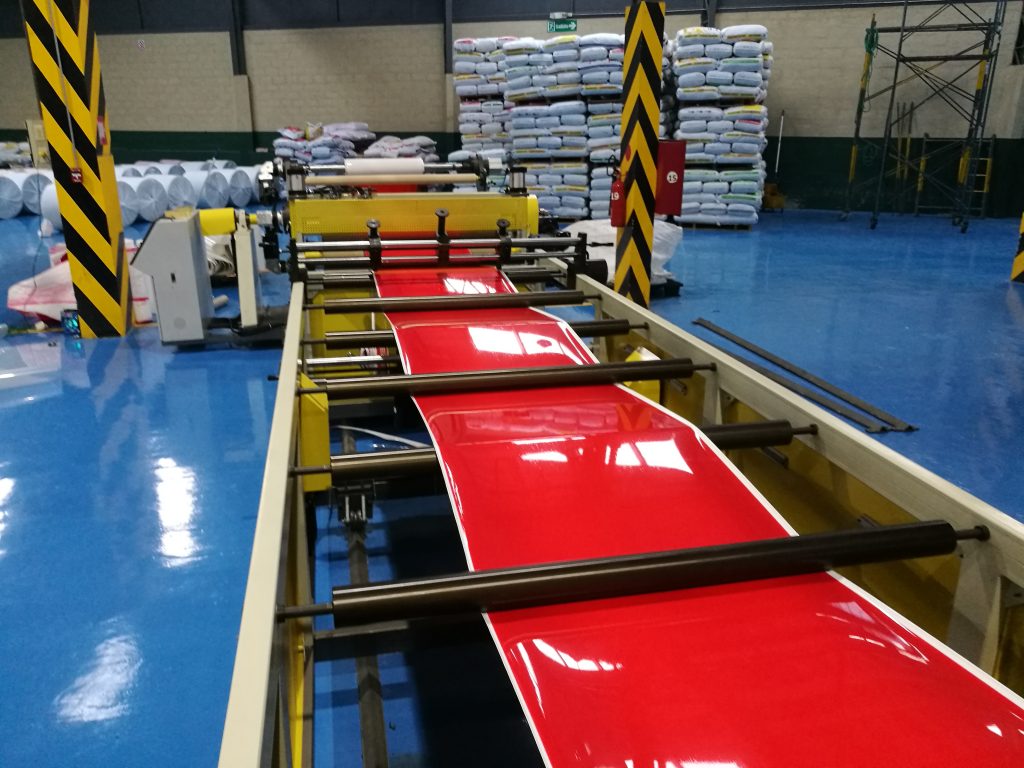
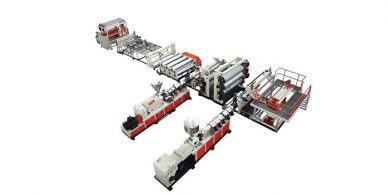
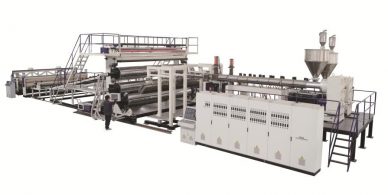
In early 2026, Jwell Machinery successfully delivered and commissioned a high-output PP sheet extrusion line (Model JWS150) to a leading packaging manufacturer in Guayaquil, Ecuador. The turnkey system — covering extruder, T-die, three-roll calender, cooling, haul-off, cutting, stacking, and Siemens PLC control — enables the client to produce PP sheets in the 0.3–2.0 mm thickness range with an annual capacity exceeding 3,500 metric tons, targeting Ecuador’s fast-growing food packaging, consumer goods, and agricultural tray markets.
| Phase | Duration | Key Milestones |
|---|---|---|
| Technical Consultation & Quotation | 3–4 Weeks | Material analysis, output calculation, factory layout design, commercial proposal |
| Equipment Manufacturing & Assembly | 50–55 Days | Screw & barrel machining, T-die fabrication, calender roll grinding and chrome-plating, full line assembly at Changzhou plant |
| Factory Acceptance Testing (FAT) | 3 Days | Client visit to Changzhou: trial run with Ecuador-sourced PP resin, sheet thickness and surface quality verification, operator familiarization |
| Sea Freight (Shanghai → Guayaquil) | 28–32 Days | Container loading, full customs documentation, marine insurance |
| On-Site Installation & Commissioning | 10–12 Days | Mechanical assembly, electrical wiring, PLC parameter tuning, trial production runs with local raw materials |
| Operator Training & Handover | 5–7 Days | Material handling SOPs, extrusion parameter optimization, quality inspection protocols, preventive maintenance schedule |
| Total Cycle (Contract → Production) | ~100–110 Days | From signed PO to commercial-grade PP sheet production |
The client’s production facility is located in Guayaquil, Ecuador’s largest city and primary industrial and port hub. Guayaquil’s strategic position on the Pacific coast provides efficient logistics for both domestic distribution within Ecuador and export to neighboring Andean markets including Colombia and Peru.
Ecuador’s food packaging sector has grown at a CAGR of approximately 6.5% (2022–2026), fueled by increasing urbanization, expansion of modern retail formats, and rising demand for convenience and takeaway food products. At the same time, Ecuador imports over 12,000 metric tons of PP sheet annually — primarily from Colombia, Peru, and Brazil — creating a clear opportunity for localized production with shorter lead times and reduced logistics costs.
The client is an established packaging converter with existing thermoforming capacity. Prior to this project, they relied entirely on imported PP sheet rolls to feed their thermoforming lines. The PP sheet supply chain involved 3–4 week lead times from regional suppliers, minimum order quantity (MOQ) constraints that limited production flexibility, and exposure to currency fluctuation and freight cost volatility.
Before partnering with Jwell, the client faced four critical challenges that limited growth and profitability:
Relying on imported PP sheets meant 3–4 week delivery windows from regional suppliers. Any disruption — port congestion, customs delays, or supplier backlogs — directly halted thermoforming production, creating costly downtime and missed customer deliveries. The client needed to maintain 6–8 weeks of sheet inventory as a buffer, tying up significant working capital.
External sheet suppliers offered restricted grade and thickness options. When the client’s end customers requested custom formulations (e.g., UV-stabilized PP for agricultural trays, high-clarity random copolymer for premium food packaging, or recycled content blends for cost-sensitive applications), the supply chain could not accommodate these specifications without substantial MOQ premiums and extended lead times.
Purchasing finished PP sheets at market prices — which include the supplier’s manufacturing margin, logistics markup, and intermediary distributor fees — meant the client’s thermoforming margins were squeezed at both ends. Analysis showed that in-house sheet extrusion could reduce raw material cost by 18–25% compared to purchased sheet, directly improving EBITDA.
Imported sheet rolls from multiple suppliers exhibited inconsistent thickness tolerance and surface quality, leading to elevated scrap rates during thermoforming, frequent machine adjustments, and customer complaints about finished product uniformity. The client lacked leverage to enforce quality standards across a fragmented supplier base.
After a three-month technical evaluation comparing extrusion equipment suppliers from Germany, Italy, and China, the client selected Jwell’s JWS150 PP sheet extrusion line. The decision was based on five decisive advantages:
Jwell manufactures all critical components in-house — screw, barrel, T-die, and calender rolls — at the Changzhou factory. This vertical integration eliminates reliance on third-party component suppliers, enabling a 50–55 day manufacturing cycle (versus 95–110 days from European competitors) while ensuring full traceability from raw steel to finished equipment. The client’s technical director noted: “We visited Jwell’s machining floor and saw the screw being ground, the die being polished, and the rolls being chrome-plated — all under one roof. That level of control gave us confidence.”
The JWS150 line delivers PP sheet thickness tolerance of ±0.02 mm across the full 800 mm width — a benchmark equivalent to premium European extrusion lines. This precision is achieved through Jwell’s proprietary screw design (L/D 33:1, optimized mixing and metering zones for PP), precision-ground T-die lip adjustment, and three-roll vertical calender with independent servo-driven roll gap control. For the client, consistent sheet thickness translates directly to lower thermoforming scrap rates, reduced material waste, and reliable finished product dimensions.
The JWS150 extruder and downstream configuration handle a wide material portfolio without hardware changes:
| Material | Grade Examples | Application |
|---|---|---|
| PP Homopolymer | T30S, F401, S1003 | General-purpose thermoforming cups, containers |
| PP Random Copolymer | RP242G, RB307MO | High-clarity food packaging, cold chain containers |
| PP Block Copolymer | EP300K, K8003 | Impact-resistant industrial & agricultural trays |
| HIPS | HIPS 825, 2710 | Disposable cups, lids, rigid containers |
| GPPS | GPPS 525, 123P | Transparent clamshell packaging, display boxes |
| Recycled PP/PS (up to 40%) | Post-industrial flake/pellet | Cost-sensitive non-food-contact sheets |
This flexibility allows the client to serve food packaging, consumer goods, and agricultural sectors from a single production asset, maximizing equipment utilization and return on investment.
Jwell’s equipment CAPEX is approximately 30% lower than equivalent European lines, while sheet quality and output are comparable. Beyond the initial investment, the TCO advantage extends through the equipment lifecycle:
Jwell’s Brazil-based service office and São Paulo spare parts hub mean Ecuadorian clients receive:
| Parameter | Delivered Specification |
|---|---|
| Extruder Model | JWS150, single-screw, L/D 33:1 |
| Sheet Width | 800 mm (expandable to 1,200 mm) |
| Sheet Thickness Range | 0.3–2.0 mm |
| Thickness Tolerance | ±0.02 mm |
| Nominal Output (PP) | 600–800 kg/h |
| Annual Capacity (8,000 hrs) | ~4,800–6,400 metric tons |
| Extruder Motor | 185 kW AC, Siemens/ABB vector-controlled |
| Energy Consumption | ~0.28–0.32 kWh/kg at 600 kg/h |
| Control System | Siemens PLC + HMI touchscreen + cloud remote monitoring |
| Electrical Configuration | 460V / 60Hz / 3-Phase (Ecuador industrial standard) |
| Certifications | CE (Machinery Directive 2006/42/EC), ISO 9001:2015, FDA 21 CFR food-contact compliance |
| Commissioning Team | 2 engineers (1 extrusion specialist + 1 PLC/electrical), bilingual Spanish/English |
From single-layer PP sheet to multi-layer co-extrusion configurations, Jwell’s 25+ years of extrusion engineering expertise ensures your project is delivered on time, on spec, and on budget — with regional after-sales support that keeps your line running. Contact us today for a customized quotation.
Download our document to see specific data of the service and how we work.