
About
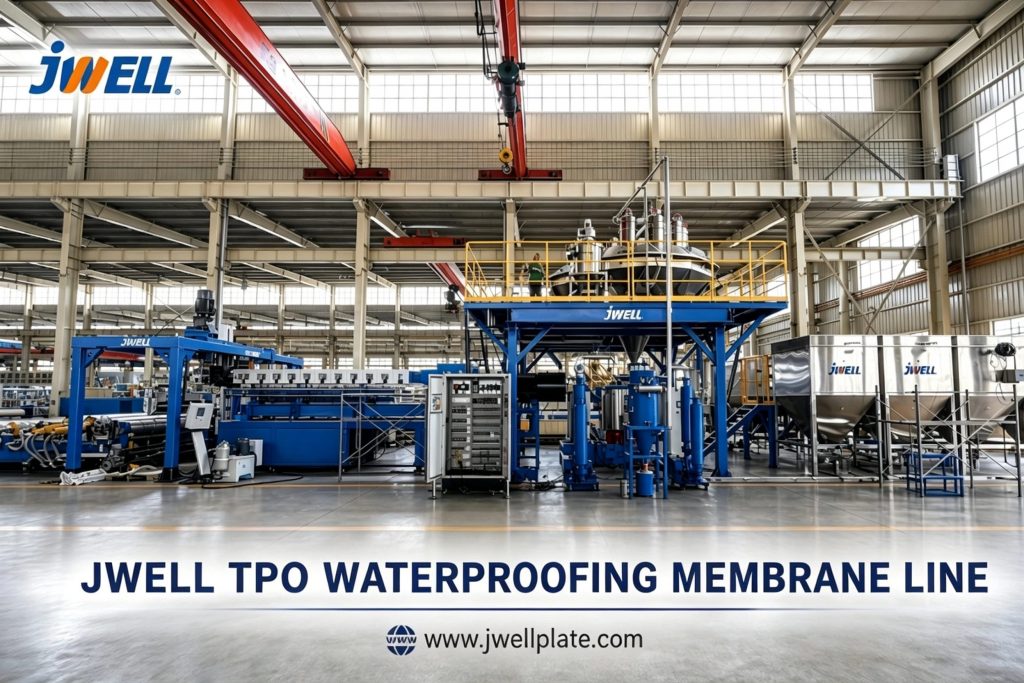
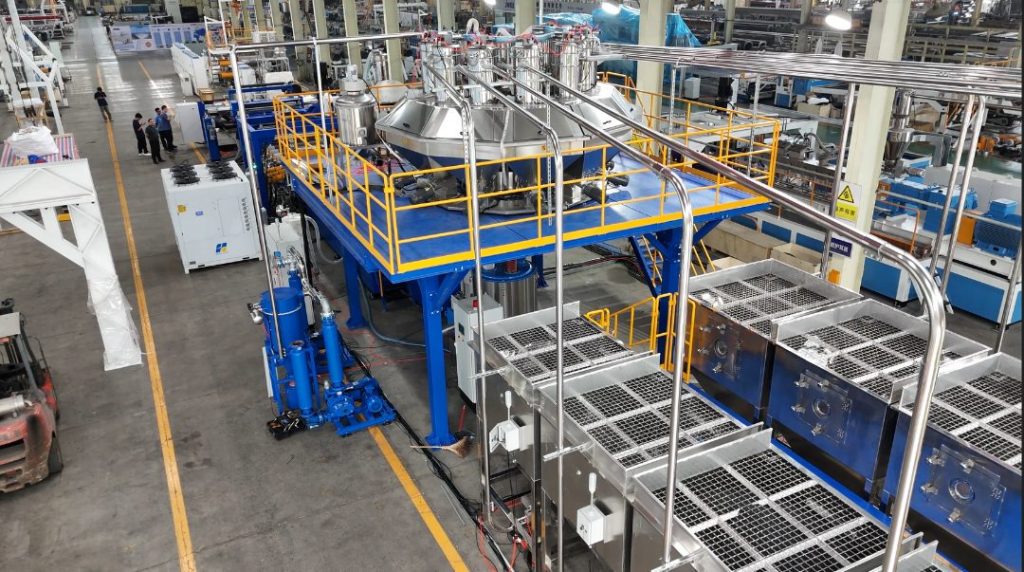
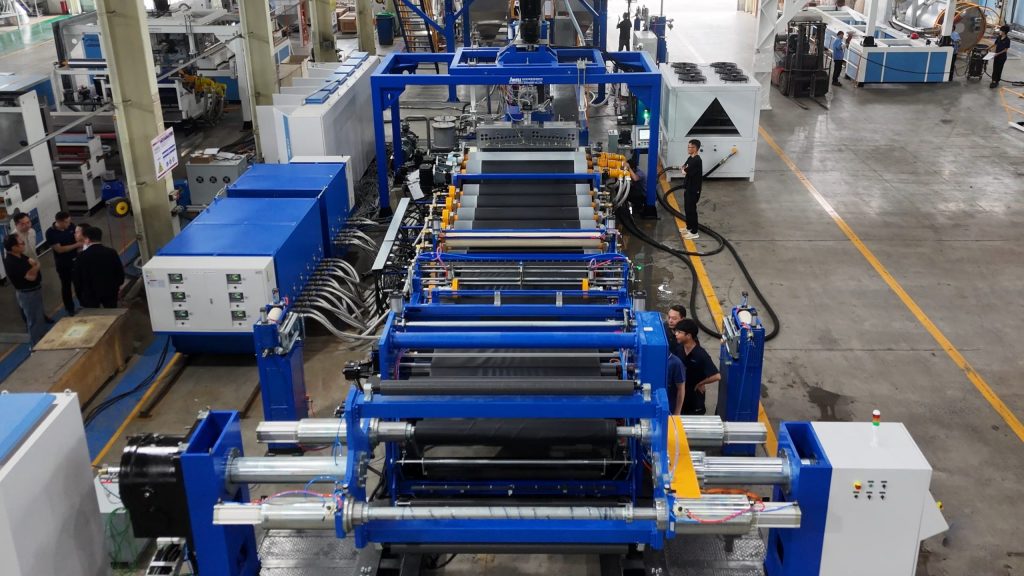
JWELL Machinery’s TPO sheet line combines a multi-component automatic weighing and feeding system with a fully automatic winder to deliver high-precision, high-efficiency TPO sheet production for two of the fastest-growing application markets.
Key Takeaways
JWELL Machinery has launched an intelligent TPO (Thermoplastic Polyolefin) sheet production line that integrates multi-component automatic weighing and feeding, high-plasticizing screw extrusion, and fully automatic winding into a seamless, quality-controlled manufacturing process. This line serves two major application markets—building waterproofing and automotive interiors—which together represent a combined market exceeding ¥9.5 billion.
A TPO (Thermoplastic Polyolefin) sheet production line is an integrated extrusion system designed to manufacture high-performance TPO sheets—a material that uniquely combines the elasticity of rubber with the processability of thermoplastics. Unlike conventional sheet lines, a modern TPO production line must handle multi-component formulations with extreme precision, maintain stable melt flow during extended production runs, and deliver finished rolls with consistent gauge and surface quality.
The importance of TPO sheet production has accelerated dramatically. According to industry analysis, the global TPO waterproofing membrane market alone has surpassed ¥9.5 billion, driven by two converging trends: the global push for green building materials in construction, and the automotive industry’s shift toward lightweight, low-VOC, recyclable interior materials—particularly in the fast-growing new energy vehicle (NEV) segment.
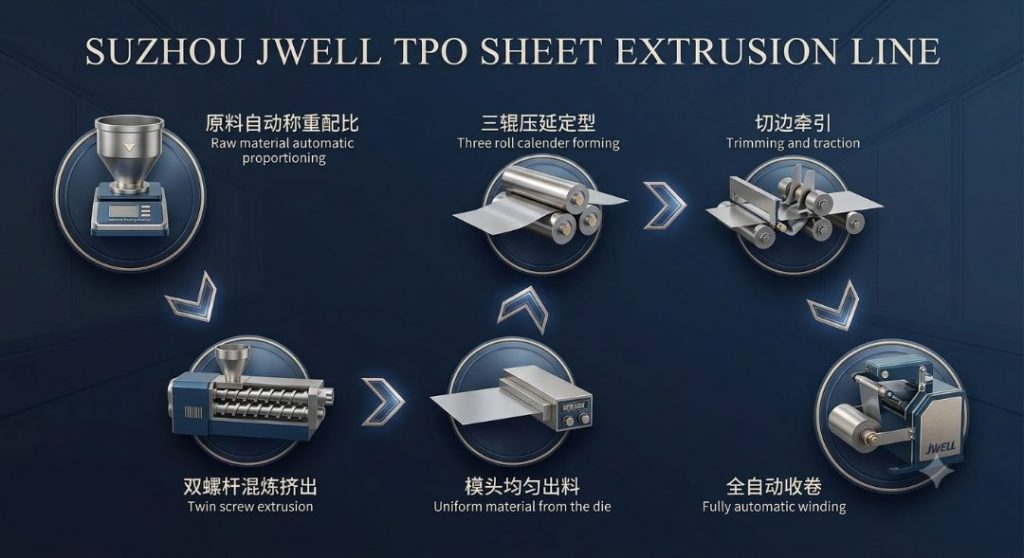
The JWELL TPO sheet production line is engineered around four integrated stages, each incorporating intelligent automation to ensure product consistency from the first meter to the last.
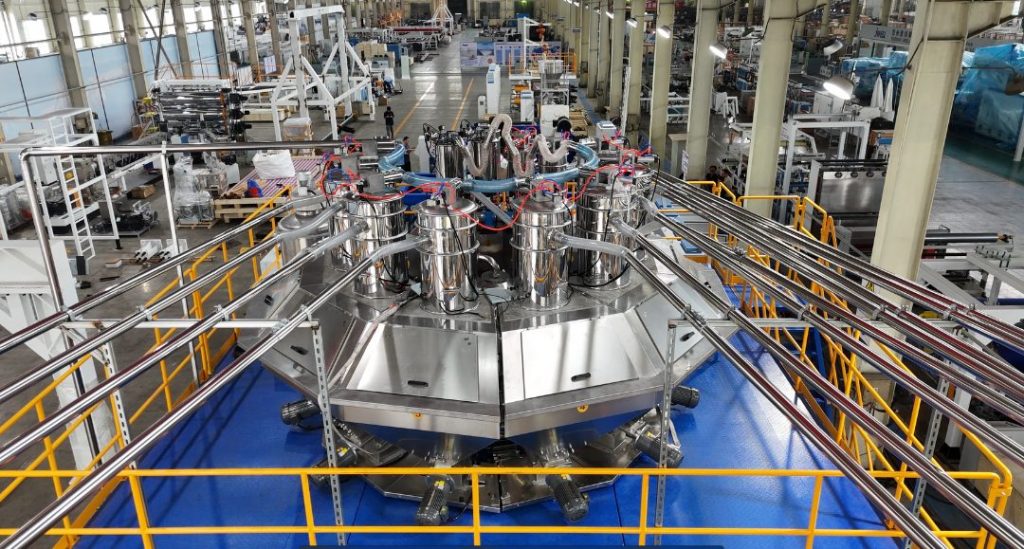
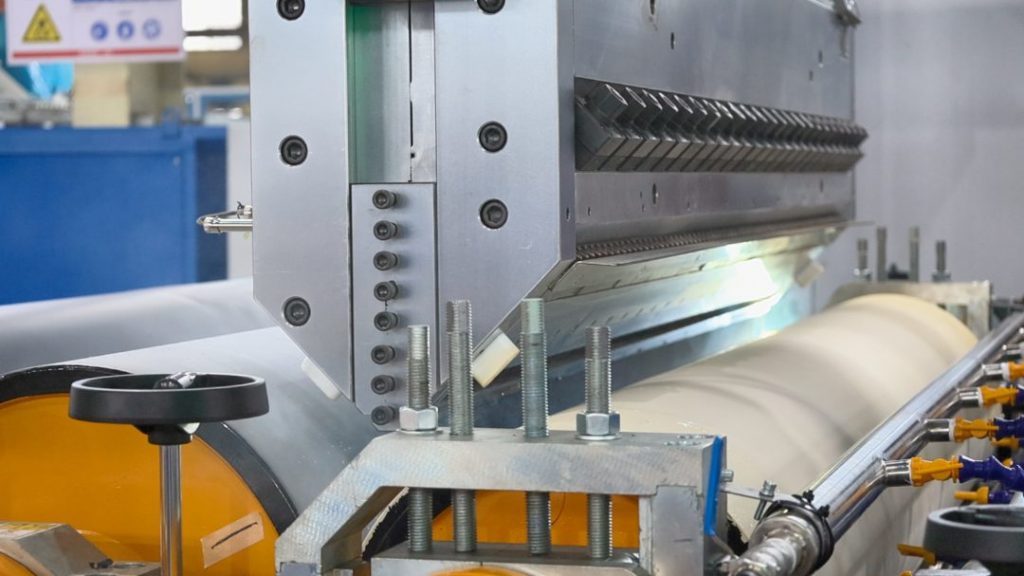
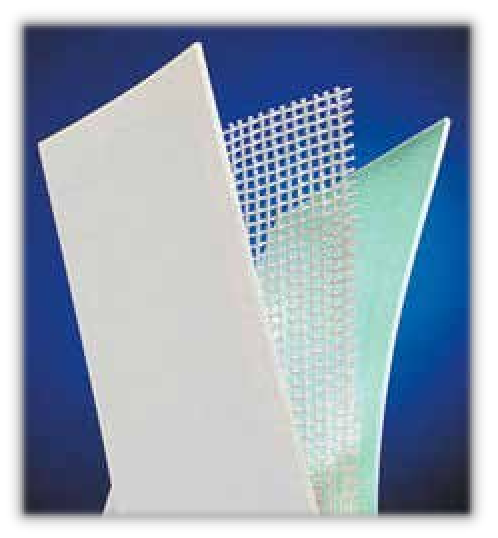
TPO waterproofing membranes are manufactured by extruding thermoplastic polyolefin compounded with antioxidants, UV stabilizers, anti-aging agents, and softeners. The membrane can be reinforced with an embedded polyester mesh layer for added tensile strength and dimensional stability in mechanically fastened roofing systems.
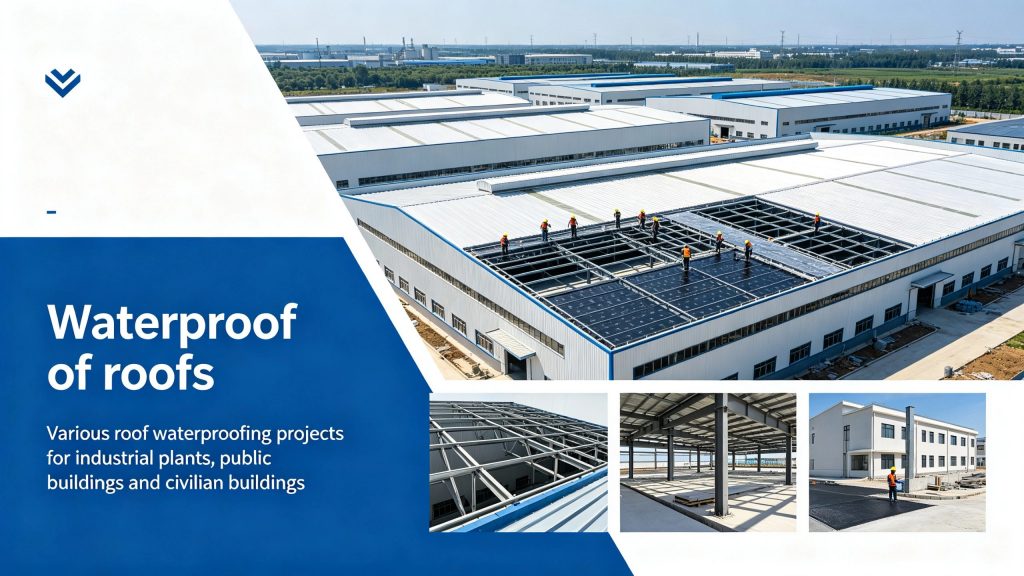
>60% Share of TPO in the commercial flat-roof membrane market in North America—making it the dominant material, surpassing EPDM and PVC. Similar adoption trends are accelerating across Asia-Pacific and Europe.
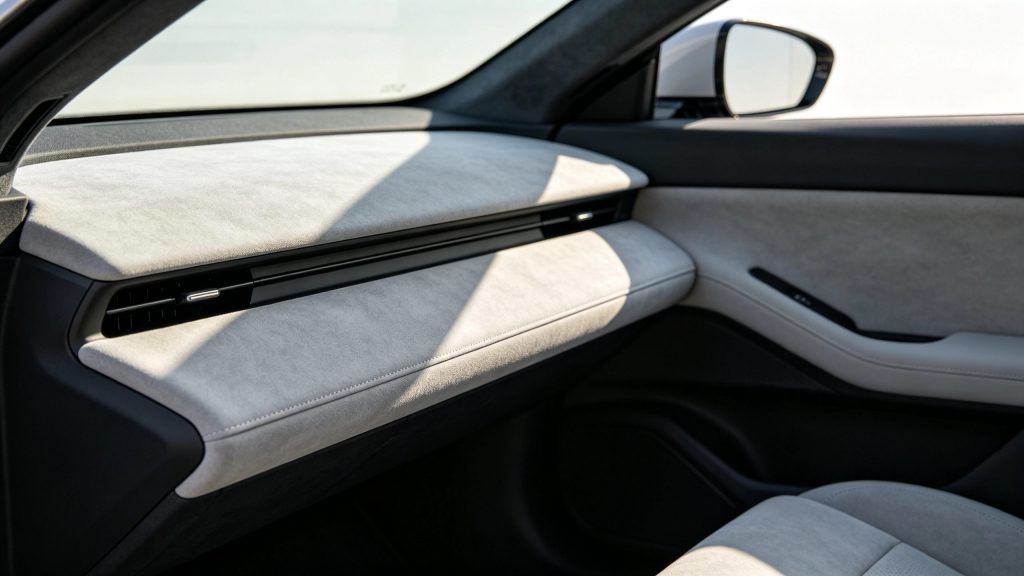
The automotive interior materials landscape has undergone a fundamental shift. Traditional materials—PVC skins, painted ABS panels, and fabric-wrapped substrates—are being replaced by TPO at an accelerating pace. In the new energy vehicle (NEV) market segment, TPO interior materials have already captured nearly 70% market share, according to industry supply-chain data.
What drives this adoption? Three factors stand out:
Soft-touch surface and design flexibility: TPO can be embossed with leather grain, geometric patterns, or technical textures directly during calendering or via post-process lamination. The material accepts low-gloss surface finishes that match premium interior design language, and its low-temperature ductility (−40 °C) ensures airbag deployment integrity in cold climates.
Low VOC and odor-free performance: Unlike plasticized PVC (which contains volatile phthalate plasticizers), TPO requires no plasticizers and emits negligible VOCs. This directly addresses China’s GB/T 27630 passenger car air quality guidelines and equivalent international standards. For EV manufacturers where cabin air quality is a key selling point, TPO is the clear winner.
Weight reduction: TPO sheets are 15–25% lighter than equivalent PVC skins at the same gauge. In an NEV, every kilogram saved translates to approximately 5–8 km of additional range over the vehicle’s lifetime, making TPO a strategic material choice for range optimization.

| Property | TPO (Thermoplastic Polyolefin) | PVC (Polyvinyl Chloride) | EPDM (Ethylene Propylene Diene Monomer) |
|---|---|---|---|
| Environmental Profile | ✓ Chlorine-free, fully recyclable, no plasticizers required | Contains chlorine, phthalate plasticizers may leach, limited recyclability | Thermoset rubber — cannot be remelted, limited end-of-life options |
| Weather Resistance | ✓ Excellent UV stability, 20–30 year service life on roofing | Moderate — requires UV stabilizer packages, plasticizer migration over time | Excellent — industry benchmark for long-term weathering |
| Weldability | ✓ Hot-air weldable, seams as strong as parent material | Hot-air or solvent weldable, but seam strength degrades over time | Seam tape or adhesive bonding only — not heat-weldable |
| Interior VOC Emissions | ✓ Extremely low, passes GB/T 27630 and ISO 12219 | Higher VOC due to plasticizers and residual monomers | Not typically used for automotive interiors |
| Weight (1.5 mm sheet, per m²) | ~1.35 kg | ~1.65–1.85 kg | ~1.50–1.80 kg |
| Cold Temperature Flexibility | ✓ Remains flexible to −40 °C | Becomes brittle below −10 °C without special formulation | Remains flexible to −45 °C |
| Cost Position | Moderate — mid-range material cost, lowest installed cost due to weldability | Lower raw material cost, higher long-term maintenance | Higher raw material cost, highest installation labor cost |
The TPO sheet market is experiencing a structural expansion driven by three powerful demand catalysts:
¥9.5B+
Current combined market size for TPO waterproofing and automotive sheets, with projected double-digit annual growth through 2030.
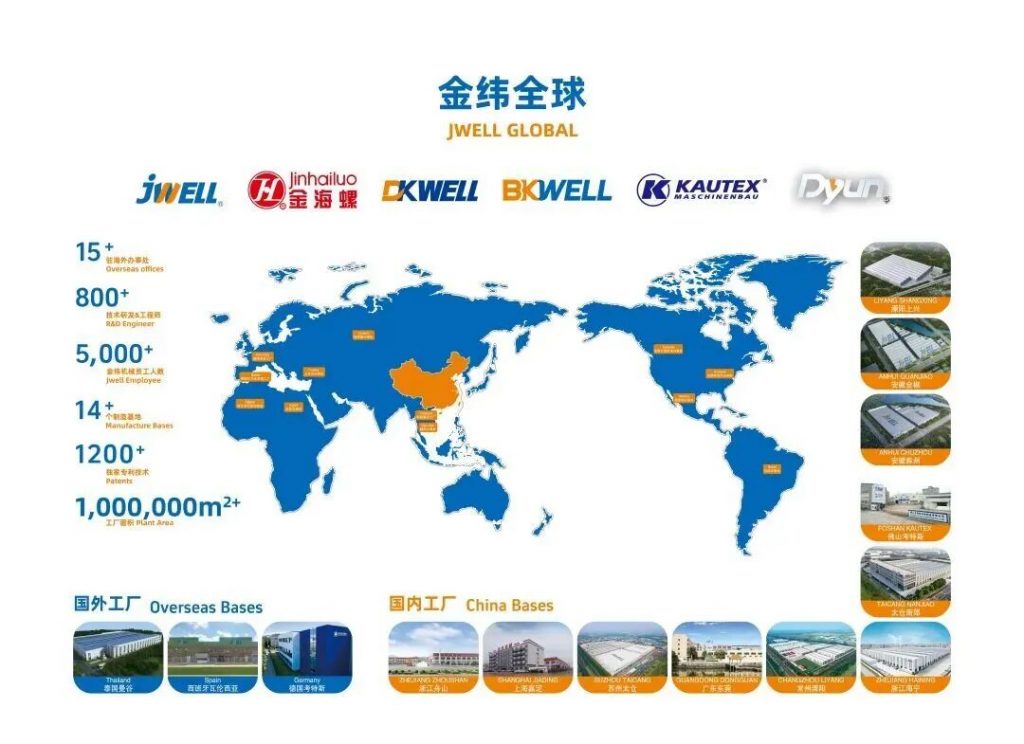
JWELL Machinery brings over two decades of extrusion engineering expertise to TPO sheet production. The Sheet & Board Division has delivered complete sheet extrusion lines to customers across 120+ countries, covering the full product portfolio—PET sheet, ABS sheet, PMMA sheet, PP hollow grid sheet, PC corrugated and solid sheet, geomembrane, and TPO sheet.
What is a TPO sheet production line?
A TPO sheet production line is an integrated extrusion system that combines multi-component gravimetric feeding, precision single-screw extrusion, flat-die calendering, and automatic winding to manufacture high-performance thermoplastic polyolefin sheets. These sheets are primarily used in building waterproofing membranes and automotive interior skins. Modern lines like JWELL’s incorporate centralized SCADA control for real-time quality monitoring and batch traceability.
What are the main applications of TPO sheets?
TPO sheets serve two primary markets: building waterproofing (roofing membranes for commercial, industrial, and infrastructure projects, plus underground and civil engineering waterproofing) and automotive interiors (instrument panels, door panels, seat backs, console covers, and pillar trims). Together these markets exceed ¥9.5 billion globally.
How does JWELL’s TPO line ensure consistent sheet quality?
Quality consistency is achieved through four integrated systems: (1) a multi-component gravimetric dosing system accurate to ±0.5%, (2) a high-plasticizing barrier screw with melt metering pump for stable output, (3) a coat-hanger die with automatic lip adjustment for uniform gauge, and (4) a servo-controlled automatic winder with closed-loop tension regulation. The SCADA system logs every batch parameter for full traceability.
Why choose TPO over PVC for waterproofing?
TPO outperforms PVC in several critical dimensions: it is chlorine-free and fully recyclable (meeting LEED and green building standards), offers superior UV and chemical resistance, achieves a 20–30 year service life on roofing, and is hot-air weldable for monolithic watertight seams—without the plasticizer migration issues that cause PVC embrittlement over time.
What is the market size for TPO sheets?
The TPO sheet market has surpassed ¥9.5 billion, driven by the construction industry’s shift to green waterproofing materials and the automotive sector’s adoption of lightweight, low-VOC interiors. The market is projected to maintain double-digit annual growth through 2030. In the NEV segment specifically, TPO now accounts for nearly 70% of interior skin materials.
How does the automatic winding system improve production efficiency?
JWELL’s fully automatic turret winder enables non-stop roll changeover at full line speed, eliminating the downtime required for manual roll handling. Servo-driven tension control ensures consistent winding density and eliminates telescoping or wrinkling defects. Combined with automatic edge alignment and integrated slitting, the system reduces labor requirements and material waste while maintaining continuous production throughput.
What are the advantages of TPO in automotive interior applications?
TPO delivers five key advantages for automotive interiors: ultra-low VOC emissions (no plasticizers), soft-touch surface feel with customizable embossing and low-gloss finish, 15–25% weight reduction versus PVC (contributing to NEV range optimization), −40 °C cold flexibility for airbag safety, and full recyclability aligned with circular-economy manufacturing targets.
What sheet thickness and width can JWELL’s TPO line produce?
JWELL configures each TPO sheet line to the customer’s specifications. The platform covers a gauge range from 0.3 mm (automotive skin sheet) to 3.0 mm (waterproofing membrane), with working widths from 1,200 mm to 3,000 mm depending on downstream equipment selection. Contact JWELL’s Sheet & Board Division for a configuration matched to your product requirements.
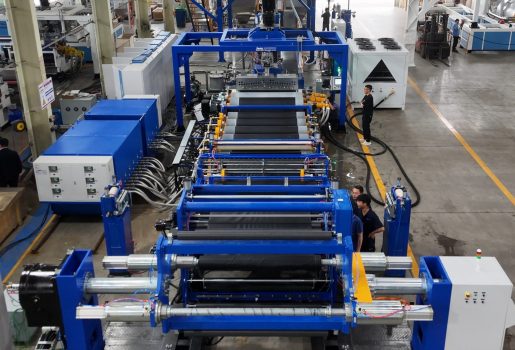
JWELL Machinery’s intelligent TPO sheet production line with multi-component auto-weighing and fully automatic winding delivers high-performance sheets for building waterproofing and automotive interiors.
JWELL Machinery’s intelligent TPO sheet production line with multi-component auto-weighing and fully automatic winding delivers high-performance sheets for building waterproofing and automotive interiors.