
About
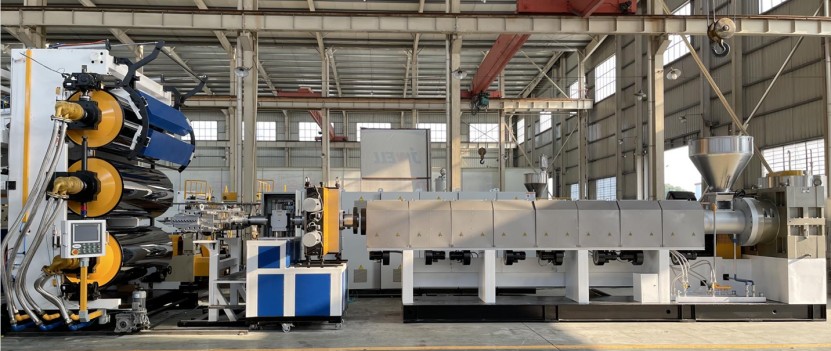
Thermoplastic thick plates — typically defined as flat extruded plastic sheets ranging from **1 mm to over 50 mm** in thickness — have become indispensable across chemical processing, infrastructure, medical, and consumer goods industries. A **thick plate production line** is the engineered extrusion system that melts, homogenizes, and forms these robust polymer sheets to precise dimensional tolerances.
Changzhou JWELL Plate and Sheet Equipment Technology Co., Ltd., a subsidiary of the JWELL group — China's top plastic extrusion machinery manufacturer for 15 consecutive years — designs and builds thick plate production lines for PP, HDPE, ABS, and PVC with plate thicknesses up to **50 mm and beyond**. This article breaks down the material categories, thickness-driven market segmentation, and the technical differentiators that make JWELL a globally competitive supplier.
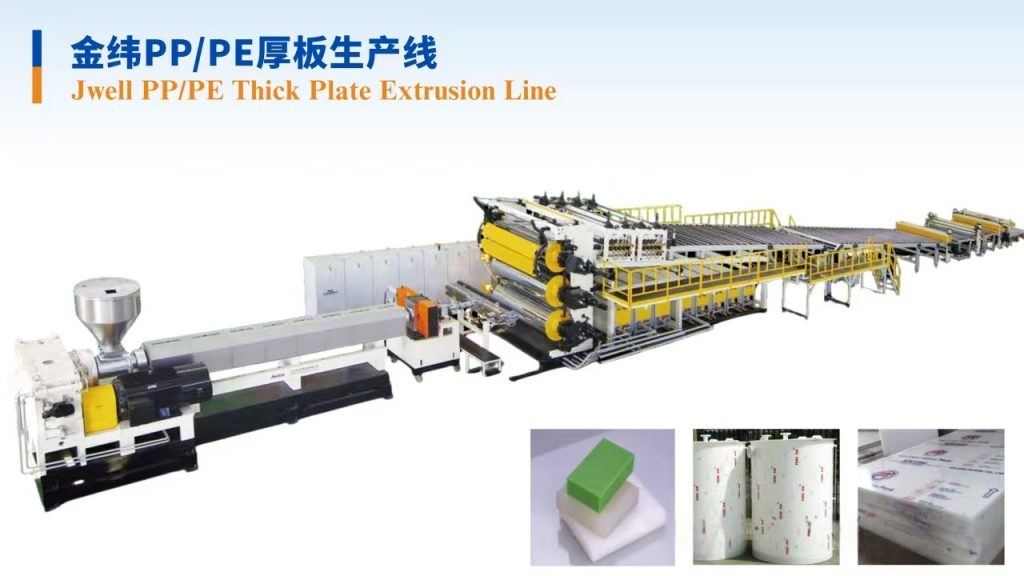
**Polypropylene (PP)** and **High-Density Polyethylene (HDPE)** are the most versatile thermoplastics for thick plate extrusion, combining excellent chemical resistance, low water absorption, and outstanding impact toughness — even at sub-zero temperatures.
Key Applications:
- Chemical anti-corrosion liners and tank construction
- Environmental protection facilities (scrubbers, fume hoods, waste-water treatment components)
- Machined mechanical parts (gears, guides, wear strips)
- Ice rink wall panels and dasher boards
- Pickup truck bed liners
JWELL Technical Highlights:
- Full production line capable of plate thickness up to **40 mm** (and thicker upon request)
- Proprietary **cross-cutting (transverse shearing) technology** ensuring:
- Stable, continuous operation at high line speeds
- Controlled dust and low noise emission- Smooth, flat cut edges — no secondary finishing required
- Screw and die designs optimized for PP/HDPE rheology, minimizing melt fracture and ensuring uniform gauge across the full web width
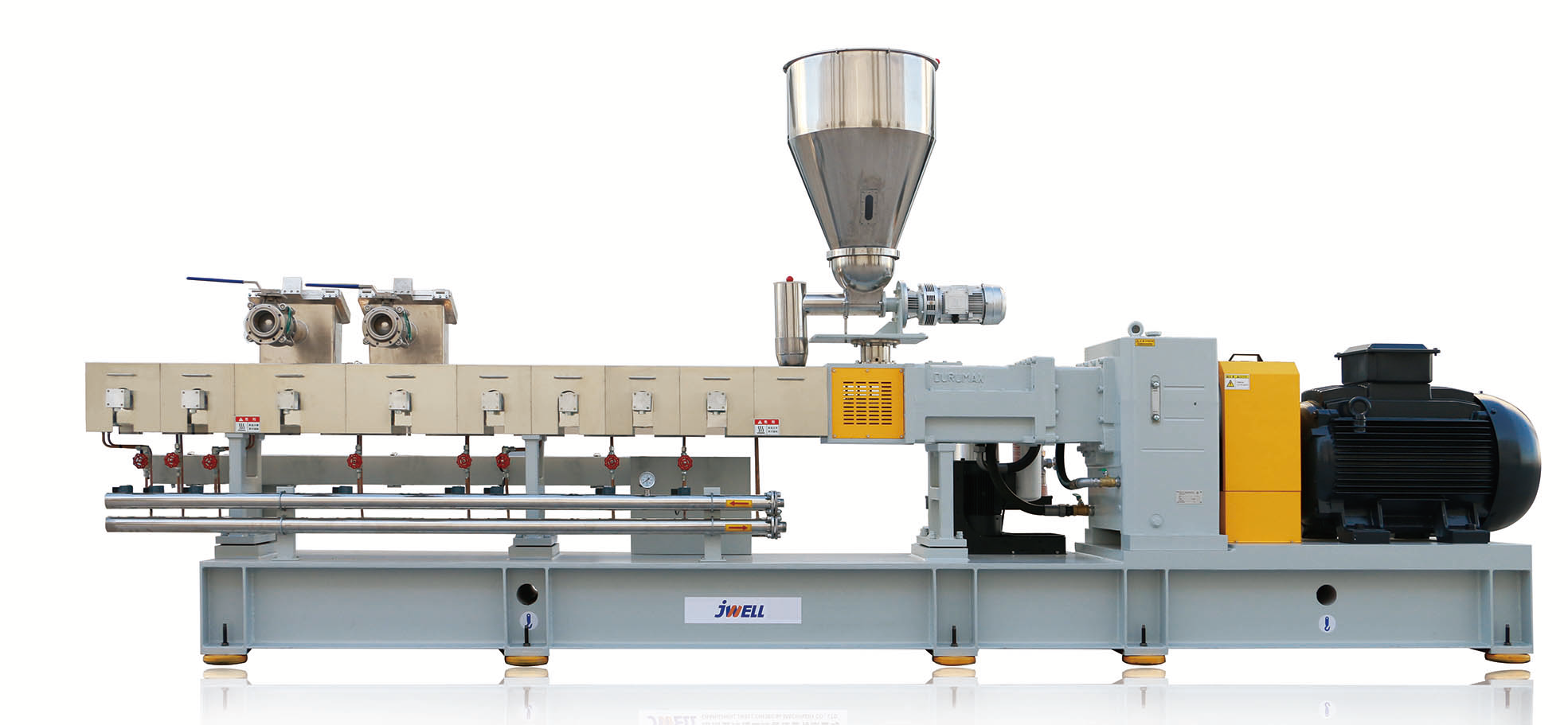
**Acrylonitrile Butadiene Styrene (ABS)** thick plates deliver a superior balance of rigidity, surface gloss, and impact strength, making them ideal for visible or structural applications demanding both aesthetics and durability.
Key Applications:
- Chemical process equipment protective enclosures
- Environmental anti-corrosion cladding
- Home appliance housings and internal structural panels
- Automotive interior trim substrates
JWELL Technical Highlights:
- High line speed and large throughput capacity- Exceptionally flat plate geometry with bright, glossy surface finish
- In-line **protective film lamination** to preserve surface quality during handling and transport
- Precision temperature control across the calendar stack to eliminate warpage
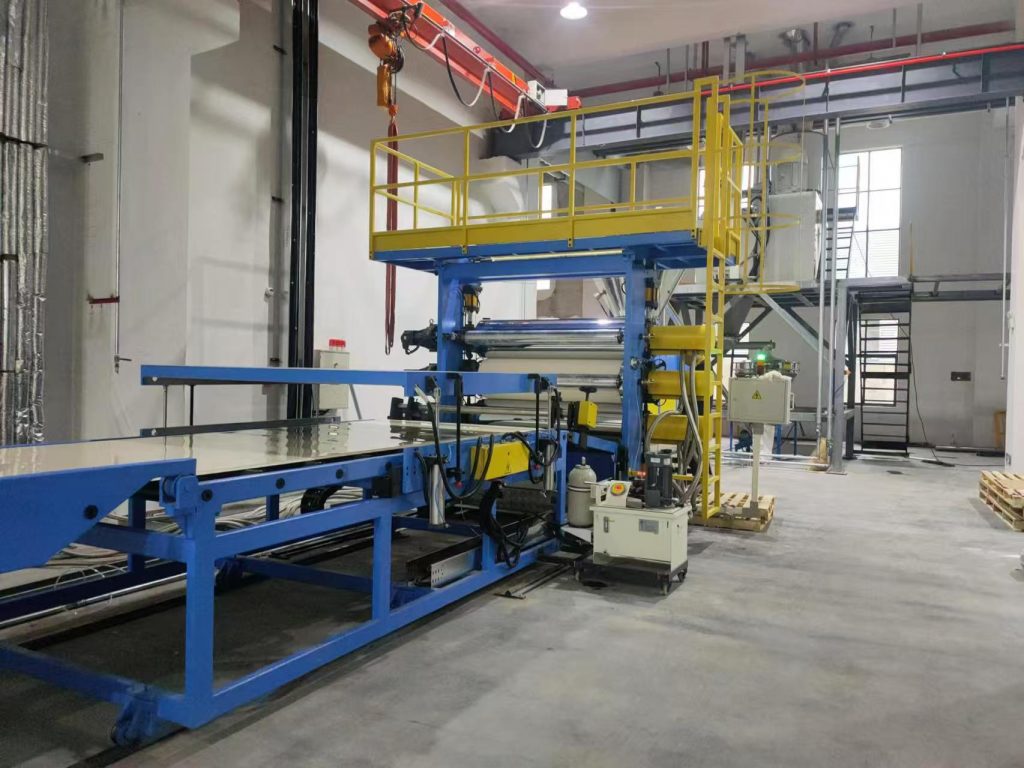
**Polyvinyl Chloride (PVC)** thick plates offer the highest cost-to-performance ratio among thermoplastic thick plates, with outstanding resistance to acids, alkalis, and corrosive fumes — the material of choice for heavy-duty chemical environments.
Key Applications:
- Chemical storage tank fabrication
- Ducting and ventilation systems in corrosive atmospheres
- Industrial flooring and wall cladding in chemical plants
JWELL Technical Highlights:
- **Twin-screw extruder** configuration for superior plasticization and thermal stability
- High plate mechanical strength with a smooth, lustrous surface
- Optimized formulation handling for both rigid and modified PVC compounds
- Energy-efficient barrel heating and cooling design reducing operational costs
Market Specifications: Thickness-Driven Application Segmentation
| Thickness Range | Primary Market Applications | Typical Materials |
| 1–10 mm | Cutting boards, Pickup truck bed panels Industrial flooring Water tanks Medical components | PP, HDPE, ABS |
| 10–20 mm | Outdoor furniture 5G telecommunications Infrastructure Medical cabinets | HDPE, PP (borated grades) |
| 20–30mm | Bathroom partitions, Chemical process vessels Temporary road plates Ice rink surfaces | HDPE, PP, PVC |
| 30 mm+ | Airport and seaport infrastructure Nuclear power containment vessels, Medical facility neutron shielding | HDPE, PP (borated grades) |
Plates exceeding 30 mm — particularly borated HDPE or PP grades — serve as **thermal neutron attenuation barriers** in nuclear power plants and medical radiation therapy facilities. The hydrogen-rich polymer matrix moderates fast neutrons, while boron additives capture thermal neutrons, providing lightweight, non-degradable shielding alternatives to traditional concrete.
JWELL also offers **twin-extruder co-extrusion** configurations for multi-layer thick plate production. By combining two polymer streams, this technology produces plates with:
- A **core layer** for structural integrity (recycled or high-strength polymer)
- A **surface layer** for UV resistance, color matching, or printability
**Typical dual-co-extrusion applications:** Outdoor advertising billboards, traffic road signs, and signage substrates requiring long-term weathering performance.
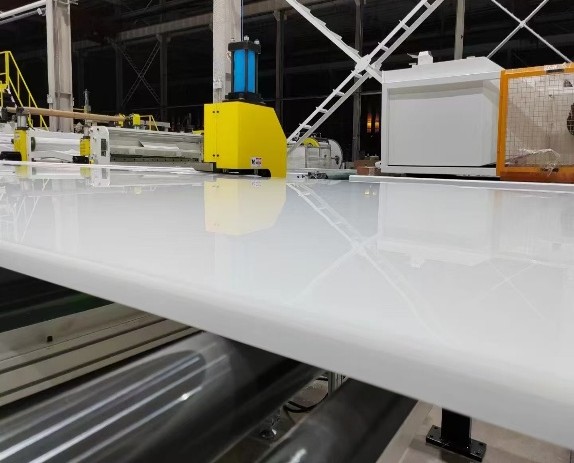
JWELL's thick plate production lines are engineered around four core competitive pillars:
1. Technical Innovation — Advanced screw geometry, precision T-die design, and proprietary cutting technology deliver plates to tight dimensional tolerances with superior surface quality across all material types.
2. Energy Efficiency & High Output — Optimized barrel heating zones, low-shear melt homogenization, and high-output calender configurations reduce energy cost per kilogram while maximizing throughput.
3. Stability & Durability — Heavy-duty frame construction, premium-grade alloy barrels and screws, and rigorously tested gearboxes ensure continuous 24/7 operation with minimal maintenance downtime.
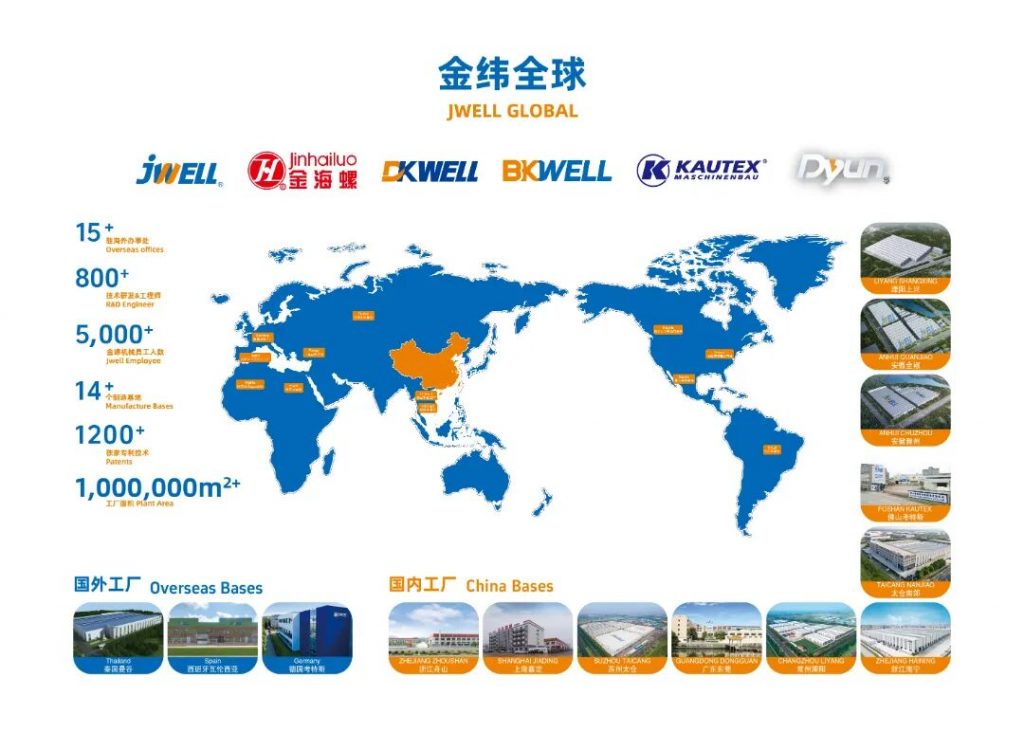
4. Flexible Customization & Localized Support — Every line is configured to the customer's specific material, thickness, width, and throughput requirements. JWELL's global service network — spanning 14 manufacturing bases and 120+ countries served — provides installation, training, and after-sales support close to the customer.
Q1: What is the maximum thickness JWELL's thick plate line can produce?
A: JWELL's standard thick plate lines produce plates from 1 mm up to 50 mm. Thicker specifications can be engineered upon request with customized die and calender configurations.
Q2: Which plastics can be processed on a single thick plate production line?
A: While some material overlap exists, PP/HDPE, ABS, and PVC each require specific screw designs, die geometries, and temperature profiles. JWELL configures dedicated lines optimized for each polymer family. Some lines can be adapted for multi-material use with screw and die changes.
Q3: What is the advantage of a twin-screw extruder for PVC thick plates?
A: Twin-screw (parallel or conical) extruders provide superior mixing, gentler thermal history, and better degassing compared to single-screw alternatives. For PVC — which is sensitive to thermal degradation — this means better plasticization, higher plate strength, and a more consistent surface finish.
Q4: Can JWELL thick plate lines process recycled or regrind material?
A: Yes. JWELL's screw designs accommodate a percentage of regrind or recycled material in the core layer, especially in dual-machine co-extrusion configurations where a virgin surface layer is co-extruded over a recycled core — reducing material costs while maintaining surface quality.
Q5: What width range is available for thick plate production?
A: JWELL thick plate lines are available in web widths from 1,200 mm up to 3,000+ mm, depending on the material, thickness, and customer requirements. Wider configurations can be discussed for specific projects.
Q6: How does JWELL ensure cut quality on thick plates?
A: JWELL employs a proprietary transverse cutting (cross-cutting) system specifically engineered for thick plates. It delivers smooth, flat edges with controlled dust generation and low acoustic noise — eliminating the need for secondary edge trimming in most applications.
Q7: What after-sales support does JWELL provide for thick plate lines?
A: JWELL provides comprehensive support including installation supervision, operator training, process optimization, spare parts supply, and remote technical assistance. With 14 manufacturing bases and service coverage across 120+ countries, localized support is available in most major markets.
The PP/PE/ABS/PVC thick plate production line represents a critical technology bridge between polymer processing and end-use industrial applications spanning chemical processing, infrastructure, nuclear shielding, consumer goods, and telecommunications. Suzhou JWELL Machinery's deep engineering expertise — built on 28+ years of extrusion leadership — delivers production lines that combine material-specific process optimization, precision cutting technology, energy efficiency, and global service support.
Whether your application requires 2 mm cutting boards or 50 mm neutron-shielding barriers, JWELL provides the complete extrusion solution — from screw and die design to calender, cutting, and stacker integration — tailored to your material, throughput, and market requirements.
For inquiries about JWELL thick plate production lines, contact us now!
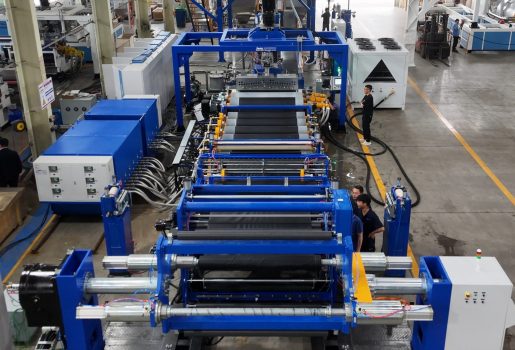
JWELL Machinery’s intelligent TPO sheet production line with multi-component auto-weighing and fully automatic winding delivers high-performance sheets for building waterproofing and automotive interiors.
JWELL Machinery’s intelligent TPO sheet production line with multi-component auto-weighing and fully automatic winding delivers high-performance sheets for building waterproofing and automotive interiors.