
About
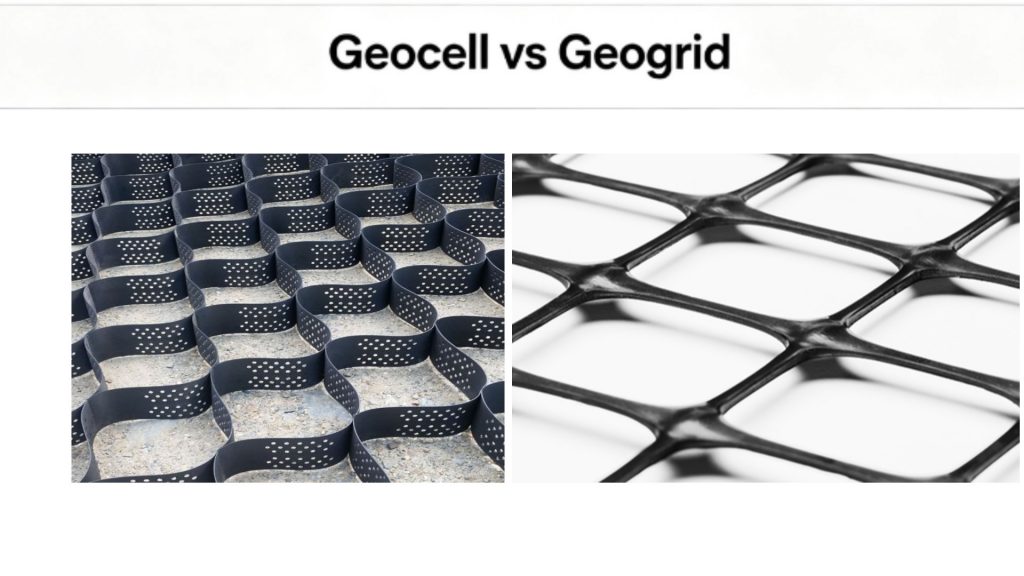
As core invisible geosynthetic "reinforcement skeletons" for modern geotechnical engineering, geocells and geogrids are widely applied in road subgrade stabilization, slope protection, channel renovation, and foundation reinforcement projects. Although both polymer geosynthetics serve soil reinforcement and deformation prevention purposes, they feature distinct structural forms, working mechanisms, and applicable scenarios, requiring professional customized production equipment. This article systematically compares geocell production equipment and geogrid production equipment, elaborates on their working principles, core characteristics, engineering advantages, and equipment differentiation, providing reliable equipment selection references for global geotechnical engineering manufacturers and construction contractors.
In complex geotechnical engineering scenarios such as highway roadbeds, mountain slope protection, water conservancy channels, and municipal foundation treatment, high-strength polymer geosynthetics have become indispensable materials to stabilize soil structures, disperse loads, and resist geological deformation. Geocells and geogrids, as two mainstream reinforcement materials, form a complete set of geotechnical protection systems with complementary functions, and their dedicated production equipment determines the final material performance and engineering applicability.
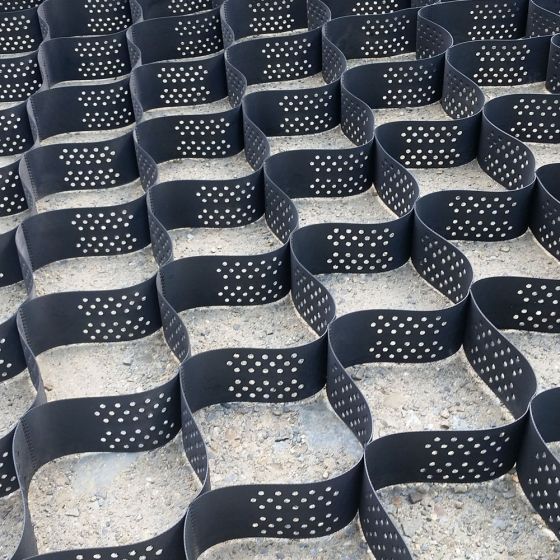
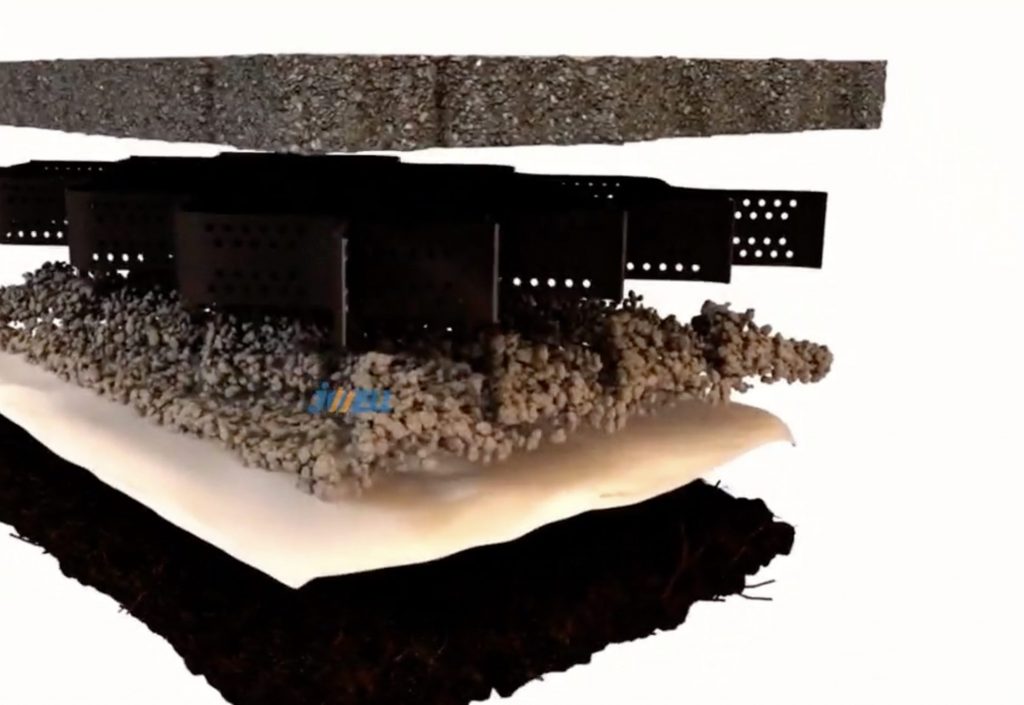
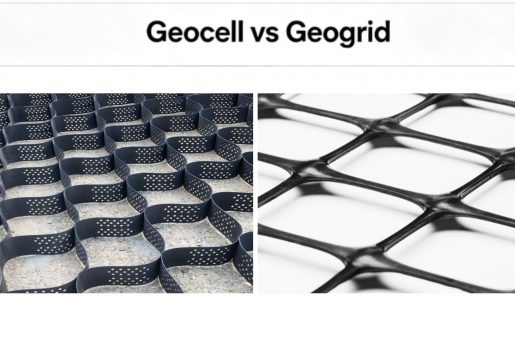
A geocell is a three-dimensional honeycomb network structure formed by high-strength polymer sheets through precise high-power welding. After unfolding on construction sites, the closed cellular structure can be filled with soil, gravel, concrete and other fillers to form an integral rigid-flexible reinforcement system.
Core Features & Working Mechanism: Geocells rely on powerful three-dimensional lateral confinement effect to constrain filler displacement, uniformly disperse vertical and horizontal loads, and effectively prevent soil settlement, sliding and deformation. It is vividly regarded as the "skeleton of geotechnical engineering", building a stable overall protective structure for loose foundation soil.
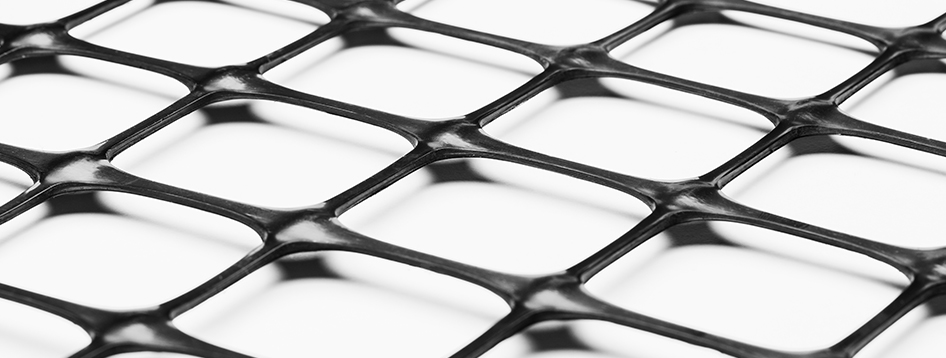
A geogrid is a flat two-dimensional geosynthetic material manufactured by polymer sheet punching, stretching and forming, with a regular and uniform grid mesh structure. It is a classic tensile reinforcement material in geotechnical engineering.
Core Features & Working Mechanism: Geogrids boast high tensile strength and low elongation rate. Through mechanical interlocking and friction with soil and aggregate particles, it enhances the overall tensile strength and structural stability of soil. It acts as the "tendon of geotechnical engineering", providing lasting tensile restraint for soil masses and resisting structural stretching and cracking.
| Comparison Dimension | Geocell | Geogrid |
|---|---|---|
| Structural Form | 3D three-dimensional honeycomb closed structure | 2D flat open grid structure |
| Core Working Principle | Lateral confinement, filler constraint, load dispersion | Tensile reinforcement, soil interlocking, anti-stretching deformation |
| Structural Advantage | Strong anti-deformation ability, excellent vertical load-bearing performance | Ultra-high tensile strength, low ductility, stable horizontal reinforcement |
| Engineering Positioning | Engineering "skeleton" — integral stable support | Engineering "tendon" — tensile strength enhancement |
Due to the fundamental differences in structure and molding principle between geocells and geogrids, their supporting production equipment adopts completely different technological processes and core configurations. Professional targeted equipment ensures the structural accuracy, mechanical properties and engineering durability of finished products.
The core process of geocell equipment is to produce continuous high-strength polymer sheets and realize precise fixed-point welding to form a honeycomb cellular structure. The whole production line focuses on sheet uniformity, welding firmness and structural dimensional accuracy.
Core Equipment Functions & Advantages: It realizes automatic sheet extrusion, fixed-distance cutting, high-frequency powerful welding and orderly stacking. The welded joints feature high tensile resistance and no cracking, ensuring that the geocell can maintain complete structural confinement performance after unfolding and filling. The equipment supports adjustable cell height and spacing, adapting to diverse slope protection, roadbed and water conservancy engineering standards.
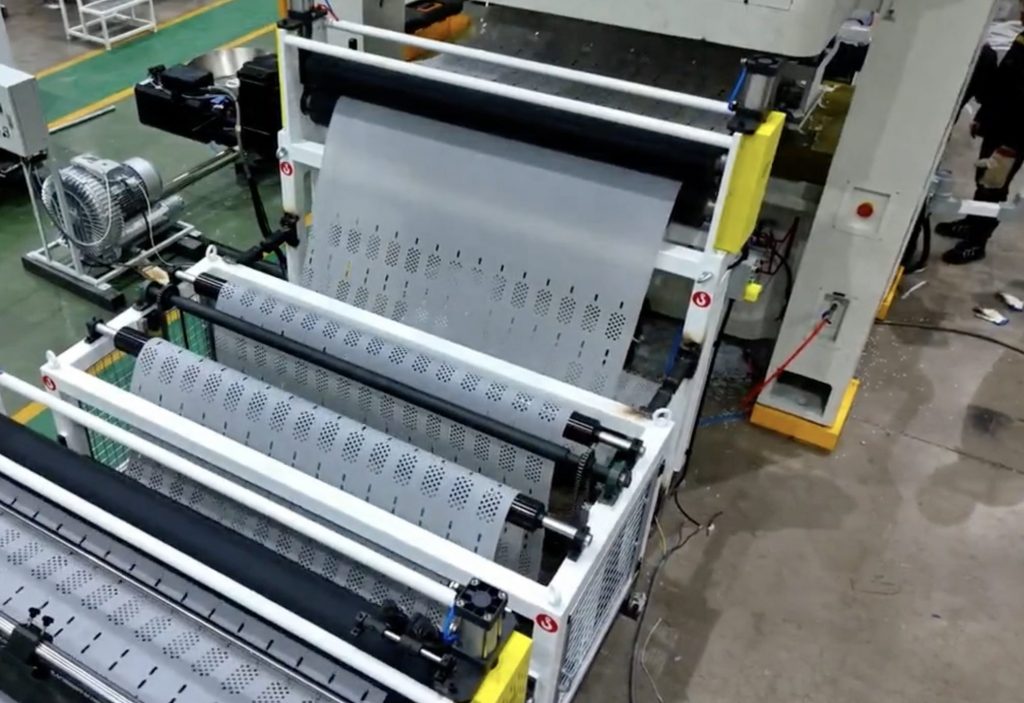
Geogrid equipment takes precision punching and directional stretching as the core process. Flat polymer sheets are punched into regular grid holes through professional molds, then stretched vertically and horizontally to form a stable grid structure with high tensile strength.
Core Equipment Functions & Advantages: The equipment features precise punching positioning and uniform stretching tension control, which effectively avoids grid deformation and uneven force. Finished geogrids have neat mesh openings, consistent rib thickness, ultra-low elongation and stable tensile performance, fully meeting the long-term tensile and anti-cracking requirements of foundation reinforcement and retaining wall projects.
Choosing between geocell and geogrid production equipment should be based on target market demand, project type and product positioning:
Geocells and geogrids are not competing substitutes but complementary core geotechnical solutions — one acts as the structural "skeleton" providing 3D confinement and load distribution, the other acts as the "tendon" delivering directional tensile reinforcement. Their corresponding production equipment is purpose-built around their respective forming principles, with distinct core processes, technical thresholds and quality control priorities.
As global infrastructure investment, ecological slope protection projects and foundation renovation demand continue to grow, professional, high-automation geocell and geogrid production equipment will become a core driver for the upgrading of the geosynthetics industry.
JWELL Machinery brings over two decades of extrusion engineering expertise to Geocell Production line and Geogrid Production lines. The Sheet & Board Division has delivered complete sheet extrusion lines to customers across 120+ countries, covering the full product portfolio—PET sheet, ABS sheet, PMMA sheet, PP hollow grid sheet, PC corrugated and solid sheet, geomembrane, and Geocell and Geogrid Production line.
The most fundamental difference lies in the forming mechanism. Geocell equipment builds a 3D honeycomb structure primarily through sheet extrusion and high-strength welding, focusing on welding joint performance. Geogrid equipment forms a 2D grid structure through sheet punching and directional stretching, focusing on stretching uniformity and molecular orientation effect.
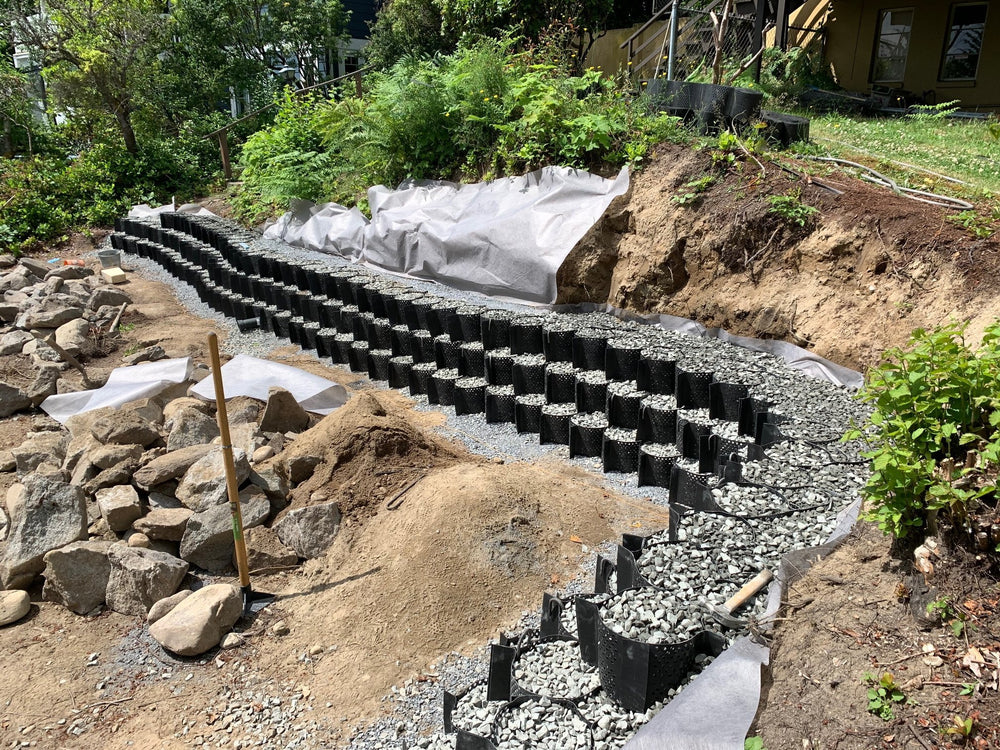
Geocells are generally more suitable for slope protection and ecological greening projects. Their 3D cellular structure can firmly hold fill and vegetation substrates, effectively preventing soil erosion, while providing holistic slope stabilization.
Geogrids produced by precision stretching equipment have ultra-high tensile strength, extremely low elongation and stable interlocking performance with soil. They can effectively disperse pavement load, restrain reflective cracking and significantly extend the service life of road subgrades and surfaces.
No. The two products follow completely different forming processes and require dedicated production lines. The extrusion section may share partial technical principles, but the downstream welding / punching-stretching sections are not interchangeable.
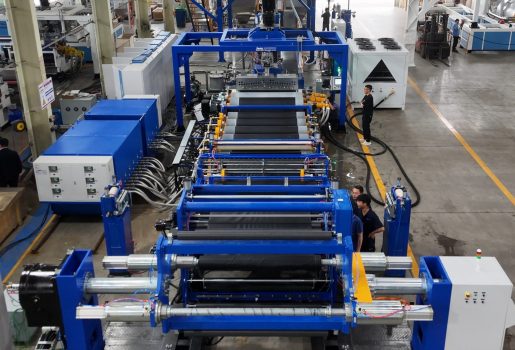
JWELL Machinery’s intelligent TPO sheet production line with multi-component auto-weighing and fully automatic winding delivers high-performance sheets for building waterproofing and automotive interiors.
In-depth comparison of geocell and geogrid production equipment, covering manufacturing processes, engineering applications and selection guidance for geosynthetic manufacturers.