
About
The choice between a twin screw extruder and a single screw extruder is one of the most critical decisions in plastics processing. Each type offers distinct advantages depending on your material, product requirements, and production scale. This technical comparison will help you make an informed decision for your extrusion line.
A single screw extruder uses one rotating screw inside a cylindrical barrel to convey, melt, and pressurize the polymer. The material moves forward through drag flow — friction between the polymer and the barrel wall propels the melt toward the die. Single screw extruders are characterized by their simplicity, reliability, and cost-effectiveness.
Key specifications typically include:
A twin screw extruder employs two intermeshing screws that rotate inside a figure-eight-shaped barrel. The two most common configurations are co-rotating (both screws turn in the same direction) and counter-rotating (screws turn in opposite directions). Twin screw extruders are the workhorses of compounding, modification, and reactive extrusion.
Key specifications typically include:
| Parameter | Single Screw | Twin Screw (Co-rotating) |
|---|---|---|
| Mixing Quality | Low–Moderate | Excellent (distributive + dispersive) |
| Material Flexibility | Limited (pellets preferred) | Wide (powder, flakes, regrind) |
| Residence Time Control | Moderate | Precise (modular screw design) |
| Self-Cleaning | None | Excellent (intermeshing design) |
| Energy Efficiency | Higher (less shear) | Moderate (more shear input) |
| Capital Cost | Lower | Higher (2–3× single screw) |
| Maintenance | Simpler | More complex (modular elements) |
| Output Stability | Good for simple profiles | Excellent for complex formulations |
As a leading extrusion machine manufacturer, Jwell Machinery offers both single screw and twin screw extruders tailored to your specific application. Our SJ series single screw extruders are ideal for straightforward sheet, pipe, and profile production, while our co-rotating twin screw compounding lines deliver unmatched mixing performance for demanding formulations.
For sheet extrusion applications, we particularly recommend twin screw configurations when processing PET, PC, or PMMA, where melt uniformity directly impacts product clarity and mechanical properties. Our in-house screw design team can customize L/D ratios, compression profiles, and mixing elements to optimize your specific formulation.
Need help selecting the right extruder? Contact our engineering team for a free consultation and customized line proposal.
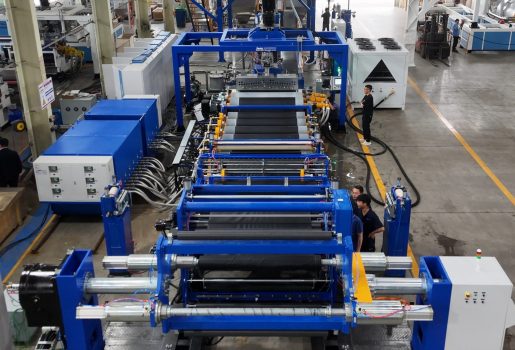
JWELL Machinery’s intelligent TPO sheet production line with multi-component auto-weighing and fully automatic winding delivers high-performance sheets for building waterproofing and automotive interiors.
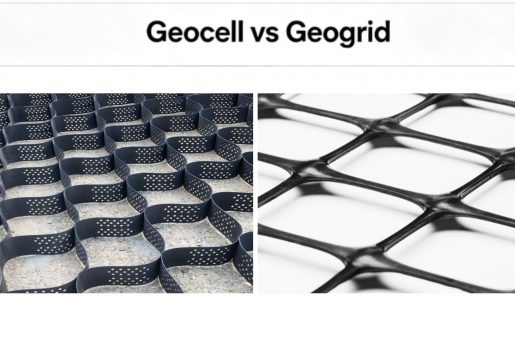
In-depth comparison of geocell and geogrid production equipment, covering manufacturing processes, engineering applications and selection guidance for geosynthetic manufacturers.